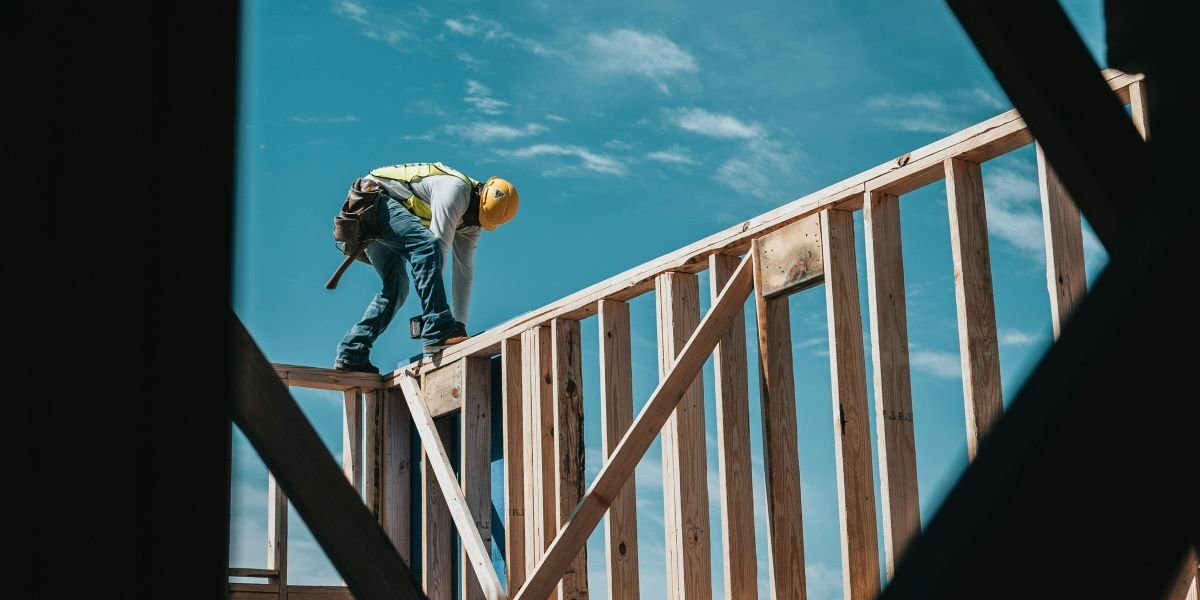

Governor Gavin Newsom signed Assembly Bill 179 on July 13, a budget trailer bill that prohibits, waives, or reduces local development impact fees on new residential projects across California. The signing took place at an active affordable housing construction site in Oakland’s Chinatown, where a 97-unit development is planned for completion this fall. State housing officials estimate the reforms will reduce construction costs by $60,000 to $70,000 per unit, a material shift for affordable projects that have historically stalled under the cumulative weight of local fees, financing delays, and regulatory layering.
Key Takeaways
- Assembly Bill 179 prohibits, waives, or reduces local development impact fees on new residential projects, estimated to cut $60,000 to $70,000 per unit in construction costs.
- The law formally establishes the California Housing and Homelessness Agency, consolidating several state housing departments under one structure.
- Funding allocations include $900 million for the HHAP homeless block grant, $500 million for enhanced state low-income housing tax credits, and $200 million for the Multifamily Housing Program.
- An $11.25 billion Veterans and Affordable Housing Bond Act has been placed on the November 2026 ballot to complement the reforms.
- Newsom cited a 59% increase in housing construction and a 57% decrease in permitting times since taking office in 2019.
What Does AB 179 Actually Change?
The core mechanism of Assembly Bill 179 is financial. For years, California cities and counties have levied impact fees on new construction to fund local infrastructure like roads, parks, and schools. Those fees vary widely by jurisdiction, but in high-cost markets they can add tens of thousands of dollars per unit, sometimes making a project financially unviable before a shovel hits the ground. AB 179 conditions state housing funding on local governments reducing or eliminating those fees on affordable housing projects. The message from Sacramento is direct: jurisdictions that want state dollars cannot simultaneously impose fee structures that undermine the projects those dollars are meant to support.
The law also restructures California’s housing bureaucracy. AB 179 formally establishes the California Housing and Homelessness Agency, consolidating several state departments under a single entity. Gustavo Velasquez of the California Department of Housing and Community Development described the change as a way to cut the time and money developers spend navigating overlapping state agencies before they can begin construction. The restructuring includes a “One-Stop Shop” financing model designed to replace the current system, where developers must submit separate applications to multiple state programs, each with its own timeline and requirements.
Alongside the regulatory changes, the bill directs significant new funding. The legislation allocates $900 million for the Homeless Housing, Assistance and Prevention (HHAP) program, the state’s primary block grant for local homelessness efforts. Ninety-seven percent of that funding goes to large cities and counties, with 3% directed to tribal communities. The bill also includes $500 million in enhanced state low-income housing tax credits and $200 million for the Multifamily Housing Program, both aimed at financing new affordable units.
Why Is California Targeting Impact Fees Now?
California consistently ranks among the most expensive states in the country to build housing. The cost of materials, labor, and land all contribute, but regulatory expenses have drawn increasing scrutiny from both sides of the political aisle. Impact fees are a particular pressure point because they are set locally, which means a project that is financially viable in one city can be dead on arrival in the next jurisdiction over.
State Senator Jesse Arreguín, one of the bill’s authors and the former mayor of Berkeley, framed the issue in terms of public frustration with the visible gap between spending and results. Arreguín noted that his constituents frequently tell him the state has spent heavily on homelessness without producing visible improvement. Reducing impact fees, Arreguín argued, is one way to ensure that state investment translates into actual construction rather than being absorbed by administrative costs.
Newsom has been building toward this moment since taking office in 2019. The governor cited a 59% increase in housing construction statewide and a 57% decrease in the time required to obtain building permits. Those figures represent a measurable reversal of the trajectory California followed for decades, when zoning restrictions, environmental review requirements, and fee structures combined to suppress new housing supply. Newsom has described the underbuilding as intentional, a product of local land-use decisions designed to prevent construction rather than facilitate it.
The political context matters. AB 179 passed the California Legislature with near-unanimous bipartisan support, drawing only 18 no votes across both chambers. That level of consensus reflects the political reality that housing affordability is a cross-party concern in California. The bill takes effect immediately, meaning developers can begin factoring the fee reductions into project budgets now rather than waiting for a delayed implementation date.
What Comes Next For California Housing?
AB 179 is not a standalone measure. The legislation arrives alongside the $11.25 billion Veterans and Affordable Housing Bond Act, which the California Legislature has placed on the November 2026 ballot. If voters approve the bond, $10 billion would finance more than 40,000 shovel-ready affordable housing developments statewide. Another $1.25 billion would support the CalVet Home Loan Program, which helps veterans and military families purchase homes.
The bond measure gives voters a direct say in whether the state commits to a sustained construction push, but its effectiveness depends partly on the kind of cost reductions AB 179 is designed to deliver. If impact fee reform and streamlined financing lower the per-unit cost of affordable construction, the bond dollars stretch further and produce more housing. If local jurisdictions resist the fee restrictions or find workarounds, the impact narrows.
The timing also intersects with federal policy. The bipartisan ROAD to Housing Act became law on July 11, and Newsom drew a direct connection between the federal bill and California’s approach during the Oakland signing ceremony. The governor noted that the federal legislation mirrors many of the reforms California has already implemented, including reduced regulatory hurdles and greater local flexibility in how housing gets built. Whether the two frameworks reinforce each other or create friction at the local level will depend on how cities and counties respond to overlapping mandates from Sacramento and Washington.
For the Oakland Chinatown project where Newsom signed the bill, the stakes are immediate. The 97-unit development, managed by the East Bay Asian Local Development Corporation, relied on roughly $26 million in state tax credits and tax-exempt bonds. It is the first phase of a two-block residential development that will ultimately provide homes for seniors. Projects like this one are the test case for whether California’s reformed financing and fee structures can deliver housing at the speed and scale the state needs.
FAQs
What is Assembly Bill 179? Assembly Bill 179 is a California budget trailer bill signed on July 13 that reduces or eliminates local development impact fees on new residential projects, restructures state housing agencies, and directs billions in funding toward affordable housing and homelessness programs. The law takes effect immediately.
How much could AB 179 save on construction costs? State housing officials estimate the combined impact fee reductions and financing reforms will lower the cost of building affordable housing by $60,000 to $70,000 per unit. The savings come from reduced local fees and streamlined state financing that eliminates duplicative application processes.
What is the California Housing and Homelessness Agency? AB 179 formally establishes this agency, consolidating several existing state housing departments under one structure. The goal is to reduce bureaucratic overlap and create a single point of contact for developers seeking state funding for affordable housing projects.
What is the $11.25 billion housing bond on the November ballot? The Veterans and Affordable Housing Bond Act of 2026 would allocate $10 billion to finance the construction of more than 40,000 affordable housing developments and $1.25 billion to support home loans for veterans and military families through the CalVet program.
How does AB 179 relate to the federal ROAD to Housing Act? Governor Newsom noted that the federal housing law, which took effect July 11, shares similarities with California’s approach, including reduced regulatory barriers and increased local flexibility. The two frameworks are expected to complement each other, though implementation will depend on how local jurisdictions respond.
Did AB 179 have bipartisan support? The bill passed the California Legislature with only 18 no votes across both chambers, reflecting broad bipartisan consensus on the need to reduce barriers to affordable housing construction in California.