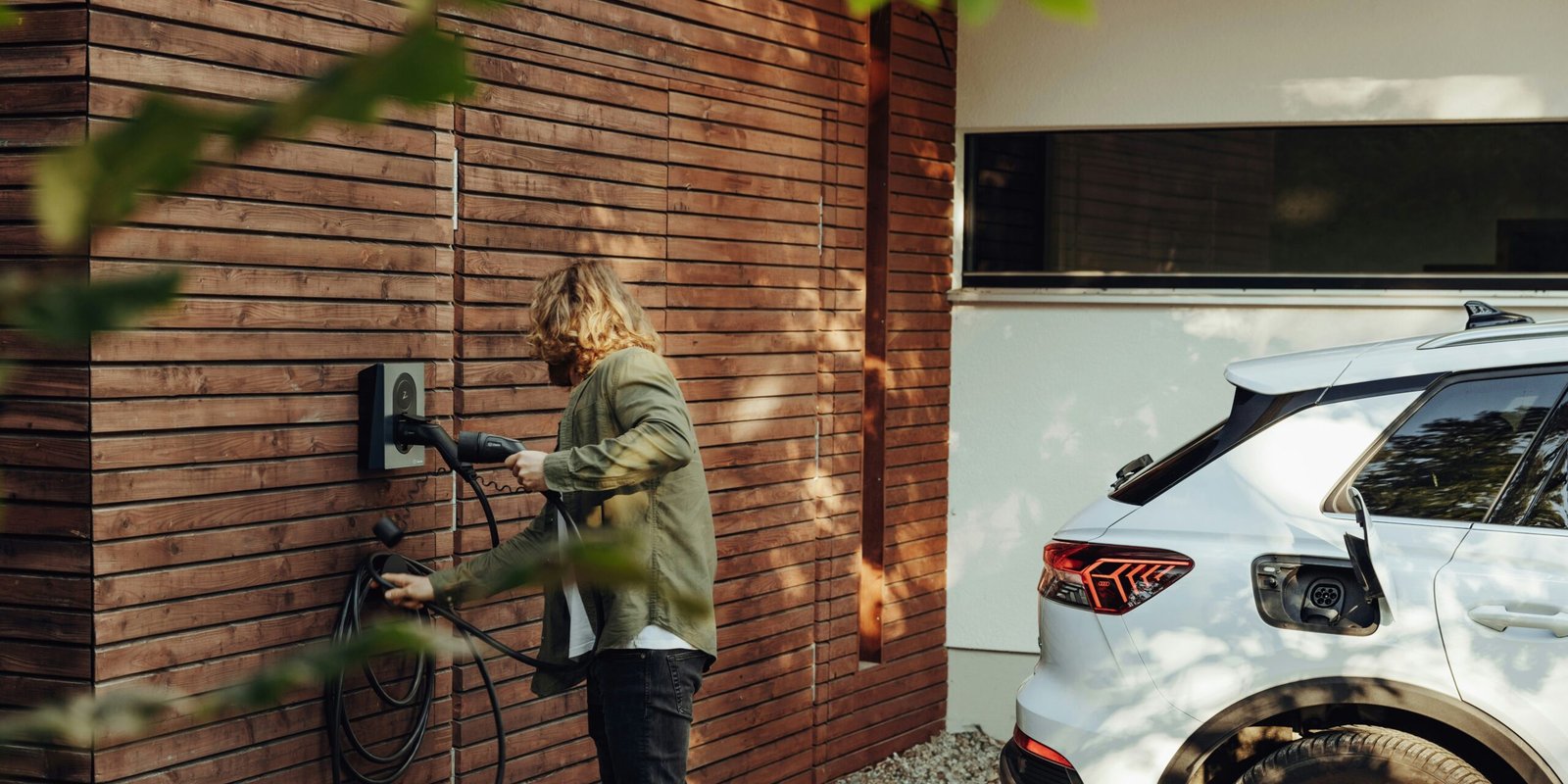

Governor Gavin Newsom announced the rollout of California’s MyFirstEV program on August 7 at the Bridge Yard event venue in Oakland, activating a $3,500 instant point-of-sale rebate for first-time buyers or lessees of new zero-emission vehicles priced up to $50,000. The program, signed into law as Senate Bill 168 on July 13, represents California’s direct response to Congress repealing the $7,500 federal EV tax credit, which expired in September 2025 and contributed to a decline of at least 20% in U.S. electric vehicle sales during the first half of 2026. Demand for the rebate has already outpaced initial projections: Tesla’s allocated share of the fund was completely exhausted within four days of the program going live.
Key Takeaways
- California’s MyFirstEV program offers $3,500 off new zero-emission vehicles priced up to $50,000 and $1,750 off used EVs up to $25,000 through certified pre-owned programs.
- The state committed $135.5 million in funding, matched dollar-for-dollar by 13 participating automakers, for a combined $270 million in consumer savings.
- Rebates are applied instantly at the dealership during the transaction, not as a later reimbursement or tax filing.
- Tesla’s allocated portion of the fund was fully depleted by August 8, four days after the program launched.
- A California-headquarters provision exempts Rivian and Lucid from the $50,000 price cap, allowing vehicles priced up to $71,000 to qualify for the full rebate.
How the Rebate Works at the Dealership
The MyFirstEV program is structurally different from the federal tax credit it replaces. Under the old federal system, buyers claimed a $7,500 credit on their annual tax return, often waiting months to see the financial benefit. California’s program eliminates that delay entirely. The $3,500 discount on new vehicles, or $1,750 on qualifying used models, is built into the sales contract at the dealership. Buyers walk out with the savings already reflected in their purchase or lease agreement. No application, no reimbursement timeline, no tax filing required.
The California Air Resources Board, which administers the program, requires buyers to sign a legal declaration confirming that the transaction represents their first purchase or lease of an electric vehicle. Lindsay Buckley, CARB’s communications director, confirmed that participants must attest under legal penalty that they have never previously owned or leased any type of zero-emission vehicle. That verification mechanism is designed to ensure the finite pool of funding reaches consumers who are new to the EV market rather than subsidizing repeat buyers who have already made the transition.
Used vehicles qualify under a separate tier. EVs priced up to $25,000 and sold through a manufacturer’s certified pre-owned program are eligible for a $1,750 instant discount. The used-vehicle provision broadens the program’s reach beyond the new-car market and into a price range more accessible to middle-income households, a demographic that the state sees as essential to meeting its long-term zero-emission adoption targets.
Thirteen Automakers Committed, With Tesla’s Funds Already Depleted
The Governor’s office secured commitments from 13 automakers to participate in the matching-fund structure. Hyundai, Genesis, Lucid, and Tesla joined at launch. Ford, Rivian, Chevrolet, and Kia are scheduled to begin participating later in August, with additional manufacturers expected through the fall. Each automaker matches the state’s rebate contribution dollar-for-dollar, meaning the $135.5 million in public funding generates $270 million in total consumer savings when combined with the industry match.
The speed at which Tesla’s allocation was consumed provides an early signal of pent-up demand. Tesla’s share of the fund was completely exhausted by August 8, just four days after the program went live. Reporting from EV tracking sites indicated that 30% of Tesla’s allocated funds remained as recently as 22 hours before they ran dry, suggesting the final wave of demand was concentrated and intense. For Tesla buyers in California who did not act within that narrow window, the $3,500 discount is no longer available unless the state reallocates additional funding to the manufacturer.
The rapid depletion raises questions about whether the program’s total funding will hold through its intended lifecycle. At the current pace, automakers with smaller allocations could see their funds drawn down within weeks rather than months. CARB has not publicly indicated whether the state plans to supplement the $135.5 million if demand continues to outpace supply across all 13 participating brands.
The California-Headquarters Rule Creates a Two-Tier Price Structure
One of the program’s more commercially significant provisions is a California-headquarters exemption that allows automakers based in the state to qualify vehicles above the standard $50,000 price cap. Under SB 168, manufacturers headquartered in California are exempt from the cap, a rule that primarily benefits Rivian, based in Irvine, and Lucid, based in Newark. Rivian’s entry-level model starts around $58,000, and Lucid’s starts around $71,000, prices that would disqualify them under the standard cap but remain eligible under the headquarters exemption.
The provision effectively creates a two-tier system. Buyers shopping from non-California manufacturers are limited to vehicles priced at $50,000 or below to qualify for the $3,500 rebate. Buyers shopping from Rivian or Lucid can access the same rebate on vehicles that cost $20,000 or more above that threshold. The structure functions as an incentive for EV manufacturers to maintain or establish operations in California, tying consumer savings to the state’s broader economic interest in hosting the companies that build the vehicles it is subsidizing.
Tesla’s situation under the rule is more complicated. Tesla is headquartered in Austin, Texas, not California, which means its vehicles must fall under the $50,000 cap to qualify. That limits eligible Tesla models to the lower-priced configurations of the Model 3 and Model Y. Higher-trim versions of those vehicles, and the entire Model S, Model X, and Cybertruck lineup, exceed the cap and do not qualify regardless of the buyer’s first-time status.
A $600 Million Clean Transportation Package Behind the Rebate
The MyFirstEV rebate is the consumer-facing centerpiece of a larger $600 million zero-emission vehicle investment included in California’s 2026–2027 state budget. The remaining funds are allocated across several programs: $150 million for the Community Air Protection Program, $135.5 million for the Clean Truck and Bus Voucher Incentive Project, $130 million for the Carl Moyer Program to replace polluting heavy-duty engines, $35 million for clean off-road equipment, and $19.8 million for Clean Cars 4 All, which provides additional purchase assistance for lower-income Californians.
The budget package is funded through Cap-and-Invest revenue and smog-abatement fees, not general fund dollars. That funding source ties the program’s financial sustainability to the state’s emissions-reduction framework, a structure that insulates it from the annual general fund budget negotiations but also means the available money is capped by the revenue those mechanisms generate.
Scott Moura, a professor of civil engineering at UC Berkeley, told CalMatters that limiting the program to first-time buyers could accelerate adoption among consumers who have never owned an EV, a group that represents the largest remaining growth opportunity for the zero-emission market. The logic is straightforward: subsidizing a second or third EV purchase for an existing owner does less to expand the overall ownership base than putting the same dollars toward converting a gasoline-vehicle household. Whether $135.5 million in state funding is enough to meaningfully move that needle at scale across a state with 26 million registered vehicles remains an open question, one that Tesla’s four-day fund depletion has made more urgent.
FAQs
Who Qualifies for the MyFirstEV Rebate?
Any California resident who has never previously purchased or leased a zero-emission vehicle is eligible. Buyers must sign a legal declaration at the dealership confirming their first-time status. The rebate applies to both purchases and leases of new battery-electric and hydrogen fuel cell vehicles priced up to $50,000, or used EVs up to $25,000 through certified pre-owned programs.
How Is the Rebate Applied?
The $3,500 discount on new vehicles (or $1,750 on used) is applied instantly at the dealership as part of the sales contract. There is no separate application, no reimbursement waiting period, and no tax filing required. The savings are reflected in the transaction before the buyer leaves the dealership.
Are Tesla Vehicles Still Eligible for the Rebate?
Tesla’s allocated share of the MyFirstEV fund was completely exhausted by August 8, four days after the program launched. California has not announced whether additional funds will be reallocated to Tesla. Tesla vehicles priced under $50,000, primarily lower-trim Model 3 and Model Y configurations, were eligible while funds lasted. Higher-priced Tesla models do not qualify because Tesla is headquartered in Texas, not California, and is therefore subject to the $50,000 price cap.