
By: Samantha Borcy
There is a particular kind of pressure that Los Angeles applies to the women who arrive there with genuine dreams and no armor. It doesn’t announce itself. It works quietly, through comparison and proximity and the constant low hum of a city that promises everything while demanding proof that you belong. Sara Stamford’s The Lost Souls opens with that pressure already present, in a single image of Elizabeth sitting in an audition corridor, tugging at her plain shirt and dabbing sweat from her forehead under fluorescent lights, surrounded by women who seem to belong in a way she does not.
That scene, Stamford says, was designed to establish everything the book is about in just a few pages. You come to Los Angeles excited and hopeful, and then suddenly you’re comparing yourself to everyone around you and questioning whether you’re good enough. The city has a sweet illusion that anything is possible. But at the same time, it constantly tests you. How much of yourself are you willing to give up to belong, to be accepted, or to get closer to that dream? Sometimes you don’t even realize you’re losing pieces of yourself along the way until you’ve already gone too far.
Two Women, Two Performances
Elizabeth and Anna are the twin centers of the novel, and both of them are performing versions of themselves for the world around them. Elizabeth performs composure and perfection. Anna performs confidence and a dream life she eventually describes as a sham and a staged performance. Stamford’s title speaks directly to that dynamic.
The Lost Souls, she explains, is about losing yourself while trying to be who you think you’re supposed to be and who others want you to be. Elizabeth gets lost trying to be perfect in everything and wanting to be loved. Anna gets lost trying to convince everyone, including herself, that her life is amazing. They are very different women, but deep down they both just want to be seen and heard and belong somewhere.
Los Angeles shapes both of them in specific and damaging ways. For Elizabeth, the city intensifies the patterns she already carries from a childhood shaped by a grandmother who gave approval sparingly and only for exceptional performance. For Anna, it amplifies the pressure to look a certain way, know the right people, and constantly prove you deserve to be there. The city doesn’t cause their struggles. It accelerates them.
The Friendship That Starts With a Borrowed Scarf
One of the most interesting structural choices in the novel is the way Stamford builds the relationship between Elizabeth and Anna. Their friendship doesn’t develop through long conversations or confessions. It grows through small, specific physical acts. A borrowed scarf. A stranger arriving at the door with bags of food from Erewhon. An accident on roller blades. A series of gestures that feel like warmth.
Stamford built it that way deliberately, drawn partly from real observation of how women actually form bonds with one another. Women often build friendships through small acts of kindness, sharing, checking in, simply hanging out. Those little gestures create connection faster than words can. But she also wanted to show the other side of that. An act of kindness isn’t always completely genuine or without motive. Sometimes generosity can be a way into someone’s life, a way to gain trust or create a sense of loyalty.
As the story unfolds, that ambiguity becomes one of the novel’s most unsettling qualities. The warmth is real. And it may not be the whole story.
What the City Finally Reveals
The nightclub scene on Anna’s birthday is one of the most resonant sequences in the book. It ends with Elizabeth soaked in champagne, realizing she knows nobody, watching Anna disappear toward the back of the room and return with manic energy. Stamford describes what she was after in that scene simply. You can be surrounded by people, parties, and attention and still feel completely alone. Sometimes the loudest social life is really just a distraction from loneliness.
That is what Los Angeles does to the women in this story. It provides the noise. The performance. The chandeliers and famous actors at the next table. And underneath all of it, two women who are more lost than the city’s brightness suggests anyone should be.
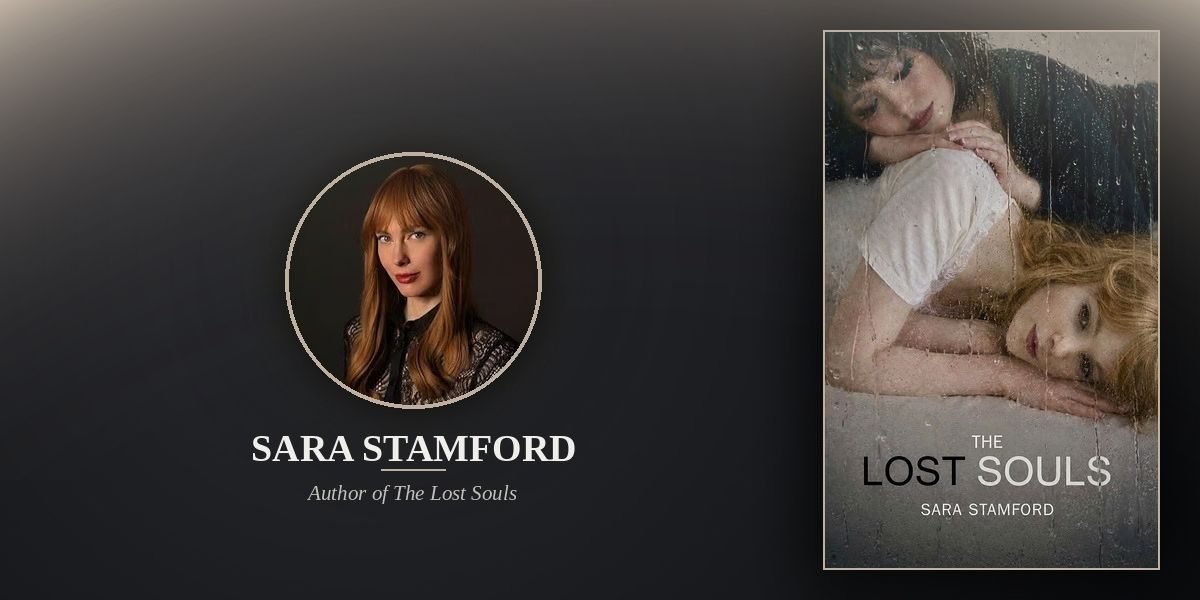
A novel about what it costs to belong and what it means to lose yourself trying. The Lost Souls by Sara Stamford is available now on Amazon.