
By: Thomas Walters
Few writers have dared to take on the enormity of the pandemic as directly—or as fearlessly—as Tejas Desai. With Bad Americans, the acclaimed New York author delivers what he calls “The Great American Pandemic Novel,” a sweeping and deeply human exploration of how ordinary people respond to extraordinary times. The book is both intimate and panoramic, exposing the contradictions, fears, and resilience that define what it means to be American when the world comes undone.
At once a social chronicle, a psychological study, and an informal experiment, Bad Americans is an ambitious and brilliant hybrid of storytelling styles. It combines a frame narrative—set in a luxurious Hamptons mansion during the lockdown—with a series of interconnected tales told by the guests who gather there. Each guest shares their own story of survival, loss, and transformation during the pandemic, revealing a mosaic of voices and experiences that cut across race, class, and ideology. Together, these accounts form a vivid, unsettling portrait of a divided nation searching for meaning and connection in isolation.
A Pandemic Story with Real Stakes
Desai’s connection to the material is visceral. Living in Queens, New York—one of the earliest and hardest-hit epicenters—he experienced the pandemic not as an abstract event but as a part of daily life and near tragedy. “I got sick early in January 2020,” he recalls. “My mom worked at Elmhurst Hospital, we all got the virus, and my dad was seriously ill. I knew people who died from it during its height.”
From those experiences came the determination to portray the pandemic not only as a historical moment but as a deeply emotional one. “My goal was to transmit to readers how it ‘felt’ from a variety of perspectives,” Desai says. “There have been other novels that touched on COVID, but I don’t think there’s been as serious an attempt to create this kind of comprehensive portrait of the human experience during the pandemic.”
To achieve that realism, Desai drew from dozens of conversations with frontline nurses, social workers, soldiers, models, and everyday citizens to help ensure that every voice felt authentic. The result is fiction that reads like lived testimony, revealing the moral and emotional texture of survival in an age of fear and disinformation.
Inside the Mansion: Storytelling as Survival
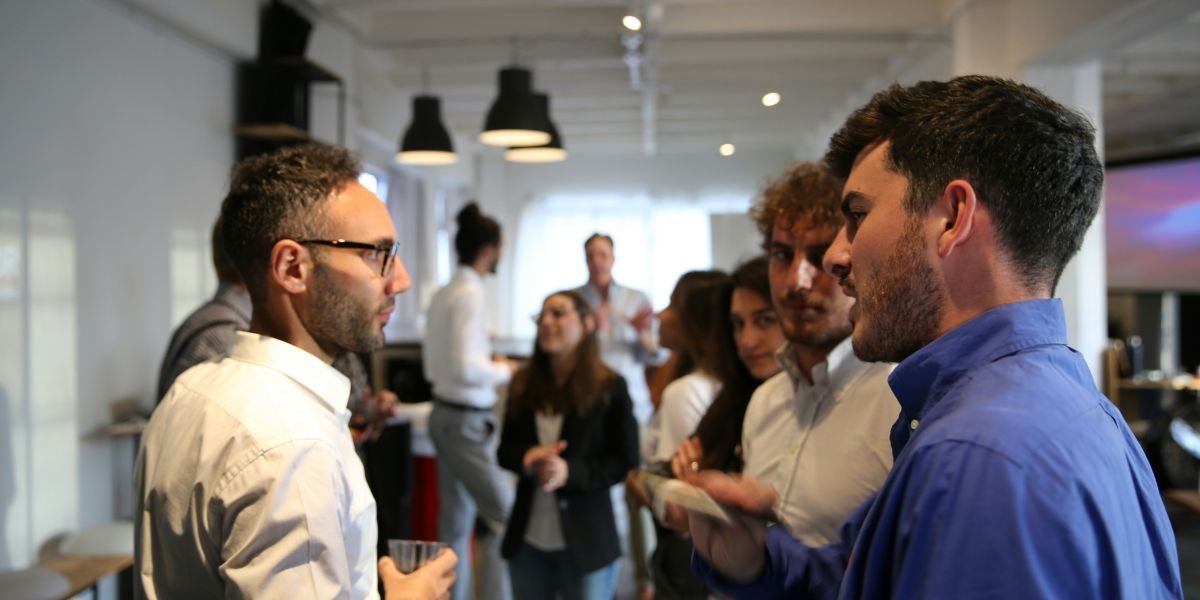
The premise of Bad Americans is deceptively simple. In the summer of 2020, a reclusive philanthropist named Olive Mixer invites twelve strangers to his estate in the Hamptons for an unusual experiment in community. Isolated from the chaos outside, the guests come together to eat, debate, argue, fall in and out of love—and each night, one of them tells a story about life during the pandemic.
Those stories form the core of the novel. Each stands on its own yet contributes to a greater whole, weaving together themes of isolation, privilege, fear, and empathy. There are tales of nurses and patients, soldiers and socialites, workers and dreamers—all trying to make sense of a world suddenly stripped bare. The frame narrative, with its mock-Reality-TV structure, heightens the contrast between the luxury of the setting and the brutal reality of the stories themselves.
Desai wanted the frame to feel distinct, almost cinematic, to show how people escaped into a fantasy milieu while chaos raged outside. “I didn’t want it to have the crafted feel of the stories,” he explains. “I wanted it to feel a little unkept, slightly screwball comedy-like, bloated with excess yet isolated from the reality of external life.”
Reinventing the Way Stories Are Told
Desai’s innovation extends beyond the page. Refusing to be bound by traditional publishing models, he chose to release each story as a standalone eBook in a serialized format, one per month. These pieces, available on Kindle Short Reads, serve as individual literary
experiences while building anticipation for the full Bad Americans novel.
“I realized the short stories were excellent on their own,” he says. “Most are long—novelettes or novellas—so they weren’t ideal for magazines. But released monthly, like singles from an album, they could reach readers directly and build momentum.”
The strategy has paid off. Readers have embraced the stories for their emotional intensity and for how they illuminate different corners of the American experience. Far from fragmenting the work, serialization has created a conversation—an ongoing exchange between author and audience that mirrors the collective introspection the book itself demands.
A Vision of America, Unflinching and Human
At its heart, Bad Americans asks a deceptively simple question: What makes someone a bad American? The answers, of course, are as complex as the country itself. Each story becomes a mirror, reflecting not villains or heroes, but flawed people grappling with uncertainty, fear, and hope.
“The human experience is diverse,” Desai says, “but it still retains a core truth—that we’re all flawed, we’re all living on borrowed time, and yet we can make the most of it and do remarkable things. We can all care about each other.”
That belief—tempered by irony and compassion—is what gives Bad Americans its power. Desai does not moralize or preach; he observes. He shows us the America we live in now: fractured, weary, yet still capable of empathy.
In doing so, Tejas Desai joins a small but vital lineage of writers who use fiction as both a mirror and a challenge. Bad Americans is more than a pandemic novel—it’s a moral reckoning, a document of survival, and a daring redefinition of how stories can be told in a time when truth itself feels under siege.
Find Bad Americans: Part I is now available on Amazon and other major book platforms. Bad Americans: Part II is scheduled to be released on April 15, 2026.