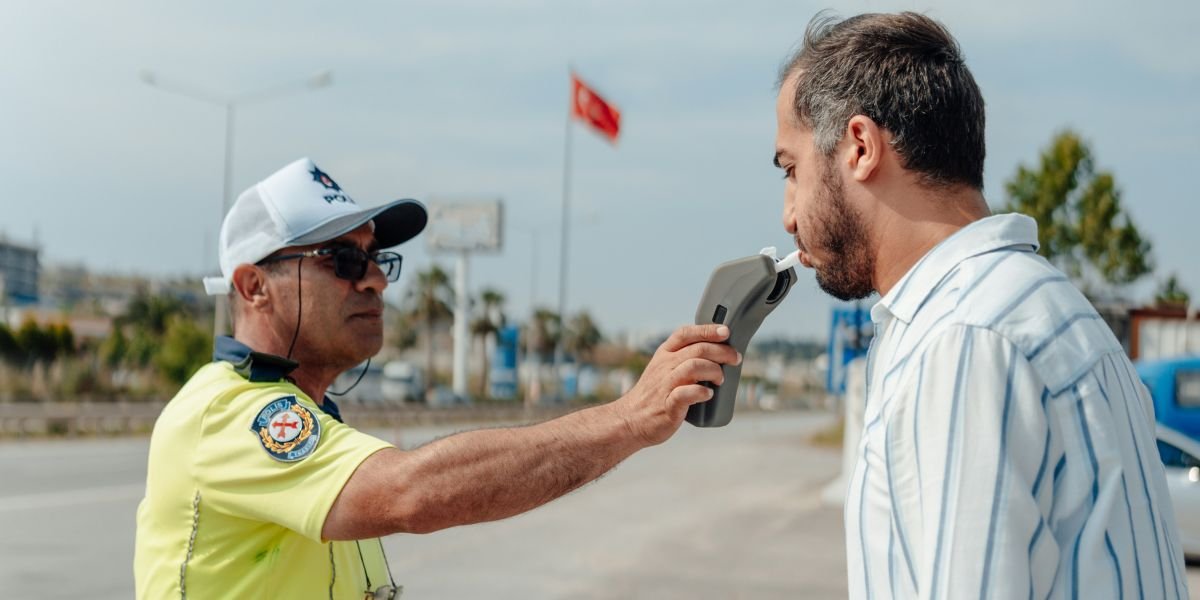


A DUI charge can seem straightforward at first glance–an officer suspected impairment and made an arrest. But the outcome often depends on the sequence of decisions made during the traffic stop and investigation.
Police are expected to follow legal standards and established procedures during DUI investigations. Those standards are tied to basic rights and to the accuracy of the evidence. If an officer skips steps, documents the situation poorly, or performs testing in a manner that does not conform to accepted methods, it can raise questions about whether the evidence accurately tells the story. A DUI defense attorney can help in these situations by reviewing the traffic stop, reports, video footage, and testing records to identify potential procedural issues.
What Is Reasonable Suspicion?
Reasonable suspicion is the legal threshold police generally need to stop a driver. It is more than a vague hunch, but it is less than proof. In simple terms, an officer must be able to point to specific facts that suggest a traffic violation or other wrongdoing may be happening.
In DUI cases, reasonable suspicion often comes from observed driving behavior. Examples can include weaving within a lane, drifting over lane lines, driving at inconsistent speeds, running a stop sign, or other traffic infractions. In some cases, reasonable suspicion can come from information provided by a caller, such as a report of a potentially impaired driver. Even then, courts often look closely at how detailed the report was and whether the officer observed anything that supported it.
Reasonable suspicion matters because it helps define whether the stop itself was lawful. If the stop is not legally justified, later evidence gathered after the stop can become a major issue in the case.
Probable Cause in DUI Arrests
Probable cause is a higher legal standard than reasonable suspicion. It is generally required for an arrest. It means there is a fair probability, based on the facts, that a person committed an offense. In DUI cases, probable cause is often based on what the officer observes during the traffic stop.
Officers may describe clues such as the odor of alcohol, bloodshot eyes, slurred speech, confusion, slow responses, open containers, or admissions about drinking. They may also rely on their assessment of a driver’s performance on field sobriety tests, such as the walk-and-turn, one-leg stand, or horizontal gaze nystagmus (an eye movement test). Portable breath test results, where permitted and used, can also play a role in an officer’s decision-making.
Probable cause is not the same as guilt beyond a reasonable doubt. It is a snapshot based on what was known at the time. Still, it matters because an arrest made without probable cause can affect what evidence may be gathered later, including results of chemical testing.
When Can Evidence Be Suppressed in DUI Cases?
“Suppressed” evidence is evidence a court decides cannot be used, usually because it was obtained in violation of the law. Suppression is a complex topic, and the exact standards can vary by state and by the specific facts involved in a case. Still, the general idea is consistent. If police obtain evidence through an unlawful stop, search, seizure, or interrogation, that evidence may be challenged.
In DUI cases, suppression issues can come up in several common ways. One is the legality of the initial stop. Another is whether the officer extended the stop beyond what was necessary without legal justification. For example, a routine traffic stop may become a DUI investigation, but the court may examine whether the officer had a lawful basis for the shift and whether the timeline was reasonable.
Suppression can also involve searches. Sometimes, an officer may search a vehicle, order a person out of a car, or conduct pat-downs or inventory searches after towing. Each type of search has its own rules, and small factual details can matter.
Chemical testing can raise suppression-related questions as well. Blood draws, in particular, may involve constitutional issues depending on whether consent was valid, whether a warrant was required, and whether the proper procedures were followed.
When Do Police Need to Read Miranda Rights?
Miranda rights are tied to custodial interrogation. That means two things are typically present: the person is “in custody” (not free to leave in a meaningful way), and the police are asking questions designed to elicit incriminating responses.
This is why Miranda rights do not automatically apply to every question asked during a traffic stop. Many roadside questions occur during a temporary detention rather than formal custody. Officers can often ask basic questions during a stop, such as requesting a person’s license and insurance or asking where a driver is coming from, without requiring Miranda warnings.
Miranda rights tend to become more relevant after an arrest or when a situation becomes the functional equivalent of an arrest, especially if the officer starts asking accusatory questions. If a person is in custody and is questioned without Miranda warnings, statements made in response may be challenged and potentially excluded during a criminal case. Importantly, Miranda issues usually affect statements, not physical evidence. That distinction can matter in DUI cases where the prosecution relies on both a person’s words and test results.
How Improper Testing Can Affect DUI Cases
Field sobriety tests are designed to be administered in a standardized way. Uneven ground, poor lighting, bad weather, heavy traffic noise, unsuitable footwear, age-related balance limitations, injuries, neurological conditions, or anxiety can all influence a person’s performance. Officers sometimes give unclear instructions or fail to demonstrate the test properly. Video footage, if available, can be important because it shows what the test conditions looked like and how the officer explained the tasks.
Breath testing can raise different issues. Instruments generally need regular calibration and maintenance. Operators may need specific training and certifications, depending on the jurisdiction. There may be an observation period requirement before a breath test to reduce the risk of mouth alcohol affecting the result. Timing can matter as well, because blood alcohol concentration can rise or fall over time.
Blood testing involves its own chain of custody and lab procedures. The collection process, storage temperature, labeling, and documentation must be handled with extreme care. Issues with contamination, fermentation, or sample integrity can raise questions about the results. None of these issues will automatically invalidate a test result, but they can become relevant when assessing whether the evidence should be trusted.
Disclaimer: The information provided in this article is for general informational purposes only and is not intended as legal advice. For specific legal concerns, it is important to consult with a qualified attorney who can provide guidance based on your unique situation. Laws and legal procedures may vary by jurisdiction, and individual circumstances can affect the outcome of any case.