The 56th Annual Parade Filled Market Street on Sunday While World Cup and Pride Programming Overlapped Across a City Managing Two Global Events Simultaneously
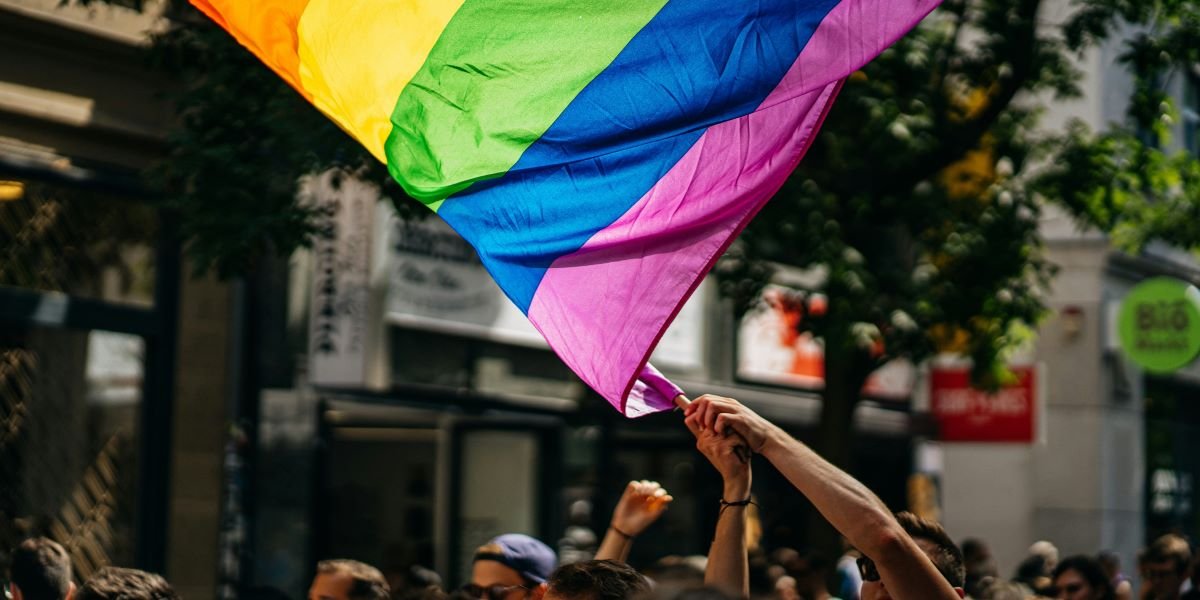
San Francisco Pride drew an estimated one million people across a two-day celebration on June 27 and 28, filling Market Street with more than 300 parade contingents and transforming Civic Center Plaza into a free, six-stage festival under the theme “Resistance in Action” — a phrase organizers chose as a direct response to federal policies targeting LGBTQ+ communities, particularly transgender and nonbinary Americans. The 56th annual celebration unfolded during a week when San Francisco was simultaneously hosting World Cup fan programming, creating an unusual overlap that pushed drag performances into halftime viewing parties and brought international soccer tourists into the Castro District alongside Pride-weekend crowds.
The Parade as Political Demonstration
The Dykes on Bikes contingent led the parade from the intersection of Market and Beale Streets at 10:30 a.m. Sunday, followed by an estimated 35,000 to 40,000 marchers representing advocacy organizations, community groups, nonprofits, local businesses, and performance troupes. The route traveled west along Market Street to Eighth Street, ending at Civic Center Plaza. Grand marshals for the 2026 parade included drag icons Peaches Christ and Honey Mahogany, alongside community leaders Marcel Pardo Ariza, John Weber, Imani Rupert-Gordon, and Joanne Davis — the latter of whom founded the Louise Lawrence Transgender Archive in Vallejo.
Davis told KQED that the “Resistance in Action” theme carries a direct message: “You can’t just stay at home during this crucial period of threat and erasure.” Rev. Megan Rohrer, the first openly transgender bishop in the U.S. Lutheran Church, marched alongside Davis and framed the parade’s scale as inseparable from its politics. “The more people are angry on the news or in legislation, the more important it is to celebrate joy in every form,” Rohrer told KQED.
The parade drew Bay Area elected officials in force. House Speaker Emerita Nancy Pelosi waved a Pride flag from a convertible. State Sen. Scott Wiener, Assemblymember Matt Haney, and San Francisco Supervisor Connie Chan marched alongside community contingents. SF Pride Executive Director Suzanne Ford told the San Francisco Examiner that the theme responds specifically to federal actions including the military transgender service ban — which an appeals court has since ruled illegal — and attempts to access the medical records of transgender youth.
Three Days of Grassroots Marches Before the Parade
The Sunday parade was the culmination of a three-day sequence of grassroots marches that began Friday evening with the Trans March at Dolores Park, one of the largest transgender visibility gatherings in the world. Saturday brought the Dyke March, also originating at Dolores Park — an event that ABC7 reported drew thousands to San Francisco’s streets for the first time in six years after a pandemic-era hiatus. A new Trans Ally Rally on Saturday morning, organized by SF Pride in partnership with Indivisible SF, Dykes on Bikes, and the organizers of the People’s March, marched from Embarcadero Plaza to Civic Center in what Ford described as “a political march, no sponsors, purely a political action.”
The Friday Trans March drew sharp attention after State Sen. Wiener was chased from the event by attendees who confronted him over policy disagreements. Wiener responded Saturday by telling KQED that the incident “does not represent a majority view of the attendees at the Trans March” and framed the confrontation as “a symptom of an illness in our democracy right now.”
The Civic Center Celebration Ran Free and Without Tickets
The Pride Celebration at Civic Center Plaza operated Saturday and Sunday from 11 a.m. to 6 p.m. with six stages, 250-plus exhibitors, and performances headlined by Aly & AJ and Kamaiyah. Community-curated hubs included stages dedicated to Black excellence, Indigenous Two-Spirit traditions, Latin culture, and leather and kink communities under the Root of Pride activation. A VIP party at the Asian Art Museum on Sunday featured panels from the AIDS Memorial Quilt alongside Nina Katz’s Larger Than Life portrait series.
San Francisco Pride remains one of the last major Pride celebrations in the country that is completely free and open to all — no ticket, registration, or wristband required. Ford emphasized that point repeatedly in press appearances ahead of the weekend, telling KQED: “Come to San Francisco’s Civic Center for the street fair, the celebration, all the music — and it’s all free.” The organization funded the celebration through sponsorships, vendor fees, merchandise, and suggested donations at the gate, though Ford acknowledged that financial challenges from the previous year — when major corporate sponsors pulled back — required more conservative budgeting and increased reliance on individual donors and LGBTQ+-owned local businesses.
World Cup and Pride Programming Converge
The overlap between Pride weekend and the ongoing FIFA World Cup produced moments that reflected San Francisco’s dual identity as a global sports host and an LGBTQ+ hub. On Thursday, June 25, SF Drag Laureate Per Sia hosted a Pride x World Cup watch party in Jessie Square, where drag performances filled halftime breaks and fans painted national and Pride flags on their cheeks simultaneously. The San Francisco Bay Times described the event as featuring dual big screens broadcasting Sweden vs. Japan and USA vs. Turkey alongside DJs, trivia, and a “Fan Glam Station.”
Castro District businesses reported a visible boost from the convergence. At Hot Cookie on Castro Street, staff told NBC Bay Area they noticed an uptick in international visitors during the World Cup who extended their stays through Pride weekend. “It’s most definitely busy all throughout the week,” a staff member said. Across the street, Rossi’s Deli — approaching its 50-year anniversary in the neighborhood — said the combination of World Cup tourism and Pride foot traffic produced one of the busiest weeks the block had seen. The recently reopened Castro Theatre, which completed its renovation and returned to regular programming earlier in the spring, added another draw to the neighborhood during the overlap.
Funding Gaps and the Question of Sustainability
The celebration’s scale contrasted with the financial pressures facing LGBTQ+ organizations across San Francisco. Ford acknowledged that funding cuts to organizations like the San Francisco AIDS Foundation have strained the broader ecosystem of community services that operates year-round behind the weekend’s visibility. Supervisor Bilal Mahmood, whose district includes the Transgender District, told the San Francisco Examiner that his office was “negotiating and pushing” Mayor Daniel Lurie to restore funding to affected LGBTQ+ organizations.
The funding squeeze mirrors a national pattern. NYC Pride lost more than $750,000 in corporate sponsorship last year. Pride celebrations in Tampa and Phoenix were canceled or forced into hiatus by similar shortfalls. San Francisco’s ability to sustain a free, million-person celebration without gating or ticketing depends on a funding model that is under increasing strain — a tension that the “Resistance in Action” theme, with its emphasis on community self-reliance over corporate allyship, addressed directly.
The weekend closed Sunday night with a rainbow laser light show illuminating the San Francisco skyline — 49 beams of light, one for each square mile of the city, projected from Twin Peaks in a display that ABC7 described as carrying “a message of hope in the fight for equality.”