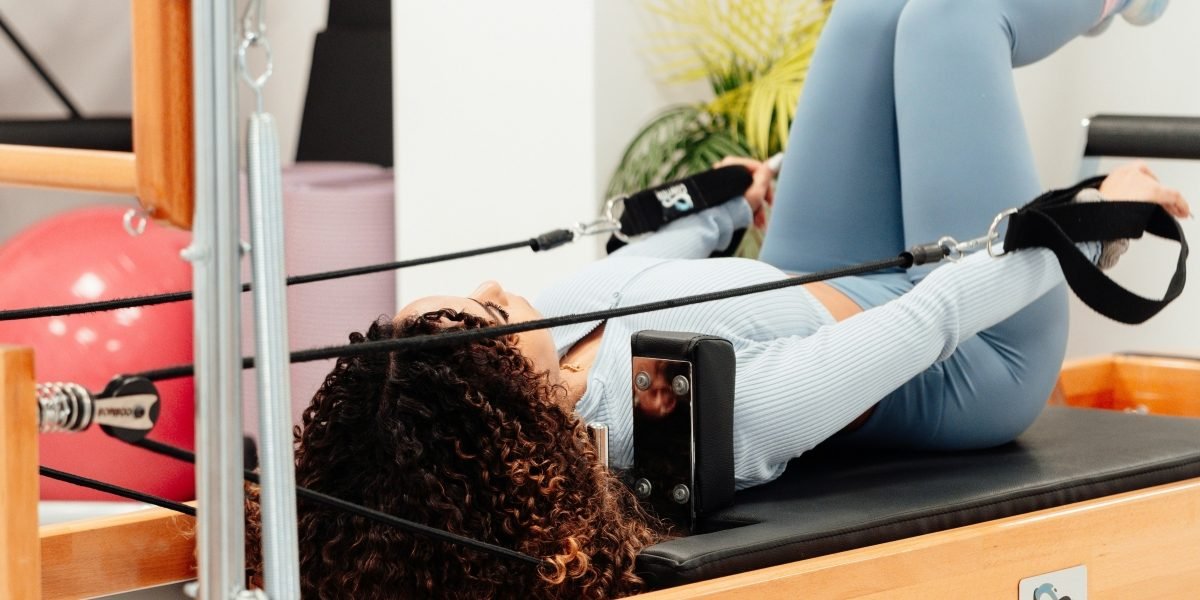

The clients walking into LA Maison Pilates EMS in Beverly Hills these days do not always fit the usual profile of a boutique fitness studio. Alongside the athletes and busy professionals are women in their fifties navigating menopause, patients on GLP-1 medications trying to hold on to muscle while the weight comes off, and adults who have been told by their doctors to start strength training for bone density but have no idea where to begin.
According to Conrad Sanchez, who co-founded the studio with Sarah Nicoli, that shift is the point. Sanchez, who holds a master’s degree in kinesiology and has trained clients and EMS instructors internationally, built the studio’s programming around the people who need strength training most but are least served by conventional gyms. “We want people to exercise smarter, not harder,” he says. “EMS meets people where they are, whether they’re recovering, rebuilding, or just starting.”
EMS, short for electro-muscle stimulation, uses controlled low-frequency electrical impulses delivered through a training suit to activate muscle fibers directly, including the deep fibers that voluntary movement recruits far less efficiently. A supervised 20-minute session can engage up to 90 percent of the body’s muscle groups at once while placing minimal strain on joints and connective tissue. That combination of intensity and low impact is what has made the technology relevant to people that high-impact training tends to exclude.
The timing matters. As GLP-1 medications like Ozempic and Wegovy reshape weight loss, physicians have grown more vocal about a consequence of rapid weight reduction: the body sheds lean muscle along with fat. The standard advice is resistance training, but many patients adjusting to the medication find intense workouts hard to sustain. Sanchez says a growing share of the studio’s inquiries now come from people in exactly that situation, looking for a way to preserve muscle without grinding through high-volume gym sessions.
A similar logic applies to the women who arrive during perimenopause and menopause, when declining estrogen accelerates muscle loss and familiar workouts stop delivering, and to clients managing osteopenia, where clinical guidance calls for the kind of resistance exercise many people find intimidating or physically risky. In each case, the appeal is the same. EMS generates the muscular tension the body needs, whether to maintain lean mass or to stimulate the loading that supports bone health, without heavy lifting or impact, and the intensity can be calibrated session by session to a client’s current condition.
Sanchez has made this argument beyond his own studio. In interviews on the state of the EMS industry, he has pointed to longevity and rehabilitation, rather than elite performance, as the category’s largest untapped opportunity, noting that the people who stand to benefit most from the technology are often the ones its marketing overlooks.
LA Maison Pilates EMS offers private and semi-private sessions in an intimate setting in the heart of Beverly Hills, with every program tailored to a client’s health history, goals, and physical needs. It is a quieter model than most of what the city’s fitness scene produces, and that may be why it is landing. The clients the studio is attracting are not chasing a trend. They are following their doctors’ advice and looking for a way to act on it that fits their bodies.
More information is available at lamaisonpilatesems.com.