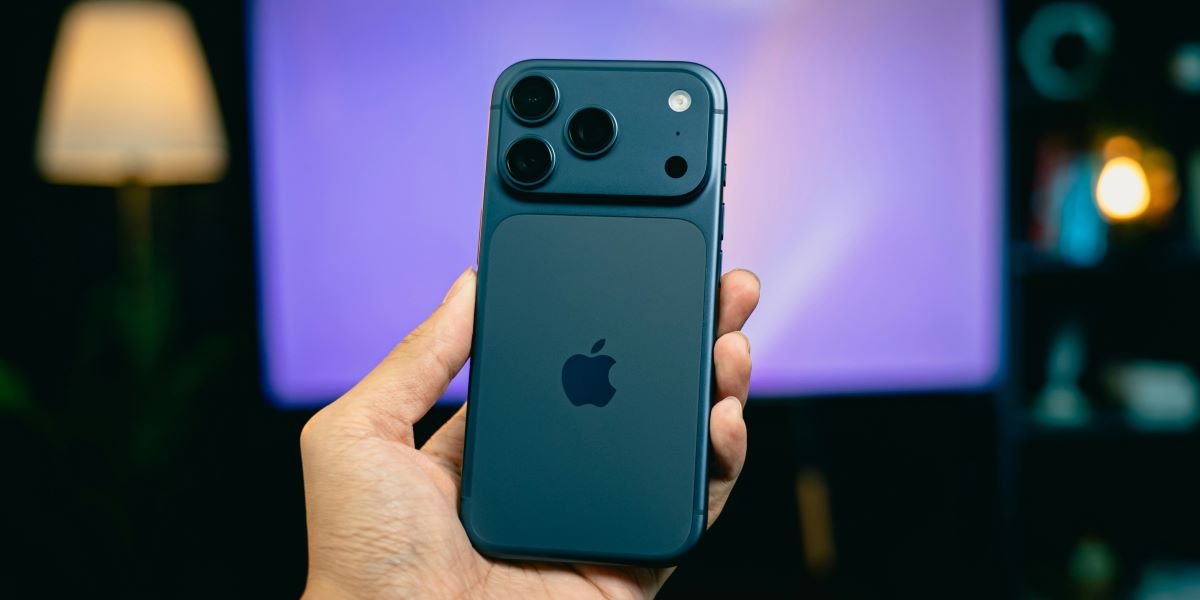

Apple confirmed on August 26 that its next product event will take place September 9 at Apple Park in Cupertino, where the company will unveil the iPhone 18 Pro, iPhone 18 Pro Max, and its first foldable device, expected to carry the iPhone Ultra name. The announcement puts Apple’s Silicon Valley headquarters at the center of what could be the company’s most significant product launch since the iPhone X in 2017, with a foldable iPhone projected to start near $1,999 and a split launch cycle that delays standard models until spring 2027.
Key Takeaways
- Apple’s September 9 event at Apple Park in Cupertino will showcase three premium devices: the iPhone 18 Pro, iPhone 18 Pro Max, and the company’s first foldable iPhone, widely expected to be called iPhone Ultra.
- The foldable iPhone features a book-style design with a 5.5-inch outer display, a 7.8-inch inner display, a titanium frame, and a projected starting price between $1,999 and $2,500.
- All three devices run on the A20 Pro chip built on TSMC’s 2-nanometer process, delivering up to 18% faster performance and 30% improved power efficiency over the A19 Pro.
- Apple has raised its foldable production target to 10 million units for 2026 and booked components for approximately 80 million new iPhones in the second half of the year.
- For the first time in the company’s history, Apple is splitting its annual iPhone launch: the standard iPhone 18, iPhone 18e, and iPhone Air 2 are delayed to spring 2027.
- Pre-orders are expected to begin September 12 with retail availability from September 18.
Apple Park Hosts the Company’s Highest-Stakes Launch in Nearly a Decade
Apple Senior Vice President Greg Joswiak announced the event on social media on August 26, using the tagline “Surprise and shine” alongside an invitation featuring a glowing Apple logo. The event begins at 10:00 a.m. Pacific Time, with select media invited to Apple Park, the 175-acre campus on the former HP site in Cupertino that Apple opened in 2017. A livestream will be available through Apple’s YouTube channel.
The September 9 date places the event in a week that has already drawn national attention to California’s tech sector. One day earlier, on August 26, Meta settled an $18 billion child safety lawsuit in U.S. District Court for the Northern District of California in Oakland, with California Attorney General Rob Bonta co-leading the 29-state coalition. The back-to-back events frame the final week of August and first week of September as a concentrated window for California-based tech companies navigating product launches, regulatory pressure, and global market positioning simultaneously.
For Cupertino and the broader South Bay, the iPhone launch generates direct economic activity through event logistics, media travel, and the retail surge that follows pre-orders and in-store launch day traffic at Apple’s Cupertino flagship and its other California retail locations. Apple operates more than 50 retail stores across California, and the company’s headquarters employs thousands of workers in Santa Clara County alone.
The Foldable iPhone Ultra Represents Apple’s Entry Into a Category It Has Watched From Cupertino
The foldable iPhone is the centerpiece of the September event. Multiple outlets reporting on supply chain sources and analyst briefings have described the device as a book-style foldable with a 5.5-inch outer display and a 7.8-inch inner display in a roughly 4:3 aspect ratio. The design uses a titanium and aluminum frame with ultra-thin glass and a liquid metal hinge engineered to minimize the visible crease that has affected competing devices from Samsung, Huawei, and other manufacturers.
Apple reportedly chose Touch ID integrated into the power button rather than Face ID for the foldable, a decision driven by the engineering challenges of embedding the TrueDepth camera system in a folding form factor. The rear camera is a dual-lens system without a dedicated telephoto sensor. The device is expected to measure approximately 4.5 millimeters unfolded and 9 to 9.5 millimeters folded.
Price estimates have ranged from a starting point of approximately $1,999, according to earlier reporting, to configurations reaching $2,500 based on Nikkei Asia’s supply chain analysis. At either figure, the iPhone Ultra would be the most expensive iPhone Apple has ever produced and would position the company at the top of the global foldable market alongside Samsung’s Galaxy Z Fold 8. Apple’s decision to enter the foldable category after years of development reflects the company’s established pattern of allowing competitors to define a product category before entering with a device that leverages Apple’s design, software integration, and supply chain advantages.
The A20 Pro Chip Marks Apple’s First Product on TSMC’s 2-Nanometer Process
All three devices announced at the September event will run on Apple’s A20 Pro chip, manufactured by Taiwan Semiconductor Manufacturing Company on its 2-nanometer process node. The A20 Pro is expected to deliver an 18% speed improvement and a 30% power efficiency gain over the A19 Pro chip in the current iPhone 17 Pro lineup.
The 2nm transition is a milestone for both Apple and TSMC. Apple has served as the proving ground for each of TSMC’s new process generations, from the 5nm A14 Bionic through the 3nm A17 Pro and now the 2nm A20 Pro. The successful deployment of 2nm in a high-volume consumer product validates the node ahead of broader industry adoption. TSMC operates its advanced node fabrication primarily in Taiwan, though its Arizona facility is ramping production for U.S.-based chipmaking. Apple’s reliance on TSMC underscores the supply chain interdependencies that connect California’s product design capabilities to semiconductor manufacturing in East Asia.
Semiconductor analyst Tim Culpan has reported that TSMC currently holds approximately $1 billion worth of unpackaged A20 Pro processors waiting on memory chips to complete assembly. The memory bottleneck, caused by surging demand from AI data centers consuming available DRAM and NAND flash capacity, has affected even Apple’s production pipeline and contributed to what supply chain sources describe as potential constraints on initial availability.
Apple Splits Its iPhone Launch for the First Time, Concentrating Premium Devices in September
In a departure from over a decade of practice, Apple will not announce a standard-tier iPhone at the September event. The iPhone 18, a budget-oriented iPhone 18e, and the iPhone Air 2 are all delayed until approximately March 2027, marking the first time Apple has divided its annual iPhone release across two separate events in different halves of the calendar year.
The decision appears tied to supply chain management. Nikkei Asia reported that Apple has instructed suppliers to prepare for up to 85 million new iPhone orders in the second half of 2026, with approximately 70 million units allocated to the iPhone 18 Pro and Pro Max and 10 million to the foldable Ultra. Apple’s total 2026 iPhone production is projected to exceed 220 million units. IDC has separately forecast that Apple will ship close to 240 million iPhones for the full year.
By concentrating the September launch on its highest-margin products, Apple can direct scarce memory and component supply toward devices that generate the largest per-unit revenue during the holiday quarter, the company’s most important sales period. The spring launch of the standard models then provides a second revenue cycle to sustain momentum through the first half of fiscal year 2027.
For California’s retail and tech ecosystem, the split launch creates two distinct product moments that could drive foot traffic, media attention, and developer activity across both halves of the year. Apple’s California retail stores, its Cupertino-based App Store economy, and the state’s broader network of accessory manufacturers, app developers, and service providers all benefit from sustained product launch cycles.
A Global Memory Shortage Gives Apple a Competitive Edge Rooted in Supply Chain Scale
Apple’s event announcement arrives against a backdrop of global semiconductor supply constraints that have reshaped competition across the smartphone industry. The worldwide shortage of DRAM and NAND flash memory, driven by the rapid construction of AI training and inference data centers, has squeezed the component supply available for consumer electronics.
Apple’s response has been to leverage its purchasing power and long-term supplier relationships to secure allocations that smaller manufacturers cannot match. Nikkei Asia reported that Chinese smartphone makers Xiaomi, Oppo, and Vivo have each cut annual production targets below 100 million units as a direct result of the shortage. An executive at a supplier serving both Apple and its Chinese competitors described the disparity in procurement leverage as structural, with Apple’s scale placing it in a fundamentally different negotiating position.
The memory shortage has already had visible effects on Apple’s California-designed product line. Earlier in 2026, the company raised prices on MacBooks and iPads, citing increased component costs. The iPhone 18 Pro and Pro Max are also expected to carry price increases over their predecessors, though specific pricing will not be confirmed until the September 9 event. For consumers, the combination of higher prices and potential supply constraints could lead to extended wait times during the pre-order window, which is expected to open September 12 with retail availability beginning September 18.
Additional Products Expected Alongside the iPhone Lineup
Beyond the three iPhones, Apple is expected to announce additional hardware at the event. Reporting from Bloomberg’s Mark Gurman and MacRumors has pointed to an Apple Watch Series 12 with a new ceramic case option and two models of AirPods 5. Software updates including iOS 20 and other platform releases are expected to be finalized for public distribution alongside the new hardware, following development cycles that began with previews at Apple’s Worldwide Developers Conference earlier in the year.
The foldable iPhone Ultra may ship on a slightly delayed timeline compared to the Pro models. Supply chain sources have described limited early production for the foldable, suggesting the device could begin arriving in customers’ hands later in September or early October even if it is announced on September 9. The raised production target of 10 million units, up from an initial forecast of 7 to 8 million, indicates Apple is confident in its manufacturing pipeline but still working within the constraints of a tight component environment.
FAQs
When Is the Apple September 2026 Event?
The event takes place Wednesday, September 9, 2026, at 10:00 a.m. Pacific Time at Apple Park in Cupertino, California. It will be available to watch via Apple’s YouTube livestream.
What Devices Will Be Announced?
Apple is expected to announce the iPhone 18 Pro, iPhone 18 Pro Max, and its first foldable iPhone, reported as the iPhone Ultra. The standard iPhone 18, iPhone 18e, and iPhone Air 2 are delayed until spring 2027.
How Much Will the Foldable iPhone Cost?
Estimates range from a starting price of approximately $1,999 to configurations reaching $2,500 for higher-storage options. Official pricing will be confirmed at the event.
When Can Customers Pre-Order?
Pre-orders are expected to begin September 12, with retail availability starting September 18 for the iPhone 18 Pro models. The foldable iPhone Ultra may follow on a slightly later shipping timeline due to limited early production.