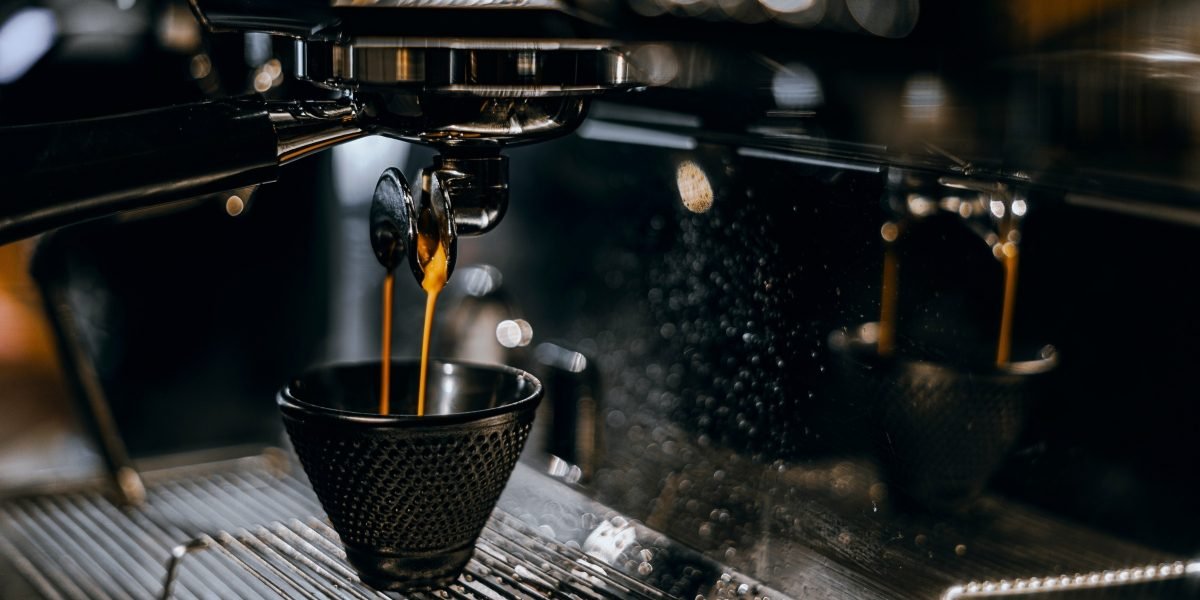

Espresso extraction was automated long ago. The jug of milk beside it is the new frontier, and companies like Thermoplan and Espresso Mio are betting that whoever masters it will shape the next decade of coffee service.
Watch a busy café at eight in the morning and the bottleneck is rarely the espresso. Shots run in under 30 seconds and, on a good machine, they run the same way every time. The queue builds somewhere else: at the steam wand, where a barista is stretching, texturing and pouring milk for the fourth flat white in a row, with an oat cappuccino and an iced latte waiting behind it.
That jug of milk is where the industry’s attention is turning. For most of the drinks sold in Britain, Europe and North America, milk is not a garnish. It is the larger share of the cup by volume, the larger share of the cost, and increasingly the part of the drink customers judge most closely.
The hardest part of the cup
Milk is difficult precisely because it is alive in a way coffee is not. Its proteins and fats change with temperature, season, herd and processing. Steam it a few degrees too hot and the sweetness collapses; aerate it a moment too long and the foam turns stiff and dry. A skilled barista corrects for all of this by ear and by feel. That skill takes months to build, and it walks out of the door whenever a member of staff does.
Four pressures have pushed the problem up the boardroom agenda.
Labor. Hospitality operators across Europe and the US continue to report difficulty hiring and keeping trained baristas. Every hour spent teaching someone to steam milk is an hour of cost, and every inconsistent drink is a reason for a customer not to return.
The plant-based menu. Oat, soy, almond and coconut drinks now sit on almost every menu, and each behaves differently under steam. Protein content, added oils and stabilisers all change how a drink foams. A system that can hold a separate profile for each milk, and switch between them without cross-contamination, solves a problem most humans handle by guesswork.
The cold turn. Iced lattes, cold foam and chilled milk drinks have grown from a summer add-on to a year-round category, particularly among younger customers. Cold foam in particular is hard to make consistently by hand and easy to make consistently by machine.
Hygiene. Milk is the part of a coffee machine that can make people ill. Automated cleaning cycles, refrigerated milk lines and logged rinse records turn food safety from a closing-time chore into a documented process, which matters to any operator with more than a handful of sites.
Thermoplan: Swiss precision meets the milk jug
Few companies have thought about this longer than Thermoplan. Founded in 1974 in Weggis, on the shores of Lake Lucerne, the family-owned Swiss manufacturer began with milk-foaming equipment before it built complete coffee machines. It is best known to the wider world as the engineering house behind the machines in thousands of Starbucks stores.
Its Black&White4 platform shows where the thinking has gone. The espresso side is what you would expect from a premium fully automatic machine. The more telling detail is beside it: a steam wand that drops into a standard stainless jug and textures milk automatically, so the drink still looks and feels hand-made while the variable of skill is removed.
That design choice says a great deal. Rather than hiding milk inside the machine, Thermoplan keeps the ritual of the pitcher visible to the customer and hands the precision to software. Temperature, air intake and texture become settings rather than judgement calls, and they can be repeated across one café or a thousand.
The broader point for the industry is that milk is no longer an accessory module bolted onto an espresso machine. In Thermoplan’s approach it is treated as a core system in its own right, with its own refrigeration, cleaning and control logic.
Espresso Mio and the view from 1,000
If Thermoplan represents the engineering case, Espresso Mio represents the operational one. At that scale, the economics of milk become impossible to ignore. A few seconds saved per drink, multiplied across every cup in every location, adds up to hours of labour each day. A single texture standard means a flat white in one site tastes like a flat white in the next. And every machine that cleans its own milk system is one less risk an operator has to manage by hand.
It is the operators running fleets of machines, rather than single cafés, who feel these gains first. That is why the conversation about milk automation is increasingly led by people who think in hundreds and thousands of units, not one counter at a time.
What it means for the barista
None of this signals the end of the barista, and the more thoughtful manufacturers are careful to say so. What changes is the job. Freed from the repetitive precision work of steaming jug after jug, staff can spend more time on service, on latte art for those who want it, and on the conversations that keep a café full.
The specialty end of the market will keep its hand-steamed milk, and should. But for hotels, offices, convenience retail, travel hubs and high-volume chains, the logic is now hard to argue with. Espresso taught the industry that consistency can be engineered. Milk is the half of the cup it is only now learning to master.
The next time you watch a jug spin quietly under an automated wand, it is worth remembering how much of your morning coffee depends on what happens there. The industry certainly has.