
A mall kiosk and a stadium full of custom balloons look unrelated. They are not. But the sentence usually used to explain the difference, that a small business simply grew into a bigger one, skips almost everything that actually happened. This is that story, told through the one job that actually marked the shift.
From Balloon Animals to a Mall Kiosk
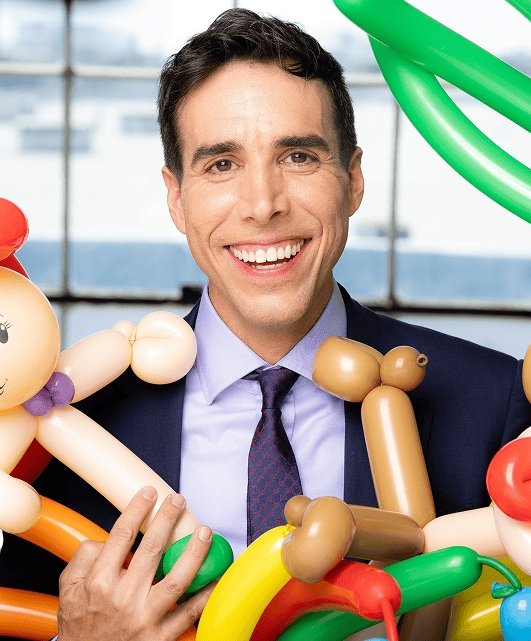
Sean Edwards became a balloon artist the ordinary way, twisting balloon animals for tips at age 12. The hobby stuck. He carried it through his training at the California Institute of the Arts. And years later, it followed him into a small kiosk at the Americana at Brand in Glendale, where he sold balloons for a few dollars apiece. None of it looked anything like corporate balloon decor for a Fortune 500 brand. Most days meant standing at a cart for hours, making one balloon animal at a time, with no guarantee anyone would stop. And there was no design software involved, no proposal deck, just a customer standing in front of him and a balloon in his hand. The training at CalArts sharpened his eye for design later, but the fundamentals, patience, precision, working within someone else’s timeline, were already in place.
What It Actually Took to Grow Past the Kiosk
Growing past a one-person kiosk took more than good balloon work. So Edwards spent the next stretch of years building the parts of the business nobody sees: booking systems, sourcing relationships, and a small team he could actually rely on. Business researchers who study small-company growth describe this exact shift as moving from doing everything personally to guiding a team through clear processes and systems. That was the real work. Which means the growth was never really about the balloons themselves. The earliest hires were people who could be trusted with a client’s event without Edwards standing over their shoulder. That trust had to be built deliberately, through training and repetition, not assumed. By the time the kiosk closed, the studio had grown to a five-person team, each with a defined role.
The Job That Showed What the Business Had Become
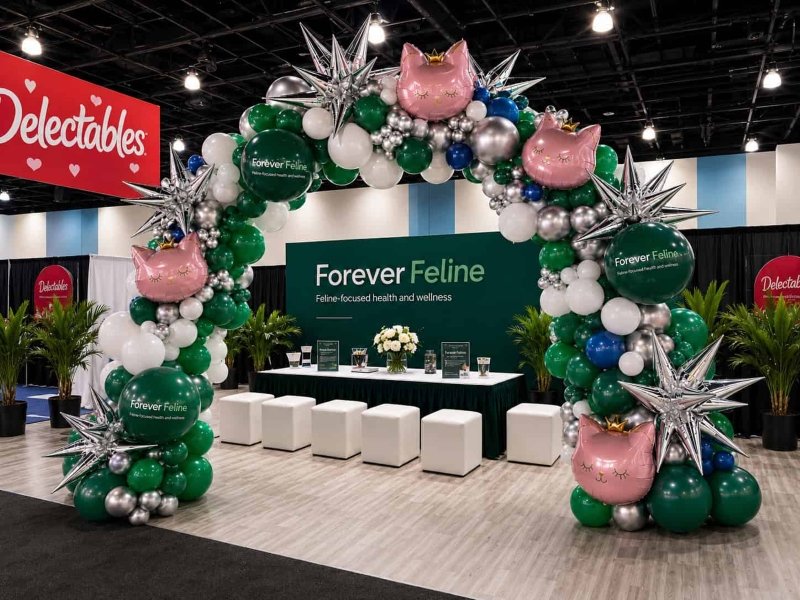
One job marked the turning point more clearly than any other. When Nike needed a fast turnaround for a Dodgers World Series championship parade, the request was for three hundred custom printed balloons, built and ready in under twenty-four hours. Sean Edwards, Founder of The Balloon Guy, remembers the deadline clearly. “We didn’t have room to second-guess anything on that job,” Edwards said. “Every piece had to be right the first time, and that told me the business could actually hold up under that kind of pressure.” The Balloon Guy, the Los Angeles studio Edwards built from that same mall kiosk, delivered on that timeline. Every balloon had to match exact team colors and print specifications, with zero room for a reprint. In other words, there was no second attempt if something went wrong. The team did not sleep. It showed what custom balloon installations look like under genuine deadline pressure, not a hypothetical one.
What Working With Major Brands Actually Requires
Event design for corporate clients runs on a different clock than a backyard birthday party. A brand doesn’t just want balloons that look good in photos; it wants a partner who can be trusted to show up exactly as promised, every time, without anyone having to check. Edwards puts it simply. “Once a brand is involved, it isn’t just our name on the line anymore,” Edwards said. “Everything we do becomes part of how they look to their own audience, so there’s no room for guessing.” Event professionals who study vendor reliability describe the same dynamic: every outside provider brought into an event becomes, in the eyes of the people attending, an extension of your business. That pressure is real. It shows up in scheduling, in backup planning, and in how quickly a team can adjust when a venue changes something at the last minute. Contracts became more detailed, timelines got built with buffer room instead of best-case assumptions, and every job now included a backup plan the client never has to think about. Of course, none of that existed at the kiosk. A missed detail on a backyard party is forgettable; a missed detail on a brand activation ends up in someone else’s photos and someone else’s report.
Why the Kiosk Still Shapes How the Business Operates Today
The distance between a mall kiosk and a Fortune 500 activation was never one big leap. Because the real change happened in dozens of smaller ones: new systems, a bigger team, and a consistency that holds up whether the client is a family or a global brand. The instinct that made the kiosk work, close attention and direct accountability, never went away. It just had to scale. A five-person studio still checks its own work the way one person once had to, because that discipline is what got it here in the first place. Edwards has spent more than fifteen years refining exactly how that scale works, one event at a time. The kiosk is gone now, but the habits it built never closed up shop.