
By: Sophia Caldwell
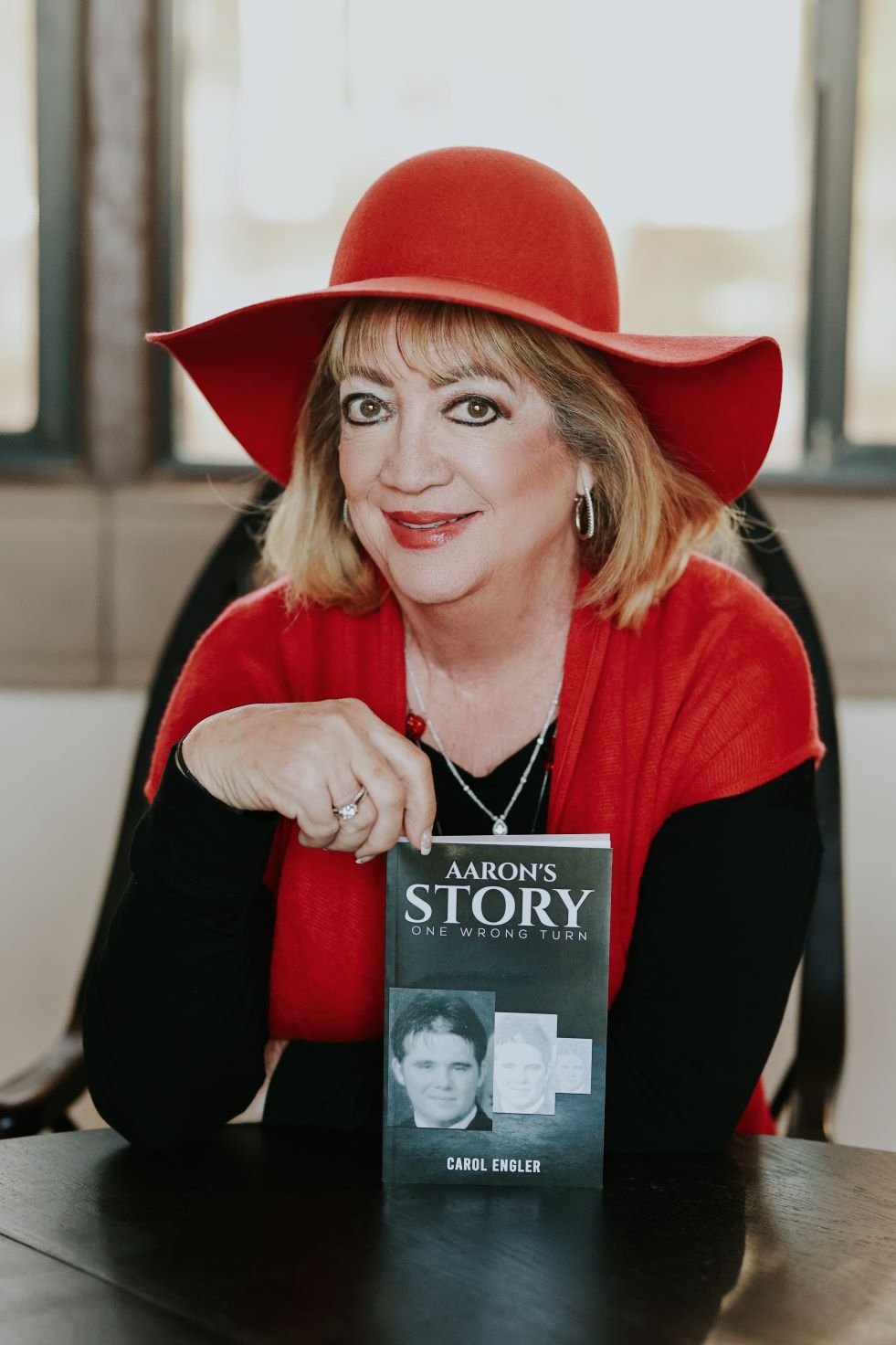
In honor of Women’s History Month, we celebrate the women who inspire, advocate, and break barriers in their respective fields. Among them is Carol Engler, an author, journalist, and passionate advocate for neurodivergent individuals and their families. With a unique blend of humor, honesty, and heartfelt storytelling, Engler has been contributing to changing the conversation around mental health and neurological disorders—one page at a time.
Her deeply personal book, Aaron’s Story: One Wrong Turn, published by Austin Macauley Publishers, is more than just a memoir. It is a raw, emotional, and, at times, humorous account of her journey raising her late son, Aaron, who lived with Tourette Syndrome, ADHD, OCD, and Asperger’s Syndrome. Through her writing, Engler aims to provide a voice for parents navigating a world that often struggles to fully understand the complexity of neurodiversity.
Turning Pain into Purpose
Engler’s book title, Aaron’s Story: One Wrong Turn, serves as a powerful metaphor—referencing both the tragic automobile accident that took Aaron’s life in 2012 and the unforeseen consequences of life’s decisions. Through her candid and compassionate storytelling, she paints a vivid picture of the challenges, triumphs, and love that define her relationship with Aaron. She openly shares the emotional highs and lows of raising a child with complex neurological conditions while offering readers a sense of hope, humor, and community.
Describing herself as the “Erma Bombeck of mental health,” Engler often infuses humor into even the darkest moments, suggesting that laughter can be a survival tool for parents facing unimaginable challenges. Aaron’s Story has resonated deeply with readers, earning praise for its ability to make them both laugh and cry, a testament to Engler’s powerful and relatable storytelling.
A Champion for Families
Beyond her writing, Engler has dedicated her life to advocacy, working closely with Tourette Syndrome support groups, mental health organizations, and families facing similar challenges. With years of research, seminars, and firsthand experience, she now offers guidance to parents who, like her, strive to support their children.
“I want families to know they are not alone on this journey,” Engler shares. “There can be light at the end of the tunnel, and we must never give up on our children. Parents are their child’s greatest advocate, often against a world that doesn’t fully understand their struggles.”
Engler’s work continues to challenge stigmas and encourage much-needed conversations about neurodiversity, mental health, and the power of perseverance. Her mission is clear: to educate, uplift, and remind families that they are not alone in their struggles.
To delve deeper into Carol Engler’s journey, advocacy work, and insights on neurodiversity, continue reading as we sit down with her for an exclusive interview. She shares her thoughts on the importance of resilience, the role of humor in healing, and how parents can support and empower their neurodivergent children in today’s world.
Read the Full Interview Below
Aaron’s Story: One Wrong Turn is a deeply personal book. What inspired you to share your journey with the world?
After having been through so much pain, stress, and angst—with a never-ending love for my son, Aaron, for 25 long years—I realized how incredibly helpful all the people were in my world … all the mental health professionals, Aaron’s school teachers and special education counselors, his few but fiercely loyal friends, my twin sister, the members of the Arizona Tourette Syndrome Assn. – it literally took an entire village (and then some) to help him survive every single day.
I want other parents to know that there can be help out there and that it’s OK to reach out for it. I thought I was Super Mom and could do it all on my own – but I was wrong!
How did writing this book help you process your experiences as a mother and advocate?
It brought more clarity and insight into the need to write this important book to reach out to the families of 13.9% of the world’s population. According to the World Health Organization, 1 in 8 people globally live with mental health issues. It seems clear that those needs are not being met, and I am on the path to helping address that!
What do you hope readers take away from Aaron’s Story—especially parents navigating similar challenges?
There can be light at the end of the tunnel, and it is NOT a train!
You describe yourself as the “Erma Bombeck of mental health.” How has humor played a role in your journey, both in parenting and in storytelling?
I learned early on in my newspaper career that humor can be the key to getting people to open up to you. During my hundreds of interviews over the years, I would strive to put the people I was interviewing at ease with jokes or funny comments. This went a very long way when dealing with the non-stop stress that I faced every minute of every day while caring for Aaron.
What was the most challenging part of writing Aaron’s Story?
The most challenging part was finding the time for peace and quiet to think! I still had a very busy work and social schedule and could only write the book when I was on an airplane or a cruise ship. While my husband and family were enjoying the adventures offered by new countries, I was holed up in my stateroom, furiously typing out this important story.
Also, reliving the pain and memories that I had suppressed for so long was difficult—it all came bubbling up to the surface with a vengeance!
And what was the most rewarding?
My first rewarding moment was securing an international publisher the first time I submitted my manuscript to several publishing houses. And still ongoing today is hearing back from readers who tell me they laughed and cried at the same time while reading my book.
As we celebrate Women’s History Month, what message do you have for other women who are caregivers, advocates, and changemakers in their families and communities?
NEVER GIVE UP! If the answer is no, then you’re just not talking to the right person! Follow your instinct and your heart – they rarely lead you wrong.
You’ve spent years educating yourself and working with experts on neurological and mental health disorders. What advice do you have for mothers and caregivers who feel unheard or overwhelmed?
Stop trying to do it all alone! Find friends and family members who support your efforts, ideas, and your heart. Make them a part of your everyday world!
Women have historically played a vital role in advocating for children with special needs. How do you see your work contributing to this legacy?
I need to get the word out to the mental health community, the families, and the world about this book AND the screenplay we just finished writing. Mental health is still often a “taboo” subject, and if we bring it to light with humor and compassion – we can achieve so much more!
What systemic changes do you think are still needed to better support families dealing with neurological and mental health disorders?
OMG – where do I start? Education and funding are the keys that are still largely missing today … even after all these years! The majority of social issues affecting our every day lives may stem from a lack of support for mental health services. Funds have been cut and are practically nonexistent, and the lack of psychiatrists and mental health practitioners is just one part of the problem.
Instead of being reactive to our country’s constant horrific shootings that are often linked to mental health issues, we need to be more proactive. We are reaping what we sowed, going all the way back to the lack of mental health federal funding since the Reagan administration.
If you could go back and give yourself one piece of advice as a young mother, what would it be?
Stop being so hard on yourself! Stop blaming yourself for something you couldn’t help or initially understand. When God gives you lemons – make a lemon meringue pie!
How can people best support the neurodivergent community and the families who care for them?
TRY TO UNDERSTAND THAT THE ABSOLUTE WORST DAY OF YOUR LIFE might be similar to what these families deal with every single day! It is never-ending. These families and the neurodivergent community need your understanding and compassion – not your criticism.
My mom always blamed my son’s issues and problems on my inadequacy as a “good mother” because I worked outside the home. I spent a tremendous amount of energy defending myself when she should have been on board as part of my “team.”
Finally, if Aaron were here today, what do you think he would say about your book and your advocacy work?
I like to think that he is proud of what I have done in the past and will continue to do in the future in his memory. I firmly believe he knows all that I have done and still want to do and is smiling from ear to ear in heaven!
For media inquiries and publicity requests for Carol Engler, contact publicist Desirae L. Benson. To purchase a copy of Carol’s book, Aaron’s Story: One Wrong Turn, go to this Amazon page.
Published by Drake M.