
The numbers from this spring’s Sierra Nevada snow surveys tell a stark story. California is entering its dry season with a snowpack that has nearly vanished — and the outlook for wildfire, water supply, and agricultural stability is drawing mounting concern from state agencies and climate scientists.
A Snow Season That Essentially Didn’t Finish
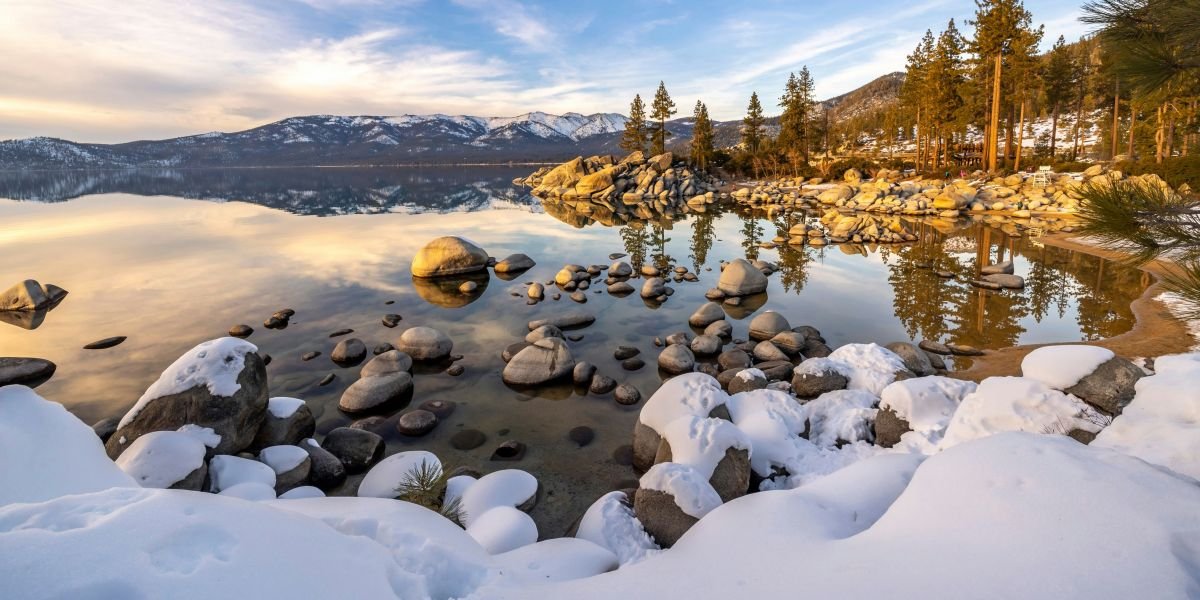
The California Department of Water Resources conducted its critical April 1 snow survey at Phillips Station south of Lake Tahoe and found no measurable snow — a stark result of how record-hot March temperatures and high-elevation rain erased the Sierra Nevada snowpack months ahead of schedule. Statewide, the snowpack measured just 18% of average as of April 1, according to the automated snow sensor network.
The results mark the second-lowest April measurement on record. The only worse reading occurred in 2015, when there was also no snow at Phillips Station. DWR expanded its monitoring efforts this year, adding 100 additional mid-month snow surveys across 18 critical watersheds to track the rapid and unusual snowmelt.
The regional picture is sharper still. Northern California’s mountains — which feed the state’s major reservoirs — recorded just 6% of normal snowpack, making the region the hardest-hit in the state. Statewide, the snowpack closed out the season at 18% of average, alarming enough; but in the north, where the Sacramento River and its tributaries originate, the snowpack was a near-total absence.
DWR Director Karla Nemeth described the unusual dynamics of this year’s conditions: “What makes this year stand out is the disconnect between precipitation and snowpack. We received near-average precipitation in many parts of the state, but much of it fell as rain instead of snow. That led to one of the lowest April snowpacks on record and one of the earliest peaks we’ve seen in decades — conditions that make forecasting runoff more complex.”
The state’s snowpack typically accounts for roughly 30% of annual water supply, acting as a frozen reservoir that releases gradually through spring and early summer. When it melts weeks ahead of schedule — as it did this year, with the statewide peak occurring around February 24 rather than April 1 — the system that California’s reservoirs, farms, and rivers depend on is fundamentally disrupted.
Reservoirs Are Full — But That Has Limits
The immediate water supply picture is not yet a crisis. DWR data shows that the state’s four largest reservoirs — Oroville, Trinity, New Melones, and Shasta — are all above their historic average levels for this time of year. State water officials say the full reservoirs reflect carryover from previous wet years and that most Californians will not face immediate supply shortages in 2026.
But the full-reservoir buffer is a short-term condition, not a structural one. Valley Water, a major supplier in Silicon Valley, has already seen its allocations from the federal Central Valley Project and the State Water Project cut as a result of the dry winter. “We see this as a warning sign,” said a Valley Water official. “This year we’ll be doing fine, but we have our eyes on next year. Next year is going to need to be a productive year to get us back to our average allocation.”
DWR Director Nemeth was candid about uncertainty: “Are we heading into hydrologic drought? The answer is, I don’t know. We could be. We’ll know with more clarity next year if this year is in fact the start of a hydrologic drought in California and throughout the West.”
CAL FIRE Forecasts Above-Normal Fire Potential Beginning in May
The wildfire forecast reflects the snowpack data directly. CAL FIRE’s current outlook for Northern California projects a steady warming and drying trend through early summer, with fire potential expected to increase from near normal in April to above normal from May through July. Lightning in July remains identified as a key wildcard that could rapidly accelerate the season’s trajectory.
Southern California faces its own set of pressures, with above-normal temperatures, below-normal precipitation, and a shallower-than-normal marine layer limiting inland moisture recovery. Drought development is considered increasingly likely across portions of Northern California over the next four months, while abnormally dry conditions are already established across the Northern and Eastern Sierra and near the Colorado River.
CAL FIRE spokesperson Battalion Chief David Acuña offered a pointed analogy for the fuel conditions building across the landscape: “Most of California is like a haystack. And if you’ve ever seen a haystack fire, they burn very intensely because there’s layers of fuel.” The abundant vegetation growth from California’s wet years in 2024 and 2025 has left hillsides and grasslands loaded with material that is now rapidly drying with no snowmelt to slow the process.
The Drought Context Is National — and Worsening
California’s snowpack crisis is not an isolated event. As of April 22, more than 61% of the contiguous U.S. is in moderate to exceptional drought — the highest level for this time of year since the Drought Monitor began tracking conditions in 2000. Two-thirds of the West is affected. NOAA’s Palmer Drought Severity Index hit its highest level for March since records began in 1895, with last month ranking as the third-driest March on record regardless of time of year.
The federal Drought.gov snow drought update described the March conditions as a “snow-eater heat wave” that caused abrupt, early, and rapid snowmelt, accelerating a snow drought that was already at record-low levels across the West. Many monitoring locations had completely melted out by early April.
The compound pressure of low snowpack arriving early and overall below-normal precipitation creates what water managers call a “double deficit” — a low total water supply that arrives months before the irrigation season begins and cannot be stored in the landscape the way a gradual snowmelt would.
What Comes Next for Communities, Farms, and Ecosystems
State water officials note that California’s large urban water districts are meaningfully better prepared for drought than in previous cycles, after decades of investment in supply diversification, new storage capacity, and improved drought contingency planning. The number of Californians without access to safe and affordable water has fallen from an estimated 1.6 million in 2019 to fewer than 600,000 today.
The vulnerabilities that remain are concentrated in the state’s agricultural sector and in rural communities. State water officials warn that should California experience another series of consecutive dry years, history shows that rural communities could be left without water, surface water deliveries to farms could be interrupted, farm employment could decline, fish and wildlife populations could be placed at risk, and conditions could fuel catastrophic wildfire at scale.
John Abatzoglou, a professor of climatology at UC Merced, framed the season’s conditions in longer-term terms: the temperatures and snowpack figures seen in 2026 offer a glimpse of what California’s baseline could look like in the latter decades of this century, as warming driven by fossil fuel use continues to reshape the state’s mountain hydrology.
California is not yet formally in drought. But it is entering fire season with its second-worst snowpack since records began in 1950, an accelerating dryness across the western landscape, and the full knowledge that the single variable that could change the trajectory — a productive winter in 2027 — is entirely outside any agency’s control.