
California claims a distinction no other place on Earth can match: it is home to both the tallest known living tree and the largest by volume. The two are different species, separated by hundreds of miles and by the very different conditions that shaped them, yet each holds a title that has stood for years against every challenger surveyed worldwide.
A Redwood That Outgrows The Statue Of Liberty
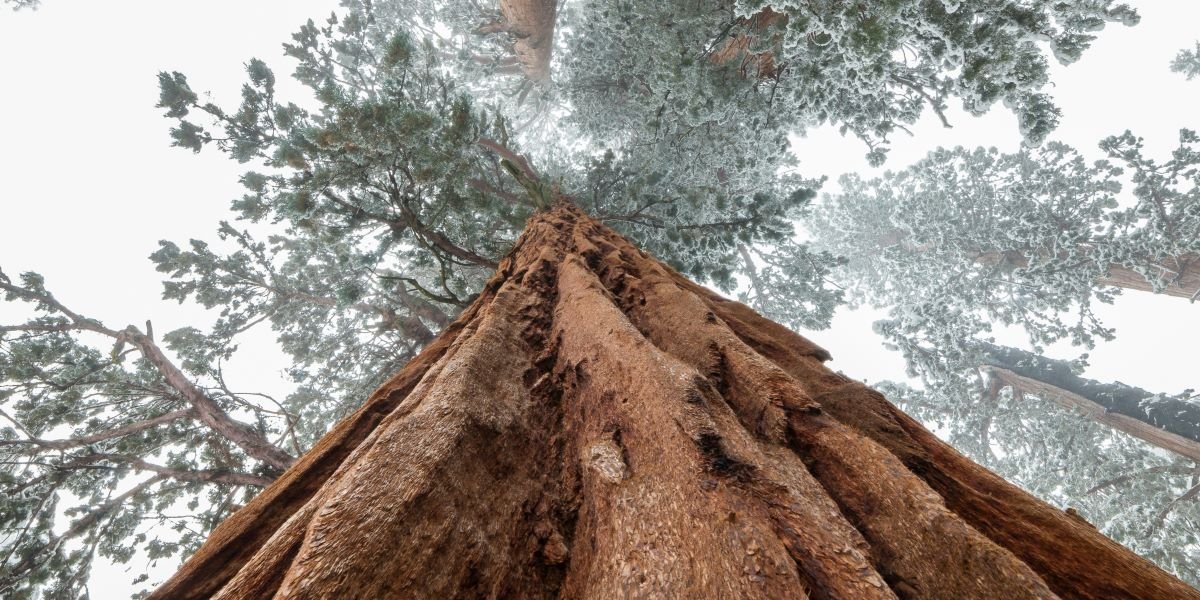
The height record belongs to a coast redwood named Hyperion, growing in Redwood National Park in Humboldt County. According to the National Park Service and Guinness World Records, the tree measured roughly 380 feet when surveyed in 2019, taller than the Statue of Liberty, which reaches about 305 feet from base to torch. More recent measurements place it near 381 feet.
Hyperion was first documented by Chris Atkins and Michael Taylor on August 25, 2006, and its precise location is kept secret to protect it. The naturalists named the redwood after a Titan from Greek mythology. The secrecy is not symbolic. Before access was restricted, visitors trampled the surrounding old-growth understory trying to reach it, prompting the Park Service to close off the area and warn of steep fines for anyone who ventures there.
The Sequoia That Holds The Crown For Sheer Mass
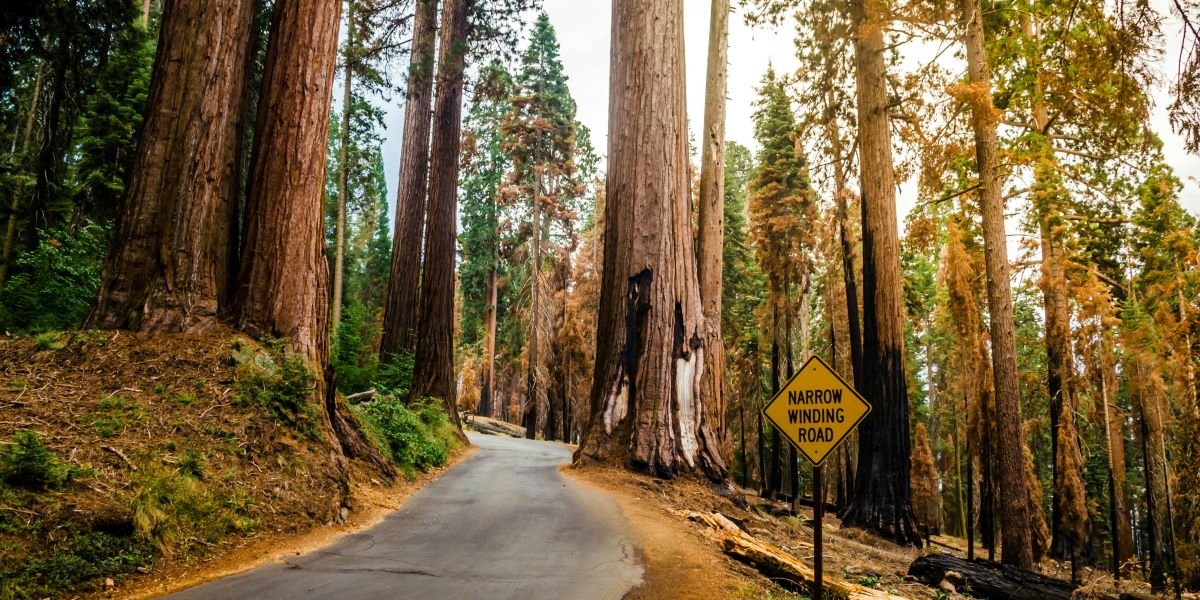
The second record sits about 425 miles to the southeast, in the Giant Forest of Sequoia National Park. There stands General Sherman, a giant sequoia and the largest known living single-stem tree on the planet measured by volume. It has a height of 83.8 meters, about 275 feet, a base diameter of 7.7 meters, around 25 feet, and an estimated trunk volume of roughly 52,500 cubic feet.
That volume is the key. General Sherman is shorter than Hyperion and is neither the widest nor the oldest tree on record, but no other single-stem tree contains as much wood. By one comparison, its trunk would fill nearly 60 percent of an Olympic-size swimming pool. The tree is estimated to be more than 2,000 years old, with some assessments placing it between 2,200 and 2,700 years.
Its name dates to the nineteenth century. A cowboy named James Wolverton is most widely credited with calling it “General Sherman” on August 7, 1879, in honor of the Civil War general he had served under. Indigenous communities in the region, including the Potwisha, knew the tree long before that.
Two Species, Two Worlds
The reason California holds both records comes down to two distinct trees that thrive in two distinct environments. Hyperion is a coast redwood, Sequoia sempervirens, which grows in a narrow band along the Pacific where persistent ocean fog keeps the air and soil moist year-round. That fog belt runs along the northern California coast and a short distance into southwestern Oregon, and nowhere else do the trees reach such heights.
General Sherman is a giant sequoia, Sequoiadendron giganteum, restricted to scattered groves on the western slopes of the Sierra Nevada. The two were once lumped together, but botanists eventually concluded they were different enough to warrant separate classification. By the 1930s it was clear the two redwoods were sufficiently distinct to be recognized as separate genera. Coast redwoods invest in height; giant sequoias invest in girth and mass. The result is one state holding two superlatives that belong to two entirely different growth strategies.
Records Under Pressure
Both species owe their longevity to traits that help them endure. Thick, fire-resistant bark, flexibility, and resistance to pests have allowed individual trees to survive for centuries. Those defenses, however, are being tested. Decades of fire suppression left forests choked with fuel, and longer, hotter dry seasons have intensified wildfires across the Sierra Nevada.
The toll has been documented. The Castle Fire of 2020 destroyed more than 10 percent of all giant sequoias, an estimated 7,500 to 10,000 trees, in a single event. General Sherman survived, but the fire underscored how concentrated the species is and how quickly a large share of it can be lost. In Sequoia National Park, crews have since wrapped the bases of prominent sequoias in protective material during fire threats, a measure that would have seemed unthinkable a generation ago.
The two record-holders sit at opposite ends of the state and at opposite extremes of what a tree can become, one reaching for the fog, the other thickening for two millennia in mountain groves. Together they give California a claim no rival region has matched, and the growing effort to defend them reflects how singular, and how vulnerable, that claim has become.