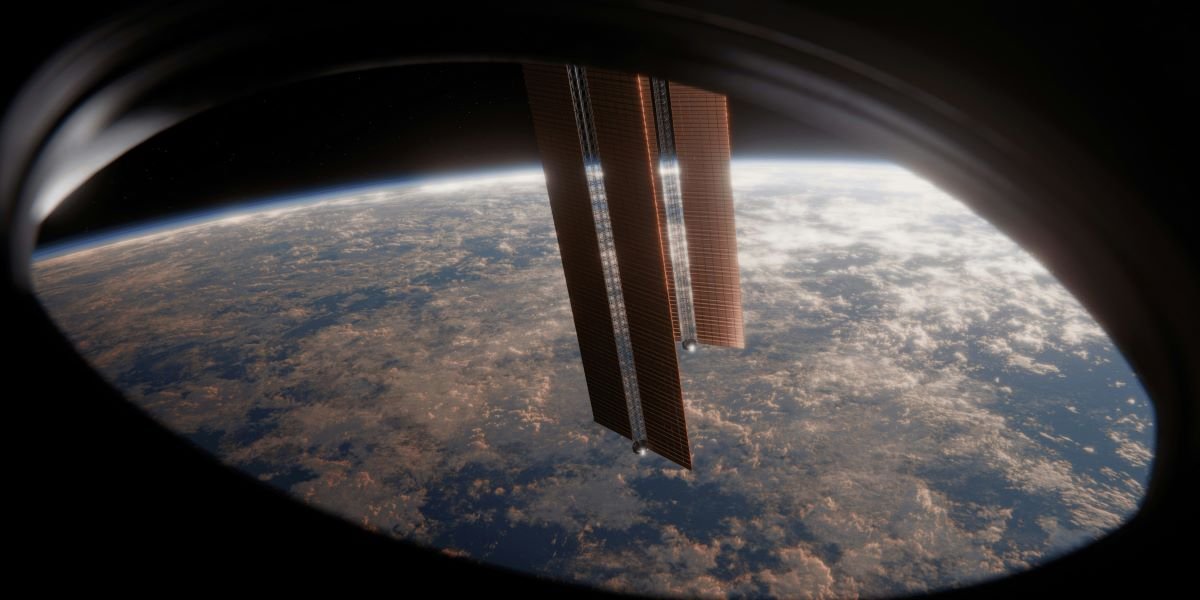

A Caltech-built robot has assembled part of a structure in orbit without help from astronauts, the university announced November 5. The ASTRA truss builder, funded by DARPA, completed one section of a planned 1.4-meter antenna before running short on time, a partial build that Caltech says proves the assembly concept works.
Key Takeaways
- ASTRA launched on March 30, 2026, from Vandenberg Space Force Base and has spent about six months in low-Earth orbit.
- The robot pushed out two prebuilt truss sections and then assembled a third section on its own in space.
- A complete truss requires 11 sections, and with the mission ending in December, finishing the full structure looks unlikely.
- Caltech professor Sergio Pellegrino, who leads the team, called it the first time a structure has been autonomously built in space.
- ASTRA is one of two projects that reached the orbital demonstration phase of DARPA’s NOM4D program, which began in 2022.
- The team designed, built, tested, and delivered the space payload in less than 12 months.
ASTRA Built One Truss Section in Orbit Before Time Ran Short
ASTRA, short for Autonomous In-Space Tensioned Reflector Assembly, was designed to build a 1.4-meter reflector antenna from composite fiber tubes, aluminum joints, and a thin reflective surface. Its robotic arm picks up struts and joints from motorized dispensers and assembles them into identical sections, called bays, of a ring-shaped truss.
The payload launched with two bays already built. Once in orbit, ASTRA released its launch restraints, pushed out the two prebuilt bays, and then assembled a third bay on its own. That third section is the structure Caltech describes as built in space. The full truss needs 11 bays, and with the mission set to end in December, Caltech says completing it appears unlikely.
Caltech Calls It the First Autonomous Construction in Space
Sergio Pellegrino, a Caltech professor of aerospace and civil engineering and a senior research scientist at NASA’s Jet Propulsion Laboratory, leads the ASTRA team. “This is the first time that a structure has been autonomously constructed in space,” Pellegrino said.
The claim rests on what makes ASTRA different: once the commands were sent, the robot did the building itself, with no crew on hand to place or fix parts. That separates it from earlier assembly work in orbit, which has relied on astronauts or on structures folded on Earth and unfolded after launch.
A Partial Build Still Counts as Proof of Concept
A demonstration that builds one section out of 11 might look like a shortfall. In engineering terms, it answers the question the mission was designed to test. ASTRA showed that a robot can take parts from storage, assemble them correctly in the conditions of space, and push a finished section out to make room for the next one. Repeating that cycle is how a much larger truss would be built.
Caltech says the team ran into time limits but learned enough to show the approach is viable. The team now plans to simplify and refine the design. Jaden Suh, a former Caltech postdoctoral scholar on the team who is now an assistant professor at the University of Texas at Austin, said the space environment always brings “lots of little surprises,” which is the reason for testing in orbit rather than only in a lab.
A Twin in a Pasadena Lab Helped Fix Problems in Orbit
The ASTRA team ran the mission from the ground under tight limits. Commands traveled to the payload through its host spacecraft, and the team checked each step against photos sent back from orbit. Engineers had only seven or eight windows a day, each about 15 minutes long, to communicate with the robot.
To work through problems, the team built an identical spare of the flight hardware and kept it in Pellegrino’s Caltech lab. When something went wrong in space, the engineers recreated the problem on the ground, tested possible fixes on the twin, and then sent the working solution up to orbit. Caltech systems engineer Charles Sommer, research engineer Alan Truong, and graduate student Tara Venkatadri sent the build commands.
Building in Space Could Remove the Rocket Size Limit
The research targets a basic constraint in spaceflight. Any structure launched from Earth must fit inside a rocket’s nose cone, called a fairing. Engineers have worked around that limit by folding structures for launch and unfurling them in orbit, or by sending pieces up over several launches and assembling them by hand. Building structures directly in space offers a third option.
DARPA’s NOM4D program, short for Novel Orbital and Moon Manufacturing, Materials, and Mass-efficient Design, was created in 2022 to explore that approach. Program manager Andrew Detor has said the goal is structures hundreds of meters or even kilometers across, far beyond what can be launched today. The other project in the program’s orbital phase, led by the University of Illinois Urbana-Champaign, is testing a method for hardening carbon tubes aboard the International Space Station.
Pellegrino said the method could support astronomy, communications, and very large solar arrays for space solar power. ASTRA’s reflective material, a perforated film co-invented with researchers at the University of Pennsylvania, needs less tension than standard metal mesh, which allows lighter structures.
California’s Aerospace Base Supports Work Like ASTRA
ASTRA was conceived, designed, and built in Pasadena and launched from Vandenberg Space Force Base on California’s Central Coast, with Momentus Inc. hosting the payload in orbit. The project draws on a statewide aerospace base that includes more than 96,000 aerospace manufacturing jobs, part of a California economy that now tops $4.5 trillion. For a field moving from lab tests to orbital demonstrations, ASTRA shows the state’s universities taking that step.
FAQs
What Is Caltech’s ASTRA Robot?
ASTRA, the Autonomous In-Space Tensioned Reflector Assembly, is a robotic truss builder designed by Caltech to assemble a reflector antenna in orbit without astronauts. DARPA funded it through the NOM4D program.
Did Caltech’s Robot Finish Building the Antenna?
No. ASTRA assembled one truss section in orbit, adding to two prebuilt sections, but ran short on time. The full truss needs 11 sections, and Caltech says completing it before the mission ends in December appears unlikely.
When Did ASTRA Launch?
ASTRA launched March 30, 2026, from Vandenberg Space Force Base. It rode to low-Earth orbit as one of 10 payloads on a Momentus orbital vehicle carried on a SpaceX rideshare mission.
What Is DARPA’s NOM4D Program?
NOM4D is a DARPA program started in 2022 to develop ways of manufacturing and assembling very large structures in space. Caltech’s ASTRA and a University of Illinois Urbana-Champaign project are its two orbital demonstrations.