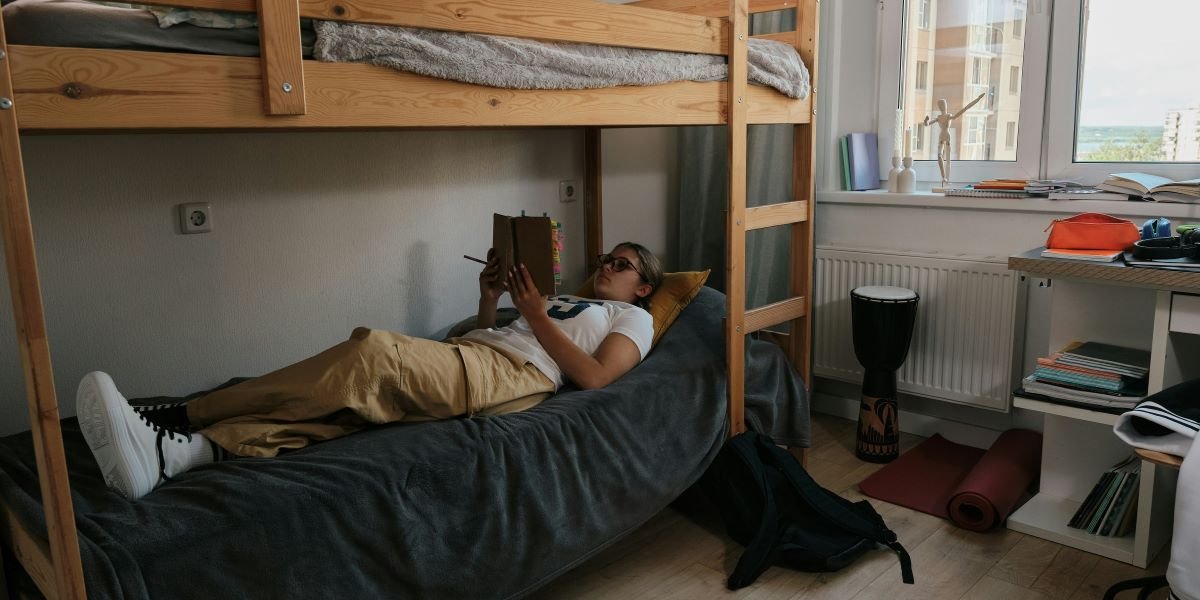

Fresno State University opened the doors of a new 80,000-square-foot student housing complex on August 11, marking the campus’s first new residential construction since 1968 and the product of a $53.7 million investment split between a state affordable student housing grant and California State University systemwide revenue bonds. The four-story building at the corner of Shaw and Cedar avenues adds 228 apartment-style beds to the campus, including six family-sized units designed for students with children, and has eliminated Fresno State’s housing waiting list for the first time. Students began moving in on August 20, ahead of the fall semester’s August 24 start date.
Key Takeaways
- The 228-bed complex is Fresno State’s first new student housing in more than 50 years, bringing total campus housing capacity to 1,598 beds across 10 buildings for a student population of more than 24,000.
- The project was funded by a $33.7 million affordable student housing grant from the state and approximately $20 million through CSU systemwide revenue bonds, with the CSU Board of Trustees approving the design in July 2023 and financing in November 2023.
- Six family-sized units accommodate students with children, addressing a gap that affects roughly 20 percent of college students nationally, according to the Institute for Women’s Policy Research.
- Fresno State’s housing waiting list has been eliminated for the first time, with all 1,598 available beds filled by 1,598 students this fall, including six student-families.
- The broader California State University system has added more than 17,000 beds over the past decade but faces uneven distribution: campuses like Cal State Northridge carry waitlists of 2,000 students while Sonoma State and CSU East Bay operate at 64 percent and 58 percent occupancy.
A $53.7 Million Project Designed Around Apartment-Style Living and Parent Scholars
The new building, designed by architectural firm SVA and built by construction manager Quiring, is structured as a U-shaped, four-story complex with apartment-style units rather than traditional dormitory rooms. Most units contain two bedrooms, each with two beds, along with a full kitchen and living room. The complex includes a small gym, a recreation room, conference space, an outdoor play structure, a basketball court, and an outdoor fire pit area designed for communal gatherings.
The six family units distinguish this project from a standard dormitory build. Each family unit accommodates up to five people, with child-friendly flooring, furniture, and proximity to the outdoor play area. More than 700 Fresno State students requested priority registration through the university’s student-parent benefit program this academic year, and the Institute for Women’s Policy Research has found that roughly one in five college students nationally are raising children while pursuing a degree. The family units give Fresno State a housing option that most CSU campuses do not offer, addressing a population that faces compounded barriers to academic persistence when stable housing is unavailable.
Fresno State President Saúl Jiménez-Sandoval described the opening as a transformational moment for the university. Jiménez-Sandoval noted that affordable housing removes one of the barriers between students and their degrees, and that the impact of degree completion extends beyond the campus into the surrounding community. Erin Boele, Fresno State’s director of Student Housing, said the project has transformed the department by creating a space where students and their families can thrive together.
The Waiting List Is Gone for the First Time in Campus Housing History
Before the new building opened, Fresno State had been managing excess housing demand by converting some double-occupancy rooms into triple-occupancy configurations, a stopgap that gave more students access to campus housing but reduced living space per resident. The 228 new beds brought the campus total to 1,598 across 10 buildings, and for the first time, Fresno State’s vice president for student affairs and enrollment management, Phong Yang, confirmed that no students are on a waiting list. Every available bed is filled.
That zero-waitlist status is notable within the CSU system, where the gap between demand and supply has been a persistent challenge on many campuses. Fresno State committed to maintaining the lowest housing costs in the 22-campus system, though the new apartment-style units carry higher rates than traditional rooms because they include full kitchens and living areas. A double unit in the new building runs approximately $10,634 per academic year, a small single $11,369, and a studio $12,343. A small single suite in existing campus housing rounds to approximately $8,869 per year.
Depending on demand patterns after the first year, some of the triple-occupancy conversions in older buildings may revert to double occupancy, which would reduce total campus capacity slightly but improve the living conditions in those units. The housing department is monitoring occupancy trends to determine how to calibrate the older inventory against the new building’s capacity.
The CSU System Has Added 17,000 Beds in a Decade, but Distribution Remains Uneven
Fresno State’s new building is one piece of a systemwide push that has added more than 17,000 student beds across the California State University over the past decade, with plans for an additional 5,600. The CSU’s housing plan targets accommodating 12,600 more students by 2030, a goal that requires sustained capital investment at a time when the system faces a $2.3 billion budget gap.
The challenge is not simply total bed count. Distribution across the 22-campus system is sharply uneven. At Cal State Northridge, which opened a new 198-bed complex recently, 2,000 students remained on the housing waiting list in the most recent reporting period. San Francisco State reported capacity for 4,000 student beds but a waitlist of 2,000 in recent years. At the other end of the spectrum, Sonoma State University and CSU East Bay were operating at only 64 percent and 58 percent housing occupancy respectively in fall 2024, reflecting enrollment declines that have left dorm rooms empty on campuses that built for larger student populations.
Cal State Los Angeles has faced a different version of the problem. Auditors reported that years of operating losses in the campus housing program were depleting its budget, and a recent investigation found that existing beds were sitting vacant because of deferred maintenance and insufficient funding to keep the facilities operational. The housing department’s most recently published budget allocated no funds to maintenance, raising questions about the long-term viability of the existing inventory even as the system works to build new capacity elsewhere.
The mismatch between campuses with overflowing demand and campuses with empty beds complicates the system’s strategy. Building new housing at high-demand campuses requires capital that the system does not have in surplus, while underutilized housing at smaller campuses represents sunk costs that generate no return. The CSU system’s housing plan attempts to address both sides, but the financial constraints are real and the timeline is long.
State Funding and a Potential Bond Measure Are Shaping the Next Phase of Construction
Fresno State’s new complex was funded through a combination of a $33.7 million state affordable student housing grant and approximately $20 million from CSU systemwide revenue bonds. The state grant program, which has awarded funding to multiple CSU and University of California campuses for affordable student housing projects, requires that rents remain below a threshold tied to local income levels, ensuring that the housing it funds stays accessible to low-income students.
Looking ahead, advocates and lawmakers have pushed for a larger state facilities bond that would fund student housing and other educational infrastructure across the CSU, University of California, and California Community Colleges systems. Assembly Bill 48, introduced by Assemblymember David Alvarez of San Diego, passed the Assembly and advanced to the Senate, with the goal of placing a bond measure on the statewide ballot. The measure’s dollar amount was to be finalized in 2026, and if approved by voters, it could provide a sustained funding source for campus housing construction that the state grant program alone cannot deliver at scale.
The bond measure, if it reaches the ballot and passes, would compete for capital allocation alongside deferred maintenance needs that the CSU system has accumulated over decades. The trade-off between new construction and maintaining existing facilities is a recurring tension in public university capital planning, and the CSU’s $2.3 billion budget gap adds pressure on every spending decision.
On-Campus Housing Directly Affects Graduation Rates and Student Retention
CSU officials, including those at Fresno State, consistently cite research showing that students who live on campus graduate at higher rates and report stronger academic outcomes than those who commute or live in unstable housing situations. The connection is not abstract. Students who secure stable, affordable housing near their campus spend less time commuting, have easier access to academic support services, libraries, and study groups, and face fewer disruptions from housing instability that can force students to reduce course loads or drop out entirely.
For a campus like Fresno State, where more than 24,000 students attend but only 1,598 can live on campus, the housing ratio means that the vast majority of students are navigating the Central Valley’s private rental market, commuting from surrounding communities, or making housing decisions that compete directly with their ability to stay enrolled. The new building does not solve that ratio problem, but it eliminates the waiting list and provides a model, particularly with its family units, that other CSU campuses are watching as they plan their own housing expansions.
Jiménez-Sandoval framed the stakes directly at the ribbon-cutting ceremony: when students earn their degrees, the impact is felt far beyond the campus. For a regional university that serves the San Joaquin Valley, one of California’s most economically disadvantaged areas, the connection between housing access and degree completion has implications for workforce development, economic mobility, and community health that extend well past graduation day.
FAQs
When did Fresno State’s new student housing open?
The university held a grand opening ceremony on August 11, 2026, and students began moving into the new complex on August 20, ahead of the fall semester start on August 24. The building is Fresno State’s first new student housing since 1968.
How many beds does the new Fresno State housing complex add?
The complex adds 228 apartment-style beds, bringing Fresno State’s total campus housing capacity to 1,598 beds across 10 buildings. The addition eliminated the university’s housing waiting list for the first time.
Does Fresno State offer housing for students with children?
The new complex includes six family-sized units designed for students raising children, with each unit accommodating up to five people. The units feature child-friendly flooring, furniture, and access to an outdoor play structure on the building’s grounds.
How much does the new Fresno State housing cost per year?
A double unit in the new building runs approximately $10,634 per academic year, a small single approximately $11,369, and a studio approximately $12,343. Fresno State has committed to maintaining the lowest housing costs in the CSU system.
How was the Fresno State housing project funded?
The project was funded by a $33.7 million affordable student housing grant from the state and approximately $20 million through California State University systemwide revenue bonds, totaling roughly $53.7 million. The CSU Board of Trustees approved the building design in July 2023 and financing in November 2023.