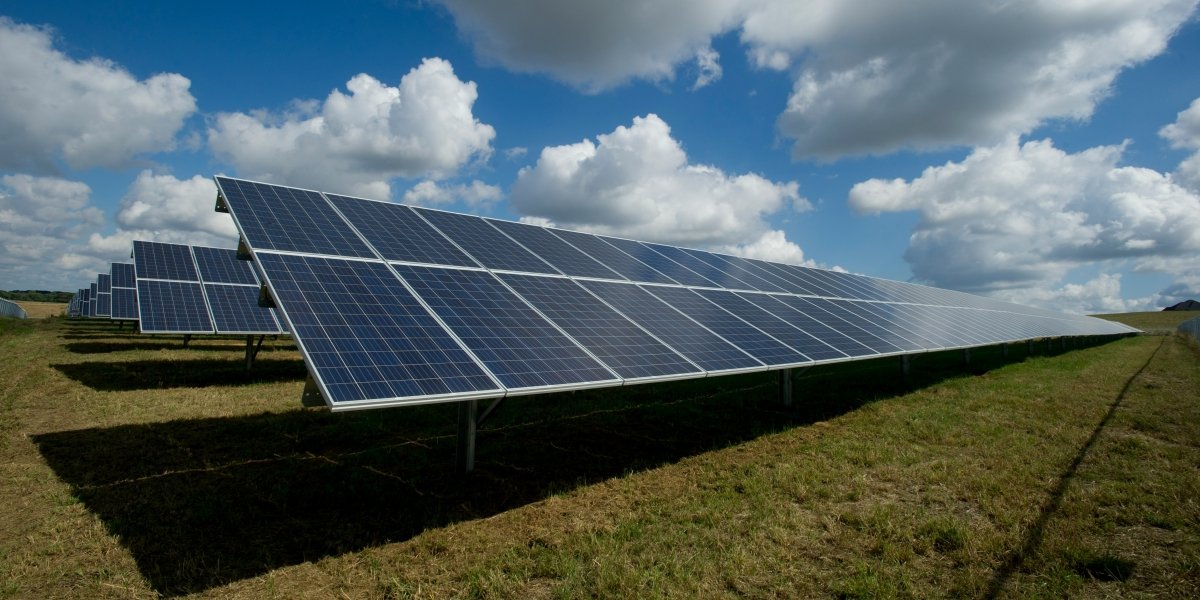

California has long been a national leader in clean energy — rooftop panels dot its suburbs, wind turbines spin across its hillsides, and ambitious state policies have pushed renewable sources to account for more than half of California’s electricity mix. But now, an unprecedented clean-energy transformation is taking shape deep in the heart of the state: a solar megaproject sprawling across roughly 136,000 acres of Central Valley farmland that could power millions of homes and shift the future of California’s energy grid.
This is not just another utility solar farm. Backed by the Westlands Water District and packaged under the ambitious Valley Clean Infrastructure Plan (VCIP), the project represents one of the largest clean-energy builds in U.S. history — part industrial powerhouse, part climate strategy, part economic lifeline for a region grappling with water scarcity and agricultural decline.
From Fallow Fields to Solar Fields
Stretching across an area roughly four times the size of San Francisco, the project will transform land that has often been fallowed due to long-term water shortages and diminishing irrigation supplies into a massive solar energy and storage hub. The Westlands Water District’s board has officially approved the framework for this conversion, signaling a major commitment to clean-energy infrastructure in the heart of California’s breadbasket.
That land — once central to the nation’s agricultural output — has faced worsening water constraints in recent decades. Farmers and local leaders describe this solar pivot as a strategic pivot toward economic resilience.
“The farm economy’s tough right now. Business is tough. And this will allow you another revenue source besides your crop income,” said Jeff Fortune, a board member and local farmer, highlighting the dual purpose of the project both as energy infrastructure and an economic stabilizer for rural communities.
A Big Boost for California’s Clean-Energy Goals
The VCIP plan — led by Golden State Clean Energy in collaboration with Westlands — envisions up to 21 gigawatts of solar generation capacity alongside large-scale battery storage and transmission infrastructure. That’s enough to power roughly nine million homes under full build-out, making it not only one of California’s largest but potentially the largest solar and energy storage project in the United States.
Project materials indicate that by 2035, this network could provide about one-sixth of the state’s electricity needs, reinforcing California’s progress toward its targets for carbon-free power by 2045.
“This project is board-ready, shovel-ready, and we could be online quicker than you could license a new gas-powered plant or build a nuclear plant,” Fortune emphasized, underscoring the urgency and feasibility driving local support.
Jobs, Investment, and Local Benefits
The economic impact — while tied to long-term climate goals — is concrete and immediate. Developers project that the construction phase alone will support about 3,000 jobs over at least a decade, with roughly 500 permanent positions once the infrastructure is operational.
For a region like the San Joaquin Valley — where job opportunities and water availability are perennial concerns — those figures represent a welcome infusion of investment and employment. Local tax bases are expected to grow as properties come out of fallow status and contribute to county revenues through land leases and utility infrastructure.
Balancing Growth With Local Concerns
Despite the optimism, not everyone sees the vision without caveats. Critics worry about aesthetic and environmental impacts, including changes to the landscape and habitat disruption as solar panels replace fields once used for crops. Concerns about noise during construction and altered local land use patterns have also surfaced.
Environmental and community groups are watching closely as permitting and environmental review processes unfold, ensuring compliance with state planning standards and habitat protections. These assessments are critical before panels and batteries rise across the valley’s vast terrain.
A Strategic Response to Water Scarcity
One of the project’s strategic underpinnings is its connection to California’s water realities. Vast tracts of the Central Valley have become increasingly water-scarce due to drought cycles and groundwater constraints under the Sustainable Groundwater Management Act. By repurposing land no longer viable for intensive irrigation, the project ties renewable energy production directly to local adaptation strategies in an era of climate risk.
This alignment between water sustainability and clean energy deployment is central to VCIP planners’ messaging — presenting the solar megaproject not just as a climate win, but as a practical adaptation to California’s changing environment.
Powering California’s Future
In the coming months and years, the Valley Clean Infrastructure Plan will advance through permitting, environmental reviews, and phased construction. If realized as currently envisioned, it will stand as a defining piece of California’s energy landscape and a major milestone in how the state balances climate leadership with economic and community resilience.
In a state where clean energy is law and climate ambition drives policy, the Central Valley’s solar revolution could become a symbol of how California meets its largest challenges with scale, innovation, and local engagement.