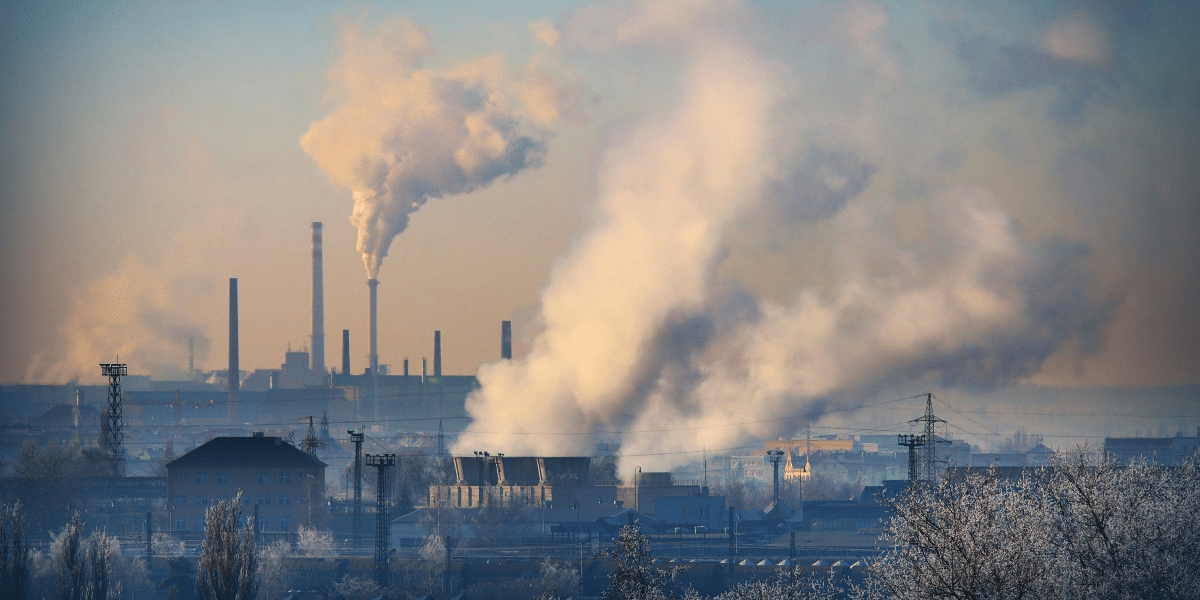


On September 7th, people around the world commemorated the International Day of Clean Air, a day set aside to raise awareness of the importance of clean air for both human health and the environment. Over the years, discussions about air quality have increasingly focused on how individuals and businesses alike can contribute to making the air cleaner. While the conversation often highlights reducing car emissions and industrial pollution, other methods, such as recycling and smarter manufacturing processes, also play a significant role in improving air quality.
You might not think recycling has much to do with how clean our air is, but it has a much bigger impact than you might expect. In fact, recycling has a ripple effect that leads to cleaner air. For example, by using recycled materials, companies reduce the need for new raw materials. Extracting and processing virgin resources, such as metal ores, petroleum, and trees, contributes significantly to air pollution. These processes often involve energy-intensive steps that release large amounts of carbon dioxide (CO₂) and other greenhouse gases into the atmosphere. By recycling, the demand for these processes decreases, helping to cut down on emissions.
This is particularly important for manufacturing companies to understand. The misconception that recycling is an extra cost or complication in production has been challenged in recent years. Reusing materials is not only environmentally friendly but also cost-effective. Many industries have found that sourcing recycled materials can be cheaper than extracting new resources, thanks to advances in recycling technology. The savings in energy alone are a major benefit—recycling aluminum, for example, uses up to 95% less energy than producing it from raw materials.
While International Day of Clean Air has passed, it’s always essential to remember that sustainability isn’t just about using less; it’s also about using smarter. JD Ambati, Founder & CEO of EverestLabs, emphasized the importance of recycling in improving air quality. He noted, “Recycling has a chain reaction of sustainability. On this International Day of Clean Air, it’s important to understand how recycling helps the environment in more ways than one by both reducing greenhouse gas emissions and eliminating waste. The more companies and consumers that consume recycled materials, the less greenhouse gases are used to produce virgin material, improving our air quality.”
Recycling doesn’t just reduce waste going to landfills; it actively reduces the pollution created by manufacturing processes. By using recycled plastics, metals, and glass, companies contribute less to the creation of smog and air pollutants like sulfur dioxide (SO₂) and nitrogen oxides (NOx), which are harmful to both human health and ecosystems.
Another often overlooked solution to improving air quality is through tree planting and reforestation. Trees act as natural air purifiers, absorbing CO₂ and releasing oxygen. In urban areas, trees can filter out harmful particulate matter, such as dust and smoke, while also providing shade that reduces the need for energy-intensive air conditioning. While large-scale deforestation has contributed to climate change and poor air quality, reforestation and tree-planting initiatives have gained momentum as a way to mitigate these effects.
Efforts to increase the energy efficiency of buildings also contributed to cleaner air. Older buildings, especially those constructed without modern environmental standards, often consume more energy to maintain comfortable indoor climates. This energy consumption, typically sourced from fossil fuels, contributes to air pollution. Retrofitting buildings with energy-efficient windows, better insulation, and renewable energy systems like solar panels helped reduce these emissions. When energy needs are lowered, the demand on power plants—many of which burn coal, natural gas, or oil—decreases, leading to fewer pollutants being released into the atmosphere.
Beyond recycling and energy efficiency, transportation remained a critical area where improvements were made to reduce air pollution. The widespread adoption of electric vehicles (EVs) played a significant role in curbing emissions. Unlike traditional internal combustion engines, EVs don’t release tailpipe emissions, such as CO₂, carbon monoxide, or nitrogen oxides. Furthermore, as more renewable energy sources like wind and solar powered the electricity grids that charge these vehicles, the overall reduction in emissions became even more substantial.
Ultimately, saving the planet doesn’t have to be expensive. These innovations—whether recycling, energy-efficient upgrades, or adopting cleaner technologies—are not only better for the environment but are often more cost-effective in the long run. By adopting these practices, both individuals and businesses can contribute to improved air quality.
The International Day of Clean Air reminded us that small, everyday actions like recycling, planting trees, and using cleaner energy are all part of a larger solution. As more companies, governments, and individuals embraced these practices, the collective impact on air quality became increasingly evident. The goal of cleaner air may seem challenging, but through collaboration and continued innovation, it remained well within reach.
Published by: Martin De Juan