
Long Beach, the aerospace hub known as Space Beach, sits at the center of California’s commercial space economy, according to state economic data released October 15, 2026. California is home to one-third of the nation’s space technology companies, employs more than 96,000 aerospace manufacturing workers and leads the country in NASA science funding.
Key Takeaways
- California is home to one-third of the nation’s space technology companies and ranks first nationally in space-technology venture capital.
- The state employs more than 96,000 aerospace manufacturing workers, more than any other state.
- More than 500 California companies and 16,000 workers contributed to NASA’s Artemis program, including Artemis II.
- California receives about $3 billion a year in NASA science funding and accounts for roughly 40% of all U.S. space-technology patents.
- Aerospace and defense contributes an estimated $35 billion annually to California’s gross domestic product.
Space Beach Grew From Decades Of Aerospace Manufacturing
Space Beach is the nickname for the cluster of commercial space and advanced manufacturing companies concentrated in Long Beach and neighboring South Bay communities. The label reflects a shift in what the city builds. For much of the 20th century, Long Beach was known for aircraft production. Today, its industrial corridors host companies designing orbital rockets, spacecraft, satellites and their components.
The location carries practical advantages. Companies in Long Beach draw on Southern California’s established aerospace workforce, existing industrial infrastructure, access to one of the nation’s busiest port complexes and a deep network of advanced manufacturing suppliers. Those factors make the region a natural landing spot for space firms scaling from prototypes to production.
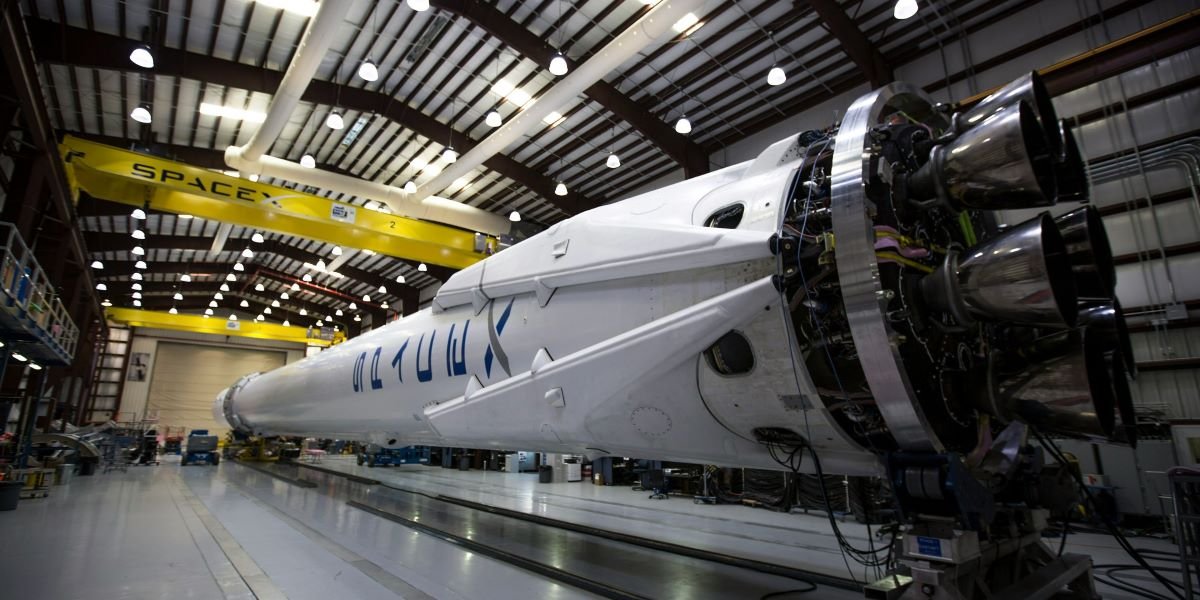
State officials toured a Long Beach launch vehicle manufacturer on October 15 to highlight that growth, using the visit to release updated figures on California’s position in the national space economy.
California Leads The Nation On Key Space Economy Measures
The California space economy spans launch, testing, research and development, tracking and communications across every region of the state. According to state data, California ranks first nationally in corporate aerospace research and development spending, first in space-technology venture capital and first in NASA science funding.
The intellectual property figures stand out. California accounts for roughly 40% of all U.S. space-technology patents, a concentration that reflects how much of the industry’s design and engineering work happens within the state. California also employs more aerospace engineers than any other state.
Those numbers support the state’s broader economic picture, which includes California’s climb past $4.5 trillion in economic output earlier this month. Aerospace and defense alone contributes an estimated $35 billion annually to state GDP.
NASA Spending Ripples Through The California Space Economy
Federal space investment flows heavily through California. The state receives about $3 billion a year in NASA science funding and roughly 28% of all NASA research and development, according to state figures.
NASA’s most recent economic impact data shows the multiplier effect. NASA procurement spending in California reached $5.8 billion, about 25% of the agency’s national procurement total, generating $18.6 billion in economic output for the state. Each NASA job in California supports an additional 35.7 jobs elsewhere in the state economy, for a total employment impact of 66,208 jobs.
California’s role in the Artemis program shows how that spending reaches private suppliers. More than 500 California companies and 16,000 workers contributed to Artemis, including Artemis II, the first crewed lunar mission in more than 50 years.
State Incentives Target Aerospace As A Growth Sector
California’s economic development strategy treats aerospace as a priority industry. Under the state’s Jobs First Economic Blueprint, aerospace is designated an “accelerate” sector, meaning public and private investment is expected to produce sustained growth.
Recent awards follow that approach. In August 2025, the state awarded $16.95 million to two projects supporting aerospace infrastructure and workforce development on the Central Coast. In August 2026, the state awarded an additional $19 million to seven projects in Kern County, the Southern Border region and the Bay Area.
California Competes Tax Credits have also supported satellite manufacturing expansion in Long Beach, Los Angeles and San Jose. These credits are awarded in exchange for job creation and investment commitments, tying public incentives to measurable hiring.
California-Built Hardware Spans The History Of Spaceflight
The California space economy builds on a long industrial record. NASA’s Jet Propulsion Laboratory in Pasadena built Explorer 1, America’s first satellite, in 1958. The first GPS satellite was built in Seal Beach and launched from Vandenberg in 1978.
Every engine on the Saturn V rocket that carried Apollo astronauts to the Moon was built in Los Angeles. The Space Shuttle fleet was assembled in Palmdale, and Skylab, the first U.S. space station, was built in Huntington Beach. The Hubble Space Telescope was built and integrated in Sunnyvale, while the James Webb Space Telescope was assembled in Redondo Beach.
That history matters for today’s companies. Space Beach firms are not building an industry from scratch; they are inheriting supply chains, engineering talent and institutional knowledge accumulated over seven decades.
A Public University Pipeline Supplies Aerospace Talent
Workforce depth is one of the California space economy’s structural advantages. The California Community Colleges, California State University and University of California systems form a large public pipeline for aerospace talent, alongside private institutions such as Stanford, USC and Caltech.
For Long Beach in particular, proximity to CSU Long Beach and community colleges across Los Angeles and Orange counties gives employers access to engineers and skilled technicians close to production floors. As commercial launch cadence rises, that local talent base may prove as important as funding in determining which regions keep growing.
FAQs
What Is Space Beach In Long Beach?
Space Beach is the nickname for Long Beach’s cluster of commercial space and advanced manufacturing companies, which design and build rockets, spacecraft, satellites and components.
How Many Aerospace Jobs Are In California?
California has more than 96,000 aerospace manufacturing jobs, more than any other state, according to state economic data.
How Much NASA Funding Does California Receive?
California receives about $3 billion a year in NASA science funding, the most of any state, and roughly 28% of all NASA research and development.
How Did California Contribute To Artemis II?
More than 500 California companies and 16,000 workers contributed to NASA’s Artemis program. The RS-25 engine powering the Space Launch System has been designed and manufactured in the San Fernando Valley since the 1970s.
Where Is NASA’s Jet Propulsion Laboratory?
The Jet Propulsion Laboratory is located in Pasadena. It leads NASA’s robotic space exploration and has built every NASA Mars rover, from Sojourner to Perseverance.