
By: Laura Zeller
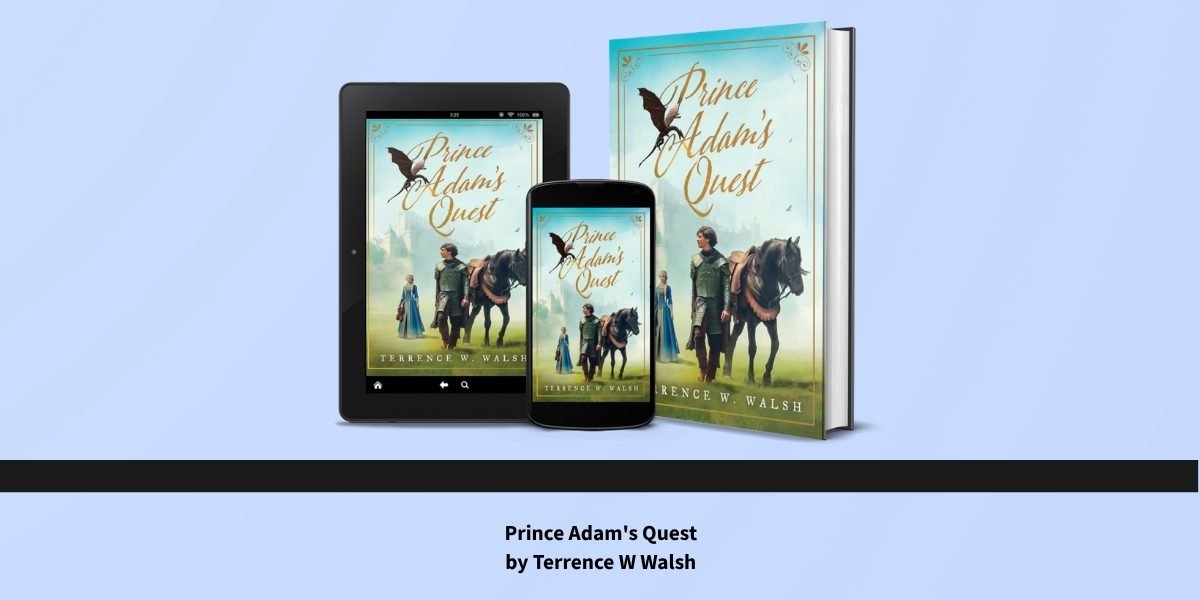
There is a specific kind of delight that can come from reading a book that knows what it is and follows that vision with confidence. Prince Adam’s Quest is that kind of book. Terrence W. Walsh has written a fantasy tale that is simultaneously a comedy, a philosophical puzzle, a character study, and an instructive piece of storytelling, and he holds those elements together with the assurance of a writer who spent decades working in clear, purposeful communication before he turned his attention to dragons and toll-loving trolls and apprentice bards with an instinctive gift for changing the emotional temperature of any situation they walk into.
The world of Leftovria is one of those fictional places that feels inhabited rather than freshly constructed. Walsh populates it with creatures and characters who have their own internal logic, their own priorities, their own sense of what matters, and none of them exist simply to move Prince Adam from one plot point to the next. The trolls are a clear example of this, a species so thoroughly organized around the collection of tolls that their culture has bent itself around the concept, producing a troll king who is both a reliable source of comedy and one of the book’s more affecting characters once Minnow’s songs get underneath his formidable exterior. That combination of funny and feeling is part of Walsh’s style throughout the book and he uses it with skill.
Minnow deserves particular attention because she is the kind of supporting character who quietly becomes the heart of the story without displacing the protagonist from the center of the narrative. Her songs arrive at important moments, not because Walsh has arranged the plot to require them but because Minnow herself has developed the instinct to know when a song is what a situation needs. Watching that instinct develop across the journey from Leftovria and back again is one of the quieter pleasures of the book and one that accumulates in ways readers may appreciate more fully near the end.
The three endings, history, comedy, or tragedy, with Adam choosing his own fate, is a structural choice that some writers might have avoided out of concern that readers would not accept the responsibility. Walsh commits to it, and the result is a book that may stay with readers after they finish it in the specific way that questions can stay with them, turning over in the back of the mind, surfacing unexpectedly. Which ending would you choose? Why? What does your answer reveal about what you believe winning actually means? Those are not minor questions dressed up in fantasy clothing. They are the questions underneath the quest, and Walsh appears to understand that from the beginning.
This is the work of a writer settled into his own voice, witty and interested in the possibilities of the story he is telling. Readers can find out which ending they would choose.
For readers looking for a fantasy novel that may entertain them while leaving them with a question to consider afterward, Prince Adam’s Quest by Terrence W. Walsh is available on Amazon. The book invites readers into Leftovria, where the trolls are serious about their tolls, the bard has one more song, and the ending belongs to Prince Adam.