
If you’ve noticed more friends swapping a second HIIT class for mobility work, you’re not imagining it. Recovery and flexibility training are becoming increasingly central to American fitness routines. According to ClassPass data, users were most likely to book stretching after strength training. This behaviour suggests that mobility and recovery training are increasingly being viewed as essential components of a workout regimen rather than optional add-ons. At the same time, assisted-stretching studios are expanding across the country: industry leader StretchLab has reached 500 locations in North America, a milestone that reflects how mainstream guided flexibility has become.
Few coaches embody this shift better than Alisa Valieva – a former elite rhythmic gymnast who turned an injury‑ended career into a mission to help everyday people move, feel, and recover better. After years in top training programs and competing internationally, Alisa retired due to overuse injuries and transitioned fully into coaching, first in Europe and the U.S., and then online. Her approach combines the discipline of high-level sport with the empathy of someone who has rebuilt her own body. “My mission is to change the way people think about stretching. It’s not just something for athletes,” she says.
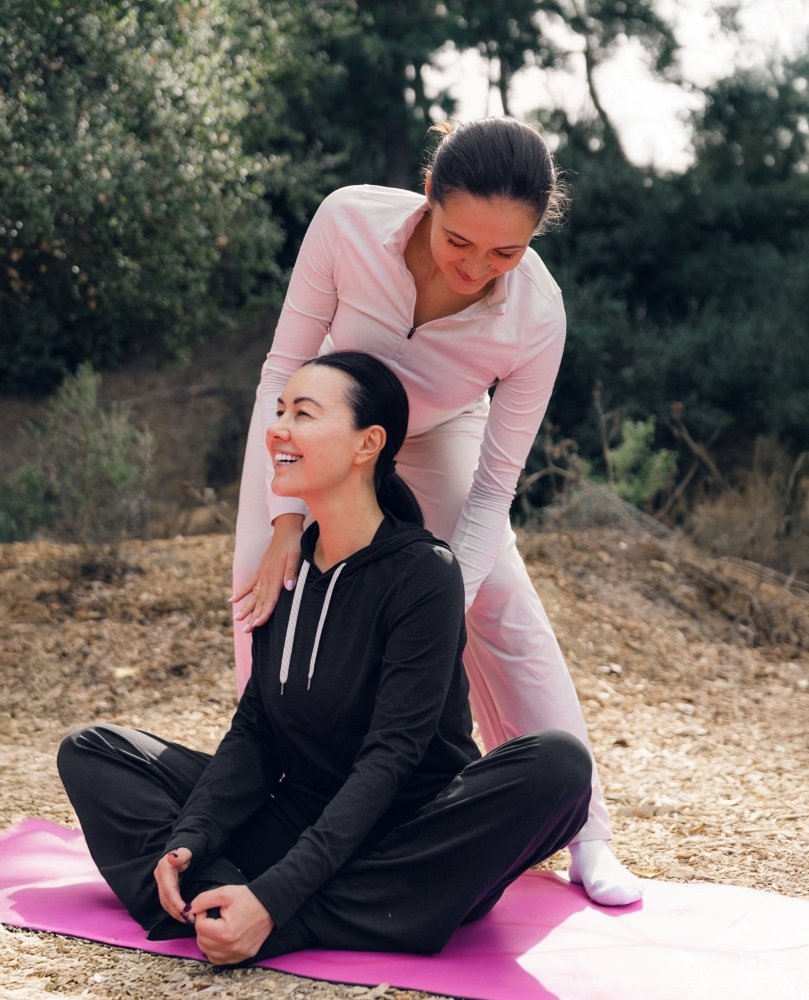
Alisa’s sessions, offered both online and in person, are not about forcing a split for Instagram. They’re about learning to read your body: where you’re compensating, which chains are tight, and why your hips or thoracic spine limit the way you squat, run, or simply sit at your desk. That perspective matters. Research in office‑based workers has shown a high prevalence of forward head posture and rounded shoulders; while exact percentages vary, these postural patterns are among known risk factors linked to neck pain and upper‑back discomfort. A systematic review found that in adults and older adults, greater forward head posture was significantly correlated with higher neck‑pain intensity and disability. This suggests mobility and posture should be considered alongside strength and cardio in training regimes.
Her programming, therefore, meshes active mobility, strategic flexibility, and proprioceptive drills with clear progressions. Runners use it to open their hips and calves and maintain high tissue quality between speed days. Lifters use it to reclaim end-range control, ensuring their pressing and pulling patterns remain strong and safe. And because Alisa teaches how to warm up and down‑regulate after training, clients build routines they can repeat solo, precisely the kind of habit that keeps people training consistently instead of cycling through flare‑ups.

Posture is another pillar of her work, and it’s bigger than aesthetics. Scoliosis affects about 2-3% of the U.S. population (roughly 6-9 million people), with lifelong implications for musculoskeletal health. While “poor posture” isn’t a medical diagnosis, slumped, forward-head positions are common in deskbound populations and may contribute to neck strain, headaches, and shoulder issues —problems that mobility and alignment training help address.
What about the face? Many people chase quick fixes for puffiness, but circulation and lymphatic flow begin with how we hold and move the head, neck, and rib cage. Lymphatic techniques can temporarily reduce swelling (that “de‑puffed” look). Yet, experts emphasize that these effects may be short-lived – another reason to pair any beauty routine with posture and mobility habits that support long-term tissue health. In Alisa’s world, better alignment is self‑care from the inside out.
Crucially, Alisa’s coaching is accessible. She teaches you to scale safely – how to modulate discomfort, protect connective tissue, and make progress without chasing pain. That means beginners can build their range gradually, and athletes can protect their performance over the seasons. Her clients leave sessions not just limber but educated. They know which drills keep their shoulders open, which breath cues unlock their spine, and which micro‑habits (how you stand at the sink, how you carry a bag) undo hours of good work.
Stretching isn’t just a side dish anymore; it’s the framework that keeps your training and your life moving forward. The most popular workout pairings today reflect that reality: after strength sessions, people book stretching to restore range and reduce injury risk. And with assisted stretching and mobility coaching booming nationwide, demand for expert-led, evidence-informed instruction is only increasing.
Disclaimer: Mobility and stretching are complementary to medical care. If you have a diagnosed condition, consult your clinician and share their guidance with your coach. This content is for informational purposes only and is not intended as medical advice, nor does it replace professional medical expertise or treatment. If you have any concerns or questions about your health, consult a physician or other healthcare professional for guidance.