
By: Lauren Westfield
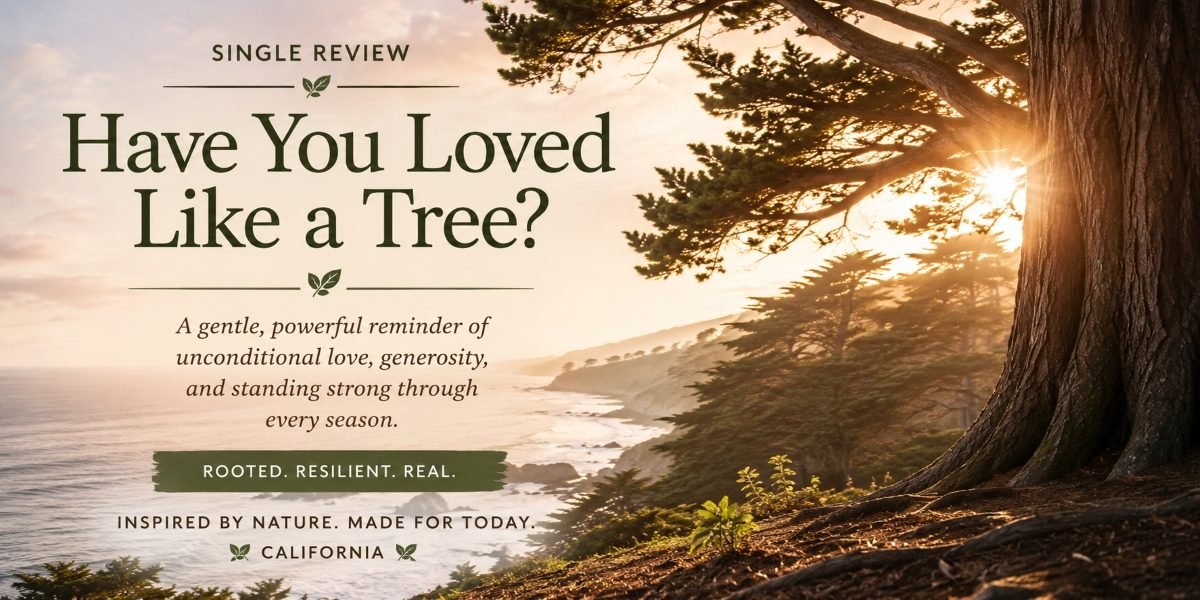
California has always understood the symbolic power of a tree. From the ancient redwoods towering above the northern coast to the wind-shaped cypress of Monterey and the palms lining Los Angeles boulevards, trees are inseparable from the state’s visual mythology. They represent endurance, reinvention and the strange coexistence of permanence and change that defines life on the West Coast.
That makes Shweta Harve’s “Have You Loved Like a Tree?” particularly interesting when heard through a California lens. The Dallas-based singer-songwriter has created a gentle, contemplative single built around a question that initially sounds almost whimsical. Stay with it, though, and the question becomes considerably more demanding.
What would it actually mean to love like a tree?
Harve’s answer is less about romance than generosity. A tree offers shade without asking who deserves it. Its branches provide shelter. Its roots hold firm while seasons change around it. It gives without advertising its generosity.
In California, a place associated equally with natural grandeur and relentless personal ambition, that idea carries unexpected weight.
This is a state where wellness has become an industry, mindfulness an app subscription and personal reinvention practically a civic tradition. From Silicon Valley productivity culture to Hollywood’s machinery of attention, California can sometimes turn even the pursuit of inner peace into another achievement to be measured.
Harve’s song offers something simpler.
Just give.
Just grow.
Just be there.
Musically, “Have You Loved Like a Tree?” wisely avoids overwhelming its central metaphor. The arrangement feels spacious and organic, favoring warmth over spectacle. Rather than chasing the enormous choruses and hyper-compressed production that characterize much contemporary pop, the track leaves breathing room around Harve’s voice.
That spaciousness gives the song something of a coastal quality. You can imagine it accompanying a drive along Highway 1 after the traffic disappears, or playing quietly as late-afternoon sunlight moves through eucalyptus branches. It isn’t music designed to fight its surroundings. It seems happier becoming part of them.
Harve’s vocal delivery follows the same philosophy. She sings with conviction but avoids turning sincerity into melodrama. There is restraint in the performance, and that restraint makes the lyric feel less like a sermon and more like an invitation.
The distinction matters because this song could easily have become unbearably earnest.
Instead, Harve trusts the metaphor.
She also trusts the listener.
The track becomes more compelling when considered alongside her earlier single “What the Troll?”, which reached No. 26 on the Mediabase Adult Contemporary chart. That song addressed online trolling, cyberbullying and the erosion of empathy in digital communication.
The two singles almost function as opposing worlds.
“What the Troll?” lives behind the screen.
“Have You Loved Like a Tree?” steps outside.
One examines anonymity and disconnection. The other searches for something elemental and enduring. Taken together, they suggest Harve is developing an artistic identity around questions of how human beings relate to one another in a world increasingly shaped by technology.
That theme feels especially resonant in California, where some of the technologies that transformed human communication were created alongside some of America’s most spectacular natural environments.
Drive from Silicon Valley toward the Santa Cruz Mountains and the contradiction becomes almost absurdly visible: an industry devoted to accelerating the future sitting beside redwoods that measure existence in centuries.
Harve’s tree belongs on the slower clock.
And perhaps that’s the song’s most appealing quality.
It refuses urgency.
If there is an area where the track could grow, it’s in the dynamics. The reflective arrangement suits the material beautifully, but an unexpected harmonic change or stronger instrumental crescendo could provide greater contrast. The metaphor is sturdy enough to support a more adventurous musical moment, particularly near the conclusion.
Still, restraint appears to be an intentional part of Harve’s aesthetic. She isn’t trying to manufacture transcendence through volume.
She wants the idea to linger.
And it does.
California listeners may also find an environmental undercurrent in the song, whether Harve explicitly intends one or not. In a state shaped by drought, wildfires and continuing debates over conservation, a tree is never entirely just a metaphor. It is shade during extreme heat, habitat, carbon storage and, increasingly, something vulnerable.
That reality adds another dimension to Harve’s question.
Perhaps loving like a tree also means recognizing our dependence on things that give far more than they take.
Ultimately, “Have You Loved Like a Tree?” succeeds because it transforms an uncomplicated image into an unexpectedly expansive meditation. Love here isn’t fireworks, possession or dramatic declarations. It is patience. Shelter. Consistency. The willingness to remain present through changing seasons.
Those ideas may not sound rebellious.
But consider the culture around us: endless scrolling, personal branding, optimization, instant gratification and the pressure to turn virtually every experience into something visible.
Against all that noise, Harve proposes the tree.
Root yourself.
Grow slowly.
Give something back.
From beneath the redwoods of Humboldt County to the jacarandas flowering purple across Southern California, that message feels right at home.
Rating: 8.5/10. The song’s memorable metaphor, sincere vocal performance, and thoughtful restraint give it lasting emotional appeal. A little more dynamic experimentation could elevate future recordings, but “Have You Loved Like a Tree?” already achieves something more important than immediate impact.
It gives the listener somewhere quiet to stand.