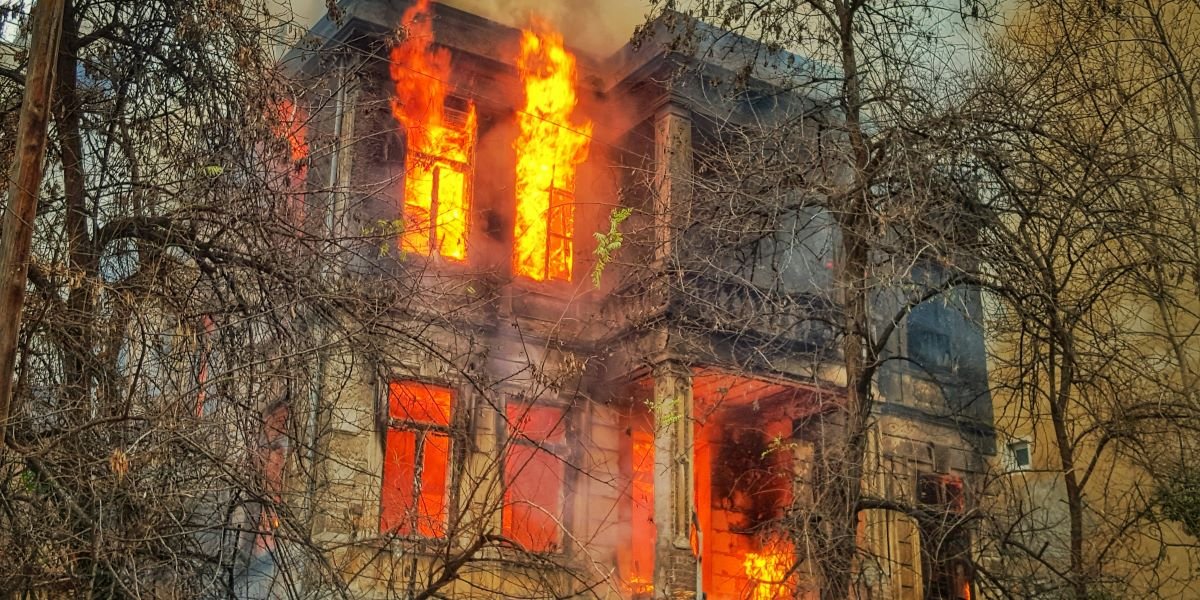

Governor Gavin Newsom on September 17 launched the Disaster Rebuilding Assistance Program, a $100 million state-funded initiative designed to help survivors of the January 2025 Eaton and Palisades fires close the gap between what their insurance covers and what rebuilding actually costs. The program offers interest rate buydowns and loan-loss guarantees to reduce borrowing costs, connect homeowners with vetted lenders, and expand loan access for low- to moderate-income households who have been unable to begin reconstruction nearly 21 months after the fires destroyed more than 16,000 structures and killed 31 people across Los Angeles County.
Key Takeaways
- The Disaster Rebuilding Assistance Program provides $100 million in state-funded financing tools, including interest rate buydowns and loan-loss guarantees for fire survivors
- The program was first announced during Newsom’s State of the State address and developed in response to direct feedback from Eaton and Palisades fire survivors
- The Eaton and Palisades fires combined destroyed more than 16,000 structures, damaged over 2,000 more, and killed 31 people across 37,469 acres in January 2025
- As of March 2026, nearly 42,000 insurance claims had been filed, with more than 40,000 at least partially paid, totaling $23.7 billion
- The CalAssist mortgage relief program has awarded $54 million to 1,575 households as of September 14, 2026, with 76% of funds directed to homes in the fire zones
- The launch came days after Newsom signed smoke remediation legislation and extended mortgage protections for wildfire survivors
How the Program Works for Homeowners Facing a Rebuilding Cost Gap
The central problem the Disaster Rebuilding Assistance Program targets is specific and well-documented. Thousands of Eaton and Palisades fire survivors received insurance payouts that fall short of what it costs to rebuild a home in Los Angeles County in 2026. Construction costs have risen since many of these policies were written. Material prices remain elevated. Labor is constrained. And the scale of the rebuilding effort, with more than 16,000 structures destroyed across two fire zones, has created a demand surge that pushes project costs higher for every homeowner in the queue.
The program addresses that gap through two primary financing tools:
- Interest rate buydowns. The state uses upfront assistance to reduce the interest rate a borrower pays on a rebuilding loan. The buydown lowers monthly payments and reduces the total cost of borrowing over the life of the loan, making reconstruction financially viable for homeowners whose insurance proceeds cover a portion of the rebuild but not all of it.
- Loan-loss guarantees. The state absorbs a portion of the lender’s risk, which allows participating lenders to extend larger loans or approve borrowers who would otherwise fall outside standard qualification criteria. For low- to moderate-income households, this mechanism is particularly relevant because it expands access to financing that conventional underwriting would deny.
The program also connects homeowners with a network of trusted lenders who have been vetted by the state, reducing the risk that survivors navigating a complex financial situation encounter predatory lending terms or unqualified contractors operating in the fire recovery market.
Tomiquia Moss, Secretary of the California Housing and Homelessness Agency, framed the program as a continuation of the state’s layered recovery approach. “For victims of wildfire and other natural disasters, the process of rebuilding their homes can be both daunting and expensive,” Moss said. “Through the Disaster Rebuilding Assistance Program, we are continuing to make key investments to help Californians with the financial assistance they need to rebuild.”
The Scale of What the Eaton and Palisades Fires Destroyed
The fires that erupted on January 7, 2025, remain among the most destructive wildfire events in California and U.S. history. The Palisades Fire burned 23,448 acres, destroyed 6,837 structures, damaged 973, and killed 12 people. The Eaton Fire burned 14,021 acres, destroyed 9,414 structures, damaged 1,074, and killed 19 people. Both fires were contained by January 31, 2025, but the recovery timeline has extended far beyond containment.
The combined destruction of more than 16,000 structures, the vast majority of them residential, created a housing displacement crisis across some of the most established neighborhoods in Los Angeles County. Pacific Palisades, Altadena, and portions of Malibu lost entire blocks of single-family homes. Many of the destroyed homes were owner-occupied properties that families had held for decades, and the insurance policies covering those homes reflected premium structures and replacement cost estimates that predated the post-fire construction cost surge.
As of March 2026, the California Department of Insurance reported that nearly 42,000 insurance claims had been filed from the two fires, with more than 40,000 at least partially paid, totaling $23.7 billion. The gap between what insurers have paid and what full rebuilding costs is the space the new program is designed to fill. For homeowners whose claims have been paid in full but whose rebuilding estimates exceed the payout, the Disaster Rebuilding Assistance Program offers a state-backed path to bridge financing that did not previously exist at this scale.
Recovery Actions the State Has Taken Since January 2025
The $100 million program arrives as the latest layer in a recovery infrastructure that the Newsom administration has been building since the fires were still burning. The state’s response has unfolded across multiple tracks, each targeting a different dimension of the rebuilding challenge:
Mortgage relief. Governor Newsom signed AB 238 to provide eligible homeowners with up to one year of mortgage forbearance, allowing families who lost their homes to pause payments while navigating insurance claims and rebuilding plans. The state also launched the CalAssist mortgage relief fund, which covers up to $100,000 per homeowner in direct assistance. As of September 14, 2026, CalAssist had awarded $54 million to 1,575 households, with 76% of the funds directed to homes in the fire-affected zones. The grants do not have to be repaid within the first year.
Permitting acceleration. California funded pre-approved, low-cost home designs tailored to the architectural character of the affected communities. The intent is to allow permits to be issued in a fraction of the time a custom design review would require, removing one of the bottlenecks that slows the transition from insurance payout to active construction. The first home rebuilt in Pacific Palisades received its certificate of occupancy in mid-November 2025, roughly six months after demolition. But that pace has not been the norm for most homeowners, many of whom are still waiting on permits, contractor availability, or financing.
Consumer protection. The state enforced and strengthened price-gouging protections, cracked down on illegal and predatory land speculation in the fire zones, and expanded consumer protections to prevent families from being exploited during the rebuilding process. Reports of unsolicited purchase offers to fire survivors surfaced within weeks of the fires, prompting legislative and enforcement action.
Smoke remediation. Days before the Disaster Rebuilding Assistance Program launch, Newsom signed legislation targeting smoke damage in homes and structures adjacent to the fire zones. Smoke remediation addresses a category of damage that extends beyond the burn perimeter, affecting properties that were not destroyed but sustained interior contamination from prolonged smoke exposure.
The Legislative Fight Over Who Pays for Wildfire Recovery
The $100 million program is state-funded, but the broader question of who bears the long-term financial burden of wildfire recovery in California remains unresolved. The 2026 legislative session addressed wildfire costs extensively, producing several significant measures and one notable failure.
The Wildfire Mitigation Affordability Act, SB 894, authored by Senator Ben Allen, establishes the California Wildfire Resilience Loan Program. The program creates a state-backed loan loss reserve that can leverage public dollars by as much as 10-to-1 to unlock private capital, lower interest rates, and finance home hardening and defensible space improvements for residential and small business properties. The bill targets prevention rather than recovery, funding the kind of structural upgrades that reduce a home’s vulnerability to wildfire before a fire arrives.
SB 973, the Wildfire County Coordinator Program authored by Senator Josh Becker, would strengthen community wildfire resilience statewide by pairing standardized state risk assessment guidance with locally delivered implementation capacity. The bill codifies and expands a program that has already operated in pilot form, giving county-level coordinators the tools and authority to translate state wildfire strategy into on-the-ground risk reduction.
Where the legislature drew a line was on wildfire liability. Governor Newsom attempted to amend SB 492 to shift wildfire liability costs away from utilities, a move that would have altered the financial exposure that Pacific Gas & Electric, Southern California Edison, and other investor-owned utilities face when their equipment is found to have caused a wildfire. The state Legislature rejected the amendment, effectively killing the proposal during a special session in August. The rejection means the existing framework, in which utilities bear substantial liability for fire damage caused by their infrastructure, remains in place heading into the next fire season.
California’s Active 2026 Fire Season Adds Urgency to the Rebuilding Effort
The Disaster Rebuilding Assistance Program launches during a 2026 wildfire season that is already more active than average. As of mid-September, 4,944 fires have burned 273,460 acres across the state. California entered fire season with snowpack at just 18% of average, one of the lowest readings in recent years, which left vegetation drier earlier in the season and expanded the window for fire activity.
The conditions are a reminder that the recovery from the 2025 fires is happening simultaneously with ongoing fire risk. Homeowners who are rebuilding in or near the Eaton and Palisades fire zones are constructing new structures in communities that face the same geographic and climatic conditions that produced the January 2025 fires. The home hardening provisions in SB 894, if funded and implemented, would apply to some of these rebuilds. But the tension between the speed of recovery and the rigor of fire-resistant construction standards is a tradeoff that plays out at every building site.
For the thousands of Eaton and Palisades survivors still waiting to break ground, the $100 million Disaster Rebuilding Assistance Program represents the state’s acknowledgment that insurance alone is not sufficient to rebuild at current costs, that conventional lending is not accessible to every homeowner who lost a home, and that closing the financial gap between payout and construction is a public interest problem that requires public investment. Whether $100 million is enough to materially accelerate the rebuilding timeline across 16,000 destroyed structures is a question the data will answer over the next 12 months.
FAQs
What Is the Disaster Rebuilding Assistance Program?
The Disaster Rebuilding Assistance Program is a $100 million state-funded initiative launched on September 17, 2026, that provides interest rate buydowns and loan-loss guarantees to help survivors of the Eaton and Palisades fires close the gap between insurance payouts and actual rebuilding costs. The program also connects homeowners with vetted lenders and expands loan access for low- to moderate-income households.
How Many Structures Were Destroyed in the Eaton and Palisades Fires?
The two fires combined destroyed more than 16,000 structures, damaged over 2,000, and killed 31 people across 37,469 acres in Los Angeles County. The Palisades Fire destroyed 6,837 structures across 23,448 acres. The Eaton Fire destroyed 9,414 structures across 14,021 acres. Both fires started on January 7, 2025, and were contained by January 31.
How Much Has Been Paid in Insurance Claims From the 2025 LA Fires?
As of March 2026, nearly 42,000 insurance claims had been filed, with more than 40,000 at least partially paid, totaling $23.7 billion, according to the California Department of Insurance. Many homeowners have reported that their payouts fall short of current rebuilding costs.
What Other Recovery Programs Are Available for Fire Survivors?
The CalAssist mortgage relief fund provides up to $100,000 per homeowner in grants that do not have to be repaid within the first year. As of September 14, 2026, the program had awarded $54 million to 1,575 households. AB 238 provides eligible homeowners with up to one year of mortgage forbearance. The state has also funded pre-approved home designs to accelerate the permitting process.