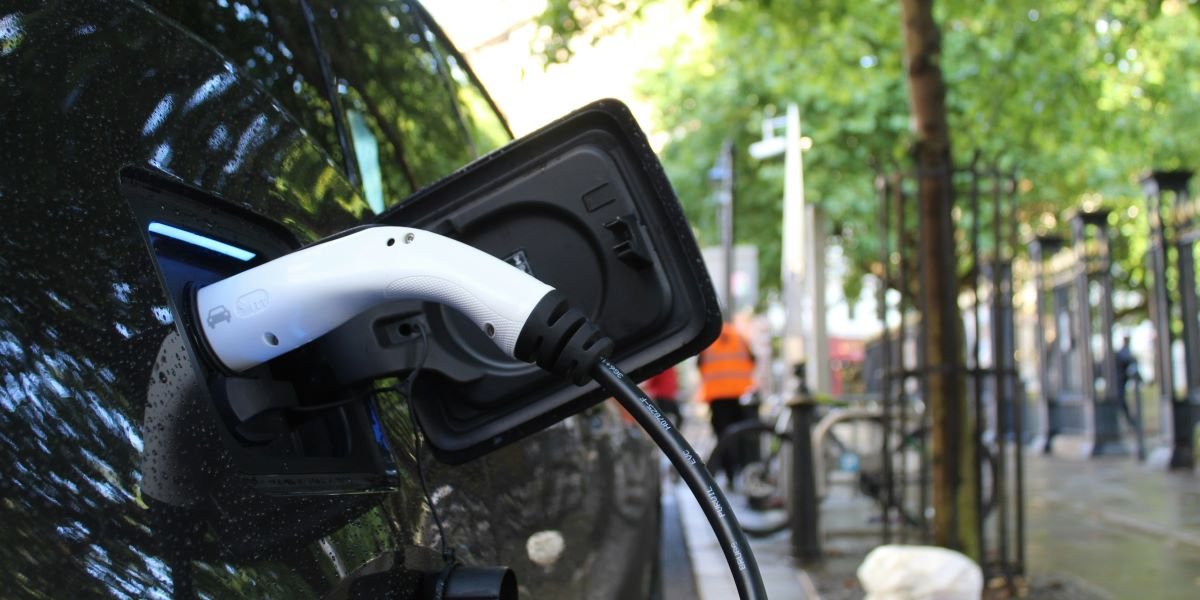

When the Environmental Protection Agency moved on June 12 to send a set of California vehicle-emissions waivers to Congress, the headlines framed it as another round in a long climate fight. That framing is incomplete. The more consequential question for the state is not whether California meets its 2035 environmental targets, but what happens to the electric-vehicle economy that has grown up around those targets if the rules underpinning it are unwound.
California’s climate goals and its EV industry are not separate stories. They are the same story, and a rollback would test the second as much as the first.
What The EPA Actually Did
The agency transmitted four California waiver rules to Congress under the Congressional Review Act, arguing the waivers, granted under prior administrations, should have been submitted to lawmakers in the first place. Among them, as Reuters reported, is a rule the EPA labels Affordable Clean Cars I, which allows California to set vehicle-emissions requirements stricter than federal standards.
The action does not, by itself, repeal anything. It hands Congress a mechanism to do so, extending a process that began in 2025, when lawmakers used the same review act to disapprove three earlier California waivers, including the centerpiece Advanced Clean Cars II program. California and a coalition of other states sued over that move, and the underlying legal question, whether these waivers are even subject to the review act, remains unsettled in federal court.
Why The Mandate And The Economy Are Tangled Together
The policy at the center of all this is California’s requirement, set by the Air Resources Board, that an increasing share of new vehicle sales be zero-emission, rising to 100 percent of new light- and medium-duty sales by 2035. That mandate is also an industrial policy. It has functioned as a demand signal, telling automakers, battery makers, charging companies, and parts suppliers that a guaranteed market exists in the country’s largest car market and in the roughly one in three states that follow California’s lead.
Strip out the mandate and the signal weakens. Companies that built California-specific production plans, dealers that invested in EV inventory and service training, and charging firms that mapped build-outs against the state’s sales targets all priced in a regulatory floor. The value of that floor is not its idealism. It is its predictability.
The Cost Of Uncertainty For Automakers And Suppliers
For manufacturers, the harder problem is rarely a rule they dislike. It is a rule they cannot count on. Vehicle programs are planned years ahead, with capital committed to factories, supply contracts, and model lineups that cannot pivot on short notice. A waiver framework that is granted, challenged, revoked, litigated, and potentially restored leaves planners guessing about the rules that will govern the cars they are designing now for sale at the end of the decade.
That uncertainty carries a cost even if the mandate ultimately survives. Suppliers may hedge by slowing EV-specific investment. Charging deployment, already sensitive to projected vehicle volumes, becomes harder to underwrite. California’s appeal as the place to build the EV supply chain rests partly on the certainty its standards once provided, and that certainty is what the current fight erodes.
The Case That California’s EV Momentum Outlasts The Rule
The opposite view deserves a fair hearing. Supporters of the rollback argue it restores consumer choice and removes a mandate they see as forcing a transition faster than buyers want. There is also a market argument that California’s EV economy no longer needs a mandate to function. The state already has the country’s largest charging network, a concentration of EV and battery firms, and consumer demand that predates the 2035 target. By this reasoning, the industry has reached a scale where it competes on price, range, and product rather than on regulatory compulsion, and a softened mandate would slow but not reverse it.
That case is real, and it is why the stakes are economic rather than existential. The question is not whether California builds electric vehicles, but at what pace, with how much investment certainty, and whether the state keeps its position as the market that sets the terms others follow.
A Decision The Courts, Not Just Congress, Will Shape
What makes the June 12 transmission notable is less the action than the open question behind it. The legal dispute over whether the review act applies to California’s waivers is still moving through the courts, which means automakers face a stretch of ambiguity rather than a clean answer. For an industry that runs on long horizons, ambiguity is its own kind of policy.
California’s environmental targets will be debated on their merits, as they should be. But the more immediate test is industrial. The waiver framework helped turn the state into the anchor of the American EV economy. Whether that anchor holds, or loosens, is the part of this fight worth watching.