
California passed a law to protect drivers from exactly the kind of gas price crisis playing out right now. Three years later, the law has never been used — and the decision to shelve it is reshaping the state’s governor’s race.
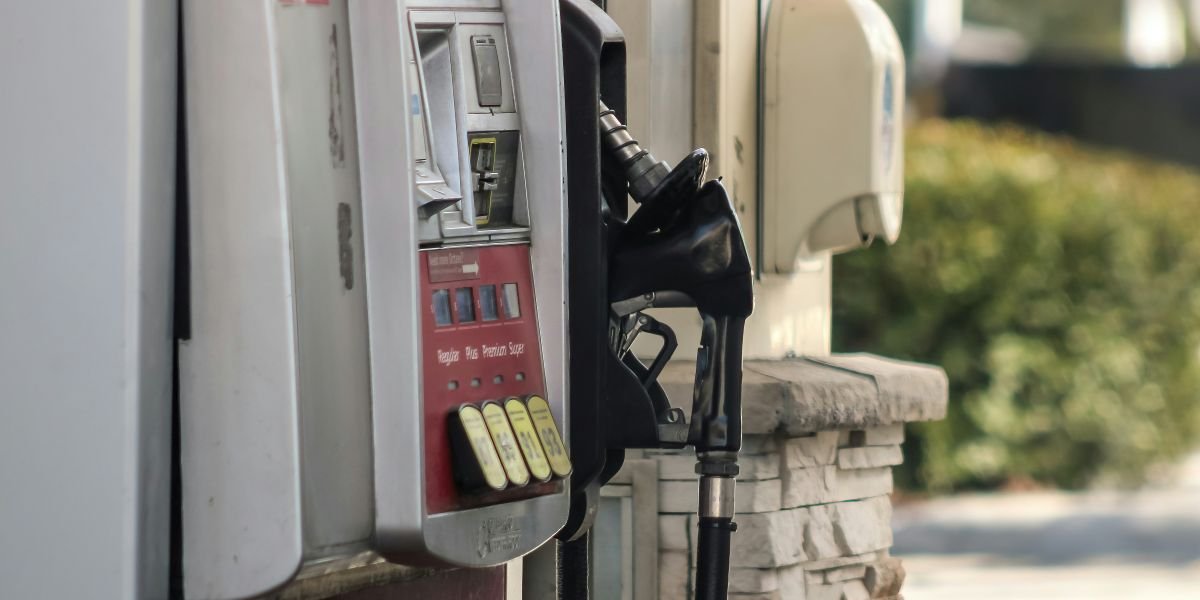
The numbers at California pumps tell a stark story. Gas prices climbed above $5.50 a gallon statewide, compared to nearly $3.80 nationally. The gap between what Californians pay and what the rest of the country pays at the pump has become a flashpoint — not just an inconvenience, but a political crisis arriving at the worst possible moment for state Democrats navigating the June primary.
The Law That Wasn’t Used
In 2023, amid a previous round of price spikes that left California drivers paying more than $2 above the national average, the state Legislature passed Senate Bill X1-2 — a law that gave the California Energy Commission the authority to cap refinery profit margins and penalize oil companies for price gouging. Gov. Gavin Newsom signed it. He proclaimed “California took on Big Oil and won.” Its author, then-Sen. Nancy Skinner, called it a “landmark law” that “will allow us to hold oil companies accountable if they pad their profits at the expense of hard-working families.”
The law created a new oversight division inside the California Energy Commission — the Division of Petroleum Market Oversight — tasked with watching the fuel market and recommending action when refinery margins grew excessive. That division found an unexplained gasoline premium of about 41 cents per gallon between 2015 and 2024, costing drivers an estimated $59 billion.
Then, in August 2025, the California Energy Commission voted to put the law’s core enforcement mechanism on ice. The commission voted 3-0 to pass a resolution resolving not to adopt for at least the next five years a “maximum gross gasoline refining margin” and a penalty for refiners that exceed it. Skinner — who wrote the law as a senator and was now serving as a commissioner — was absent when her own commission voted to delay it.
The official rationale: the state needed to reassure oil companies that California was still a viable place to operate. Two major refineries — Phillips 66 in Los Angeles and Valero in Benicia — had announced closures. Ahead of the vote, commission Vice Chair Siva Gunda said the delay would help boost “investor confidence” in the state’s oil refiners, “thereby ensuring a reliable in-state refining capacity.”
An Energy Island With Nowhere to Turn
The consequences of California’s structural energy position are not abstract. They show up at every pump in the state, and they are amplified every time a global shock hits oil markets.
California’s in-state crude oil production has declined to roughly 23% of consumption, making the state heavily dependent on imports. The state has no pipelines connecting it to the rest of the country, meaning all imported crude and refined fuel arrives by tanker. California requires a special blend of cleaner-burning gasoline not produced elsewhere, which means the state cannot easily draw on fuel stocks from other regions during a shortage.
California has the highest state gasoline tax, at 71 cents per gallon. There is also an additional carbon tax unique to California that can add another 20 to 25 cents per gallon, and regulations requiring cleaner-burning gasoline can add approximately 25 cents more. Those layers compound the base effect of global crude prices rather than absorbing them.
In April 2026, Valero plans to idle its refinery in Benicia, which produces 145,000 barrels of oil per day. That closure removes roughly 10% of the state’s remaining in-state refining capacity — compressing the supply pipeline further just as demand is being stressed by the global oil shock tied to the U.S.-Iran conflict.
Global Shock Meets Structural Vulnerability
Analysts are careful to separate the two drivers of California’s current gas price spike. Experts say the latest gas price spike is driven by global oil markets and the Iran conflict, while California’s higher base price stems from refinery closures, the state’s market and environmental rules.
Since the conflict began, the international benchmark for crude oil has climbed more than $25 a barrel — a shift that typically translates to about 60 cents per gallon at the pump, in line with the increase in California retail prices, according to Severin Borenstein of UC Berkeley’s Energy Institute. “All of the change we’ve seen in the last couple of weeks is in line with the change in crude oil prices, and therefore is not California specific,” he said.
“The current increase is almost entirely due to global oil markets,” said Paasha Mahdavi, a UC Santa Barbara political science professor and energy policy expert. “The problem, though… is that our starting point is so much higher than nationally.”
That starting point is exactly what the 2023 law was designed to address. Consumer watchdog advocates argue this is precisely the moment the legislation was built for. “When you have this type of level of gas run up, you’re going to need those tools,” said Jamie Court, president of Consumer Watchdog, adding that the governor “panicked” in delaying the rules.
Those who supported the delay have a counterargument: penalizing refiners, they say, risked driving them out of the state entirely. With California already on track to lose significant refining capacity, that fear carries real weight for regulators trying to ensure fuel supply doesn’t collapse entirely.
The Governor’s Race Gets a New Issue
The gas price crisis has arrived precisely as California’s June primary heats up, and candidates are moving quickly to frame their positions. One candidate wants to suspend a host of state environmental policies that boost the price of gas. Another wants to suspend the 61-cent-a-gallon state gas tax. At least two Democratic contenders for California governor are capitalizing on the moment to push for policies they say would give drivers a break.
The political dynamic is awkward for Newsom, who signed the original price-gouging law with considerable fanfare and then effectively retreated from it less than two years later. His administration’s response to the current spike has focused on blaming global oil markets and working to convert closing refineries into fuel import terminals — longer-horizon solutions that offer little immediate relief to drivers paying above $5.50 today.
The commissioners who voted to delay the enforcement rules did leave themselves an exit ramp. The commission left the door open to rescind the delay and move forward with the rule before the five years are up if they change their minds. Whether the current price environment is enough to change those minds — and how quickly the Commission could act if it did — remains an open question.
“Because they’re putting it on hold, it’s not going to be prioritized,” Court of Consumer Watchdog told KPBS. “And if prices start spiking and profits start spiking, it’s going to take a year and a half to even get a rule in place.”
California’s gas price crisis is the product of global forces meeting structural vulnerabilities that have been building for years. The state built a policy response. Then it chose not to use it. Now voters and candidates alike are asking whether that choice was a miscalculation — and what it would take to reverse it.