
About 115 miles east of San Diego, in the flat sun-bleached expanse of California’s Imperial Valley, a plot of dirt on West Aten Road gives no indication of what its developer wants to build there. No foundations have been poured. No steel has gone up. But the “Not In My Backyard” signs planted across neighborhood lawns tell the story clearly enough.
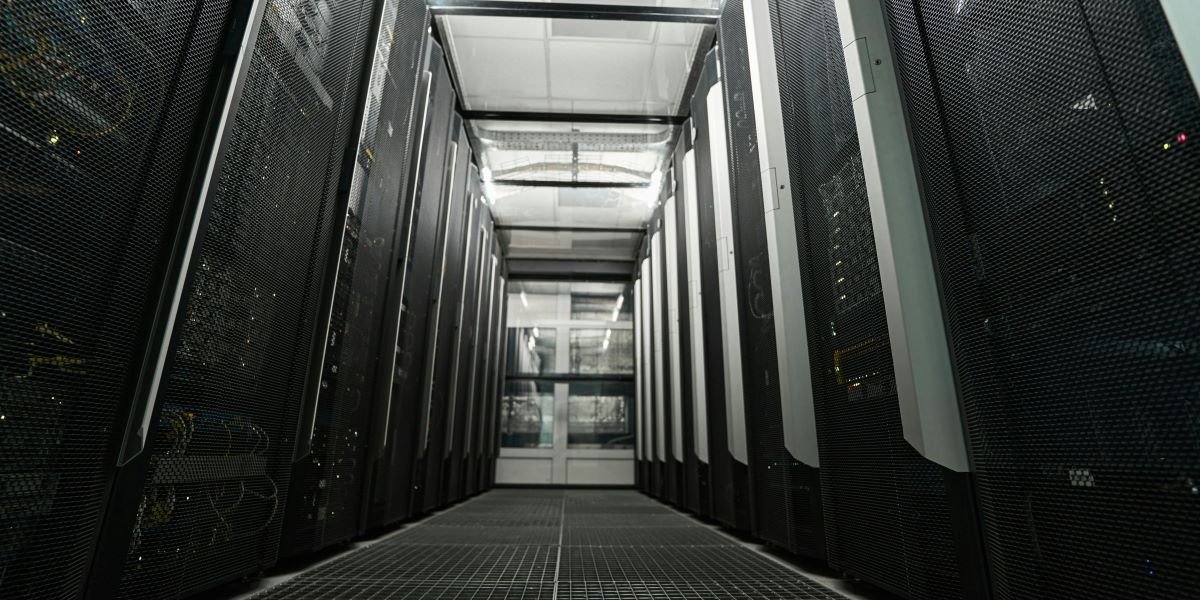
A roughly $10 billion, 330-megawatt data center is proposed for the city of Imperial — a facility that would span 17 football fields’ worth of land and require 750,000 gallons of water a day to operate. It would be, if completed, the largest operating data center in the state.
And it is just one of dozens coming.
The Scale of What Is Coming
There are currently 286 data centers operating in California, according to Data Center Map. The Imperial County facility is one of 24 additional projects planned for completion across the state by 2030, according to market intelligence platform Cleanview. That would push California past 300 facilities — a threshold that researchers, water managers, and community advocates say the state’s water infrastructure is not prepared to handle.
More than 90% of data centers in the United States draw their cooling water from municipal systems, according to Shaolei Ren, an associate professor of electrical and computer engineering at UC Riverside. During the hottest summer days, a single 100-megawatt facility can consume approximately 1 million gallons of water — equivalent to the daily home water use of 10,000 people.
A UC Riverside research team found that data centers nationally could collectively require 697 to 1,451 million gallons per day of new water capacity through 2030. For context, New York City’s average daily water supply is approximately 1,000 million gallons per day.
In California alone, water infrastructure upgrade costs just to meet the demands of the new facilities planned statewide could run from $200 million to $800 million, according to Ren’s estimates — based on the approximately 1.7 gigawatts of electricity the proposed data centers would collectively consume.
A Community Caught in the Middle
For Margie Padilla, the debate is not abstract. The 43-year-old Imperial mother’s monthly water, sewer, and trash bill already ranges from $90 to $130 — more than double what she paid six years ago. The proposed data center would sit less than half a mile from her home.
Padilla grows fresh produce to support her sons’ iron levels after they were treated for anemia; she depends on that garden. “I can only imagine the rates going up once that data center is up and running,” she said.
Developer Sebastian Rucci maintains the project will not raise water or power costs for local residents. “We have studies on the air. We have studies on the water. The electricity could be handled,” Rucci said. “We did our homework.” He has proposed sourcing 6 million gallons per day of reclaimed water from the cities of Imperial and El Centro to supply the facility — an arrangement that has not yet materialized. The Imperial Irrigation District, which supplies water and power to all of Imperial County and parts of Riverside and San Diego counties, declined to be interviewed and noted in a written statement that it has yet to receive a formal request for water from the project.
The project is currently facing litigation, and the next court date has been set for late April. Imperial city officials have not addressed residents’ concerns directly, noting only that long-term utility impacts have not been determined.
The Regulatory Blind Spot
The water question is compounding a regulatory vacuum that California has so far failed to close. California does not require AI data centers to report their water usage, and the state’s Water Resources Control Board does not maintain a specific list of water rights held by data centers. Recent efforts to require the facilities’ owners to report how much water they use to the state have faltered.
Governor Newsom vetoed a bill that would have required data center operators to disclose their water use, stating he was reluctant to impose requirements on data centers “without understanding the full impact on businesses and the consumers of their technology.” A separate Assembly bill requiring data centers to disclose their electricity use was placed in the Senate’s suspense file and quietly halted.
A UC Berkeley School of Law report, published earlier this year, found that oversight of direct data center water use in California relies on “a patchwork of policies and regulations that has gaps and inconsistencies,” and warned: “If the State of California wants to address concerns about data centers’ rapidly expanding water footprint, it needs to act before more centers are built. Once a data center is in place it will be difficult or impossible to mitigate its negative impacts.”
The report recommends that the state expand requirements for data center operators to report anticipated and actual water use, build local regulatory capacity, and establish efficiency incentives — including requirements to use recycled water where feasible.
No Single Fix
Shivaji Deshmukh, general manager of the Metropolitan Water District of Southern California — the largest supplier of treated water in the U.S. — said there is no single fix. “Every community — even within our service area — is different in terms of costs, what type of supply they have. Some regions have access to groundwater. Some have access to treated wastewater or recycled water somewhere along the coast,” he said.
Ren at UC Riverside noted that comparing data center water use only by annual totals misses the real problem. “Only comparing the annual totals can obscure the real water challenge,” he said, noting that demand spikes from data centers can cause bottlenecks in small community water systems even when annual totals appear manageable relative to other industries.
UC Riverside researcher Ren also pushed back on the industry argument that stricter rules would drive data center development out of California, noting that data center locations are driven by energy prices, land availability, and local permitting — not proximity to AI researchers. “These two things are sort of separate. They’re decoupled,” he said.
Khara Boender, senior manager for state policy at the Data Center Coalition, acknowledged the scale of the numbers. “I know when we start to talk about billions of gallons of water in a year, that sounds absolutely crazy,” she said. “Looking at how that falls into context with some of these other large water users, I think that that kind of contextualization could be surprising to folks.”
For Padilla tending her garden in Imperial Valley, contextualization offers little comfort. The data center developer hopes to break ground soon. The water question remains unanswered.