
By: Nina Woods
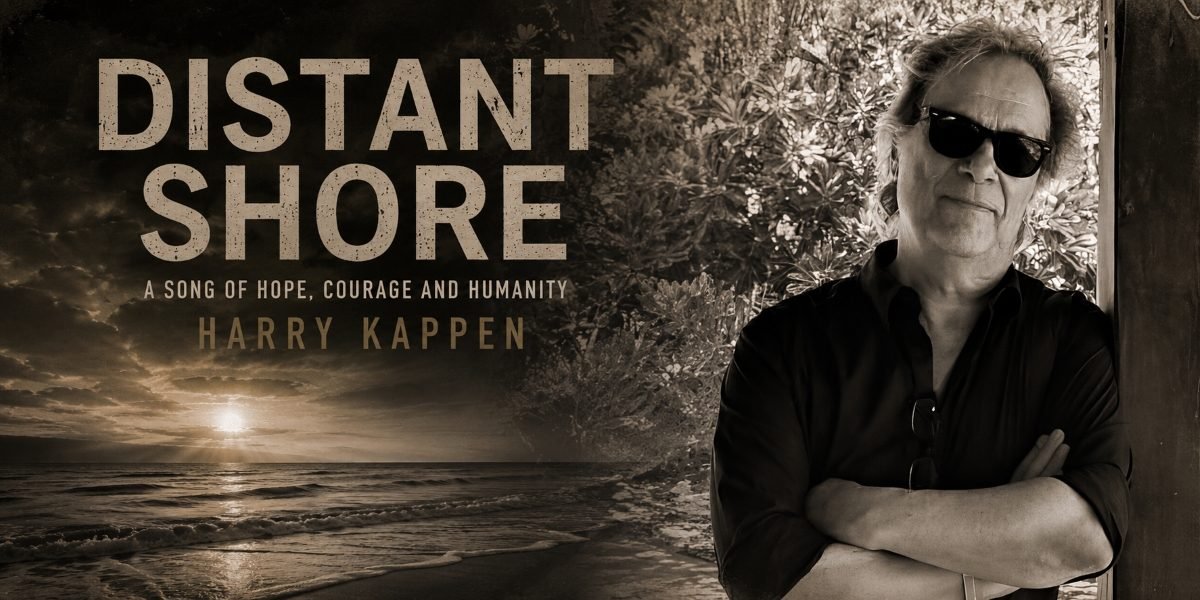
There’s something wonderfully refreshing about discovering an artist who isn’t trying to chase the latest trend, algorithm, or viral moment. Harry Kappen has always followed his own compass, and with “Distant Shore,” he delivers a song that feels timeless precisely because it refuses to be fashionable.
Taken from his album After the Crossing, “Distant Shore” is one of those records that quietly sneaks up on you. At first listen, it’s an atmospheric rock ballad with beautiful production and a memorable melody. Spend a little more time with it, though, and you realize it’s carrying something much heavier, a meditation on displacement, survival, and the courage it takes to search for a better life.
The inspiration comes from the stories of refugees crossing dangerous borders and seas to escape war, poverty, and persecution. That’s ambitious territory for any songwriter, but Kappen wisely avoids preaching or politicizing. Instead, he tells a human story.
And that’s exactly why it works.
The opening lyric immediately draws you in:
“I kiss the door I can’t replace…”
What a beautiful image. Before the song ever talks about oceans or danger, it reminds us that leaving home isn’t about maps, it’s about saying goodbye to everything familiar. That emotional perspective gives “Distant Shore” an authenticity that’s difficult to manufacture.
Kappen knows how to let listeners fill in the blanks.
As the verses unfold, the imagery becomes increasingly vivid. Crowded trucks. Sleepless nights. Towering waves. Quiet prayers. Every scene feels cinematic without becoming melodramatic. Rather than overwhelm the listener with tragedy, the song trusts the details to carry the emotional weight.
Musically, “Distant Shore” is equally sophisticated.
Kappen wrote, performed, and produced the recording himself, and the craftsmanship shows throughout. The arrangement is spacious and immersive, built around lush keyboards and haunting mellotron textures that immediately recall the adventurous spirit of David Bowie. Kappen has acknowledged Bowie as one of the inspirations behind the song, particularly Space Oddity, and the influence is easy to hear,not as imitation, but as shared atmosphere.
Where Bowie looked toward the isolation of space, Kappen looks toward the uncertainty of the sea.
The production is wonderfully restrained. Every instrument has room to breathe. The guitars shimmer gently beneath layers of keyboards while understated percussion keeps everything moving forward without ever overwhelming the song. It’s proof that sometimes the powerful production choice is knowing what not to play.
One of the biggest surprises is Kappen’s vocal performance.
There’s no unnecessary showmanship here. He sings with warmth, sincerity, and just enough vulnerability to make every lyric believable. His delivery feels conversational rather than theatrical, inviting listeners into the story instead of performing it for them. That’s becoming an increasingly rare quality in modern recordings.
Then there’s the chorus.
“Where is that distant shore…”
Simple.
Direct.
Completely unforgettable.
It’s one of those phrases that grows larger each time you hear it. On one level, it’s about reaching physical safety. On another, it’s about finding hope, peace, belonging, even redemption. Kappen wisely leaves the meaning open enough that every listener can find their own “distant shore.”
That’s the hallmark of thoughtful songwriting.
The emotional intelligence running through this song likely isn’t accidental. Beyond his music career, Kappen spent more than twenty years working in youth care as a music therapist. That experience seems woven into everything he writes. His songs don’t simply describe emotion; they understand it. There’s compassion in every line without ever becoming sentimental.
“Distant Shore” also represents another strong step in what has become an impressively productive creative period. Albums like Escape, Time Will Tell, Four, and now After the Crossing have steadily established Kappen as one of independent rock’s more thoughtful voices. His recognition through international songwriting awards and nominations feels well deserved, but listening to this single, it’s clear the awards aren’t driving the music.
Curiosity is.
Empathy is.
Craftsmanship is.
What ultimately makes “Distant Shore” memorable isn’t just its message or its production; it’s its honesty. In a music landscape often dominated by instant gratification, Harry Kappen has created something that rewards patience. Each listen reveals another subtle instrumental texture, another lyrical nuance, another emotional layer hiding beneath the surface.
That’s the kind of record people used to spend weeks living with.
And maybe that’s the highest compliment you can pay “Distant Shore.”
It’s not trying to be today’s biggest hit.
It’s trying to become tomorrow’s favorite song.
Judging by the quiet confidence and emotional depth Harry Kappen brings to every note, there’s a very good chance it will.