By Eleanor Vance, Cultural Affairs Editor
The streaming wars created a strange kind of exhaustion.
For years, platforms chased scale through endless libraries, franchise universes, and billion-dollar productions designed to keep audiences trapped inside subscription ecosystems. Yet somewhere along the way, viewers began drifting toward something quieter, something more intentional.
That shift is exactly where the company believes its future lies.
Rather than trying to imitate Hollywood’s volume-driven model, the arts-focused FAST network has begun reshaping its identity around what executives describe as “cultural immersion programming,” a blend of live experiences, documentary storytelling, global arts coverage, and event-driven originals designed to feel connected to the real world instead of disconnected from it.
At the center of that strategy is Kurt A. Swauger, Head of Programming and Strategic Development for the network, who says the company made a deliberate decision to stop thinking like a conventional entertainment platform.
“We’re not trying to compete with giant entertainment companies on quantity,” Swauger said. “We’re building a destination around culture itself. Art already creates emotional moments around the world every single day. Museum openings, exhibitions, performances, rediscovered archives, and emerging artists. Our job is to extend those moments and make them accessible globally.”
That philosophy has gradually reshaped the company’s programming slate.
In the network’s earlier stages, leadership explored more traditional scripted and narrative concepts. But over time, executives realized the strongest audience engagement came from programming connected to real cultural movements already unfolding across galleries, museums, fairs and creative communities worldwide.
One example is That Boy on Stage: The John Shiner Story, a documentary exploring the life of teenage concert photographer John Shiner, whose images captured legendary artists including Freddie Mercury, David Bowie and Tina Turner before he disappeared from public view for decades. Rather than functioning as a standalone film release, the project was developed alongside gallery activations, archival exhibitions and broader media storytelling initiatives.
The goal, according to Swauger, is not simply to premiere content, but to create momentum around cultural rediscovery.
“We’re interested in programming that lives beyond a single viewing window,” he explained. “If a documentary can connect to a gallery event, an exhibition, a live discussion or a historical archive, it becomes larger than entertainment. It becomes part of the cultural conversation.”
That approach extends across much of the network’s growing lineup.
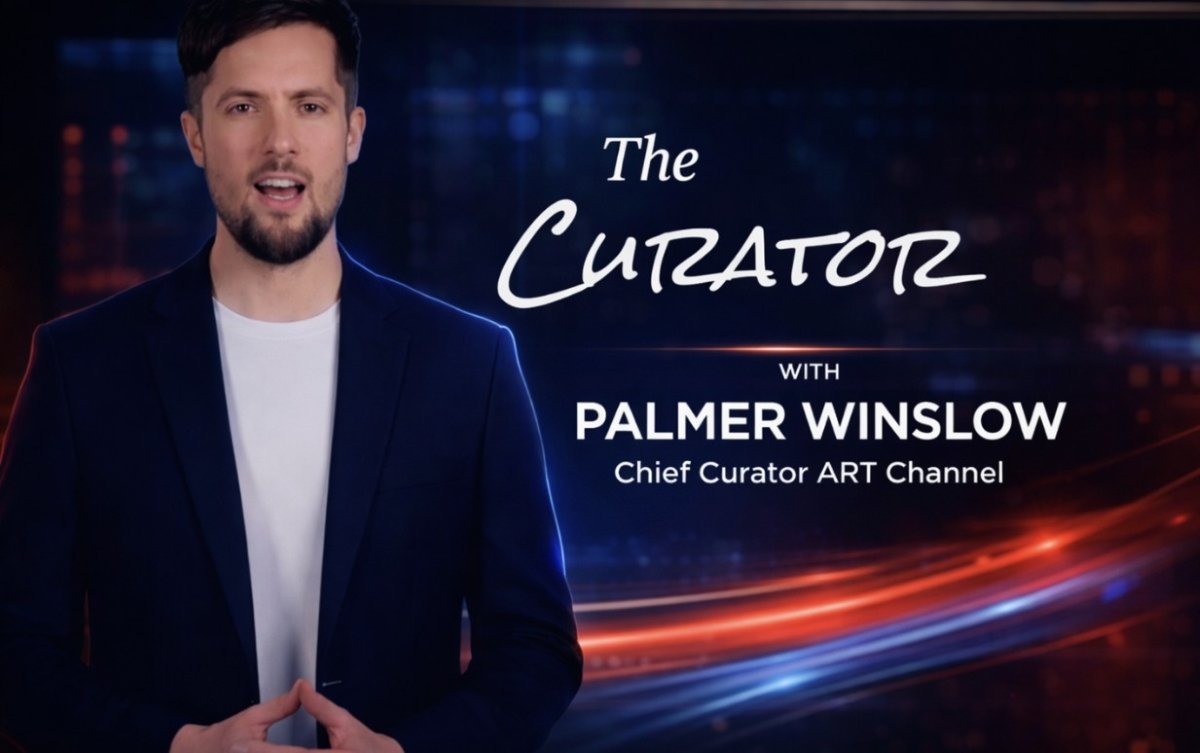
Its AI-hosted series The Curator, featuring virtual host Palmer Winslow, explores contemporary exhibitions, emerging artists and thematic movements within the global art world. Episodes are frequently timed alongside real-world events in cities such as Los Angeles, Miami, Hong Kong and New York, creating a bridge between physical cultural spaces and digital audiences.
Meanwhile, series like Cooktop Art: Dish’in’ blur the lines between culinary creativity and visual expression, pairing chefs and artists together to reinterpret iconic works through food, presentation and storytelling. Other productions explore digital art, metaverse culture, experimental creators and evolving forms of ownership in virtual spaces.
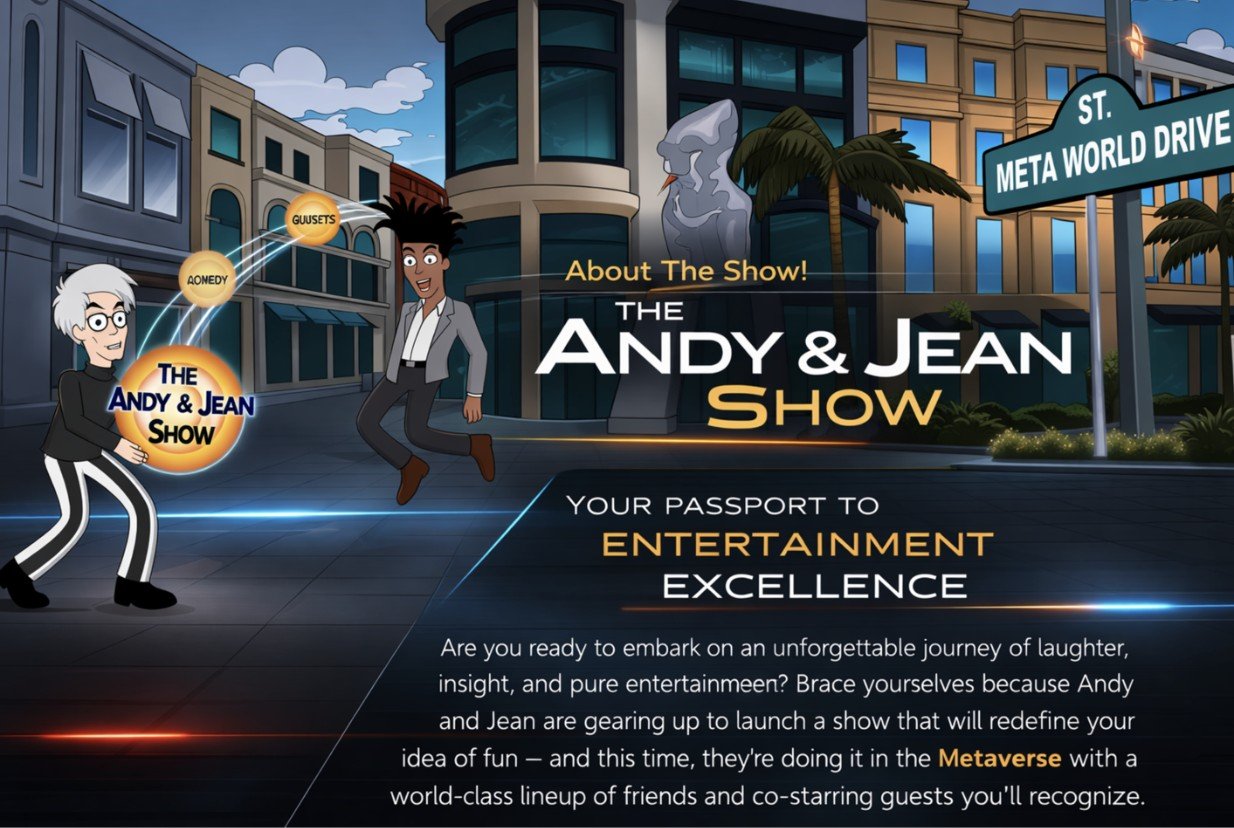
Even the network’s adult animated property, The Andy & Jean Show, inspired by Andy Warhol and Jean-Michel Basquiat, is positioned less as traditional animation and more as social commentary wrapped in pop culture absurdity.
But executives are careful to point out that original programming is only one piece of the broader business model.
Like many FAST services, the company relies heavily on licensed programming to maintain viewer retention and daily watch-time engagement. Swauger believes that balance is essential for long-term sustainability.
“Licensed programming gives audiences consistency,” he said. “Originals create identity and differentiation. You need both. One builds habit. The other builds brand value.”
The company’s free ad-supported streaming footprint continues expanding across Roku, Apple TV, Amazon Fire TV, Android, iOS and web distribution. Internally, executives report steady year-over-year growth in watch time and engagement as viewers increasingly seek alternatives to high-cost subscription fatigue.
What differentiates the platform, however, is not scale, at least not yet, but specificity.
Rather than targeting mass-market entertainment audiences, the network appeals to viewers interested in architecture, fashion, fine art, photography, design, performance and international cultural storytelling. Leadership describes the audience as globally diverse but united by curiosity.
“The misconception is that arts audiences are niche,” Swauger said. “In reality, culture touches everything. It’s students, collectors, travelers, designers, creators, educators and everyday viewers who simply want something more thoughtful on their screen.”
That positioning has also allowed the network to experiment with live and near-live programming experiences.
Gallery openings, museum walkthroughs, artist interviews, international fair coverage and behind-the-scenes cultural access now anchor themed content hubs within the platform. Executives compare the concept loosely to sports streaming ecosystems, where viewers can move fluidly between live coverage, historical context and supplemental programming tied to a single event.
“When a major exhibition opens somewhere in the world, we don’t want it to feel isolated,” Swauger said. “We want audiences to experience the entire narrative around it. The artists, the history, the interviews, the atmosphere, the energy.”
International expansion is becoming another major focus.
The company has accelerated development of subtitled and dubbed programming for Spanish-speaking and Asian markets, reflecting the increasingly global nature of contemporary art audiences. Leadership believes cultural programming naturally transcends geographic boundaries when properly localized.
At the same time, the platform continues leaning heavily into FAST’s core advantage: accessibility.
Unlike subscription platforms requiring endless menu navigation and decision-making, FAST channels recreate a simpler viewing experience, one where curated programming is already playing when audiences arrive.
Swauger believes that simplicity may become increasingly valuable in the years ahead.
“People are tired of spending half their evening searching for something to watch,” he said. “There’s comfort in curation. There’s comfort in entering a world that’s already been thoughtfully assembled.”
The company has explored the possibility of an ad-free premium layer, though executives remain committed to maintaining a free-access foundation supported through advertising, sponsorships and branded partnerships.
Importantly, the network views advertising differently than many mainstream platforms.
Rather than disruptive commercial insertion, leadership prefers integrated sponsorship models tied organically into cultural experiences. Luxury brands, galleries, museums and institutional partners can align directly with documentaries, exhibition coverage and live programming initiatives.
“Our advertisers are often part of the story itself,” Swauger explained. “A museum partner, a luxury sponsor, a gallery group, they’re contributing to culture, not interrupting it.”
That philosophy reflects a broader shift occurring across media.
As traditional cable continues declining and streaming matures into a more fragmented environment, audiences appear increasingly drawn toward platforms offering identity, curation and emotional resonance instead of sheer content overload.
For the company, that may ultimately become its strongest advantage.
Rather than competing for attention through spectacle alone, the network is positioning itself as a place for reflection, inspiration and discovery, a slower, more intentional corner of the streaming ecosystem.
Looking forward, executives envision deeper integration between physical exhibitions and digital experiences, including AI-guided exhibition navigation, augmented reality enhancements and globally synchronized premieres connected directly to museum installations and cultural events.
Swauger believes the industry is only beginning to understand how technology and culture will merge over the next decade.
“Streaming is evolving beyond passive viewing,” he said. “The future is participation. The future is immersion. And art is one of the most powerful ways to connect people emotionally across borders.”
In an industry increasingly crowded by recycled franchises and algorithm-driven sameness, the company is pursuing something different, not simply more content, but more context.
And in today’s streaming market, that distinction may matter more than ever.