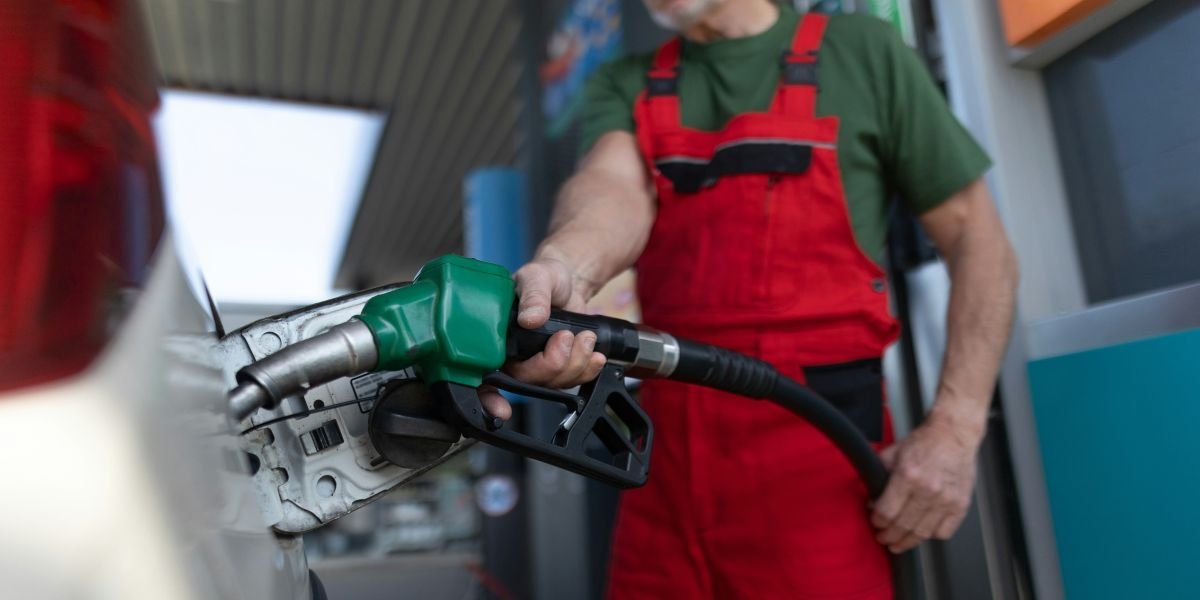

The Iran war reached California’s gas stations Thursday in the most direct terms possible: $6.01 per gallon, a number that has no precedent in American history.
For the first time ever, a U.S. state has crossed the $6-per-gallon threshold for regular gasoline. California reached that mark on April 30, 2026, when the statewide average hit $6.01 per gallon according to data from the American Automobile Association — the highest in the country, the highest since October 2023 in California, and a figure that no other state in the nation has ever recorded.
The milestone is not an anomaly. It is the compounding result of a global energy crisis, a state infrastructure gap that has been years in the making, and a geopolitical conflict that shows no signs of resolution. California drivers did not arrive at $6 per gallon because of any single decision or failure. They arrived here because of many decisions, made over many years, that left the state unusually exposed to exactly the kind of supply shock the Iran war has delivered.
How the War Reached the Pump
The Strait of Hormuz, the narrow waterway between Iran and Oman through which approximately 20% of the world’s seaborne oil trade had flowed before February 28, has been effectively closed since the United States and Israel launched strikes against Iran that day. The closure triggered an immediate and sustained global oil price shock that has now filtered down to every gas station in California — and most gas stations across the country.
California gasoline prices were $4.64 a gallon at the outset of the war — a 30% increase since the conflict began; diesel in California hit a record above $7 a gallon; fuel stockpiles in California hit record lows in April; gasoline imports dropped sharply from a record 195,000 barrels per day in mid-April to less than 75,000 barrels per day the following week.
That collapse in import volume captures the specific vulnerability California carries into this crisis. Unlike most other states, California has no pipeline connections to Gulf Coast refineries. When East Coast states face a supply crunch, they can draw from the vast pipeline infrastructure that connects domestic production to regional distribution. California cannot. The state depends on imports, primarily from Asia, to supplement what its own refineries produce. When the Strait of Hormuz closes, the supply chain that California depends on tightens faster and more severely than almost anywhere else in the country.
Denton Cinquegrana, chief oil analyst at Dow Jones Energy, said: “California is arguably the state most impacted by the Strait of Hormuz in the United States.”
The Refinery Problem
The import shortage is not California’s only structural challenge. The state has also lost significant domestic refining capacity in recent months. Two California refineries shuttered since October 2025, eliminating roughly 20% of the state’s refining capacity. Less domestic refining means more reliance on imports. More reliance on imports means more exposure to the Hormuz closure. The math compounds in one direction.
The refinery closures have been a source of political friction between Sacramento and Washington. Energy Secretary Chris Wright pointed earlier this month to a pipeline restart as evidence that the federal government was acting to bring prices down. Governor Newsom’s office pushed back, noting that the Sable pipeline project has faced federal investigations and investor lawsuits and that its claimed contribution to California supply relief has not materialized.
Meanwhile, on April 12, the Trump administration ordered a U.S. Navy blockade of the Strait of Hormuz — a decision that California’s governor said directly drove prices higher. “Every American who fills up their tank this week, buys groceries, or books a flight is paying Donald Trump’s Iran war tax,” Newsom said in a statement on Thursday. “He started the Iran war with no plan, and it is clear he has no plan to end it either.”
In total, Americans have paid over $29.2 billion more for fuel since the war began than they otherwise would have, according to Brown University — that’s over $223 per household for every household in the U.S. California households, at $1.6 billion more spent at the pump since the war began, are absorbing a disproportionate share of that national total.
The Political Dimension — One Month Before the Primary
The gas price crisis has arrived at a moment of maximum political sensitivity in California. The June 2 gubernatorial primary is five weeks away, and with Governor Newsom term-limited, the question of who leads California next — and how they navigate the tensions between energy costs, climate commitments, and economic competitiveness — is being answered in real time at the pump.
At a recent debate, candidates sparred directly over California’s $0.61-per-gallon state gas tax — the highest in the nation. The tax exists to fund transportation infrastructure and has historically been justified by California’s above-average road and transit investment needs. But at $6.01 per gallon, the political logic of the tax is being stress-tested in ways it has not faced before. Miguel Angel Cruz, a landscaping business owner filling up in Carlsbad, put it plainly: “I cannot drive any less. Every time we get a new president in the White House, they say this year is gonna be better. But nothing’s changed. It’s the same story, except now it’s worse because of the war in Iran.”
The debate over the gas tax is a stand-in for a larger argument about what California is willing to trade off between its climate and infrastructure goals and the immediate economic pressure on residents and small businesses who have no alternative to driving.
The Summer Ahead
The timing is particularly difficult. Memorial Day weekend is approximately three weeks away, marking the traditional beginning of the summer driving season — the period when seasonal demand for gasoline peaks and typically pushes prices higher even in ordinary years. This is not an ordinary year. The Iran conflict that closed the Strait of Hormuz has not resolved. Negotiation attempts have stalled. The Navy blockade of Iranian ports has not been lifted. And California’s refining and import infrastructure remains more constrained than it was before the war began.
Analysts expect the pain to worsen as the Iran conflict stretches into the peak U.S. summer travel season, typically beginning around Memorial Day in late May and lasting through Labor Day in September.
For Californians who drive to work, who run small businesses that depend on vehicles, who plan to travel this summer on roads that have become historically expensive to use, the $6.01 number on the pump is not a policy abstraction. It is what Thursday cost. And with no ceasefire in sight, Friday may cost more.
Disclaimer: This article reports on California gasoline prices as of April 30, 2026, based entirely on publicly available data and official statements. All price figures are sourced from the American Automobile Association (AAA) and GasBuddy, both of which publish real-time and historical fuel price data publicly. All economic figures cited from Brown University are drawn from publicly released research.
Governor Newsom’s statements are drawn directly from an official press release published on the California Governor’s Office website (gov.ca.gov) on April 30, 2026, and are quoted in full without editorial modification. The characterization of the Iran war’s economic impact reflects the Governor’s official public communications and does not represent the editorial position of CA Gazette.
This article does not constitute financial, investment, or energy market advice. Fuel price data is subject to daily fluctuation. Readers seeking current pump prices are encouraged to consult AAA’s GasPrices.AAA.com or GasBuddy.com directly.
References to refinery closures, import volumes, and pipeline infrastructure are drawn from publicly syndicated reporting by CNBC and Bloomberg. CA Gazette has not independently verified internal industry data beyond what these outlets have reported from named public sources.
The article covers an active and ongoing geopolitical situation. Conditions described — including Strait of Hormuz shipping volumes, California fuel stockpile levels, and national average gasoline prices — were accurate as of the publication date and may have changed since.