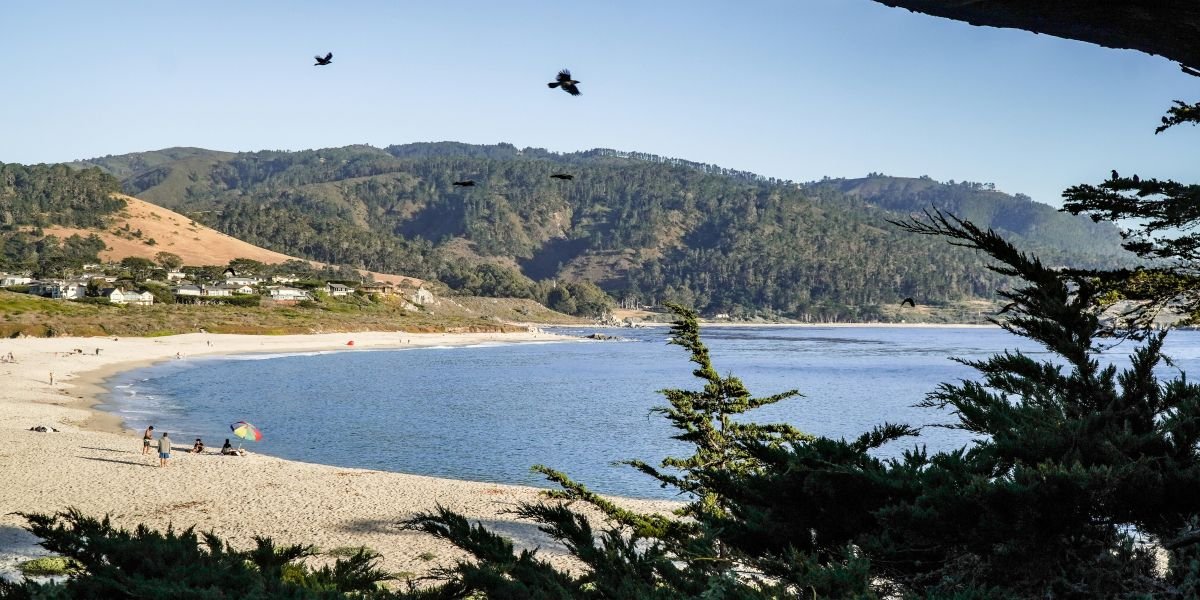

California used its annual Ocean Day to send two messages simultaneously — one looking back fifty years at a landmark environmental legacy, and one looking forward to defend that legacy against federal energy policy moving in the opposite direction.
The State Senate passed two measures on Tuesday, each carried by Senator John Laird of Santa Cruz, whose district encompasses some of the most protected coastline in the state. Both resolutions now head to the Assembly for consideration.
Two Measures, One Clear Signal
Senate Joint Resolution 12 and Senate Concurrent Resolution 136 were passed by the State Senate on California Ocean Day, both now heading to the Assembly for consideration.
The first measure is pointed squarely at Washington. SJR 12 expresses bipartisan opposition to the federal government’s proposed offshore oil and gas leasing program and calls for California to be excluded from any future offshore leasing plans. The resolution also urges federal officials to conduct a full environmental review and provide opportunities for public input, reinforcing longstanding concerns about the risks offshore drilling poses to coastal communities, marine ecosystems, and the state’s coastal economy.
The second carries the weight of history. SCR 136 commemorates the 50th anniversary of the California Coastal Act and the State Coastal Conservancy Act, the landmark laws that have guided coastal protection, public access, and responsible development along California’s 1,100-mile shoreline for five decades.
Senator Laird, who has championed coastal legislation for decades, framed the occasion in terms that connect past and present. “I remember what our coast looked like before these protections — when access was limited and development went unchecked,” Laird said. “What we’ve built over the last 50 years is something worth celebrating and continuing.”
On the drilling resolution, he was more direct. “This resolution’s passage in the Senate sends a clear message that California stands united in opposing new offshore drilling along our coast,” Laird said. “We must continue working to protect our ocean, our communities, and the economic vitality that depends on a healthy coastline.”
The Coastal Act at Fifty
The California Coastal Act of 1976 did not emerge from a legislature inclined toward conservation by default. It came from a citizens’ ballot initiative — Proposition 20, passed in 1972 — that created a temporary coastal commission after developers and local governments had spent years approving projects that cut off public beach access and degraded marine habitat. When the Act was codified four years later, it established a permanent California Coastal Commission with authority over development decisions within the coastal zone.
The result over five decades is a coastline that functions substantially differently from those of states without comparable protection. Public access to beaches is legally protected. Wetlands cannot be filled for development without intense scrutiny. New construction must demonstrate it does not block views or access for the general public. The Act has survived legal challenges, gubernatorial administrations of both parties, and sustained lobbying from real estate and energy interests that have periodically sought to narrow its reach.
The State Coastal Conservancy Act, passed in the same year, created the funding mechanism that has enabled the state to acquire coastal properties, restore degraded habitats, and fund the trail systems and public access improvements that have made California’s coastline among the most publicly accessible in the country.
SCR 136 does not carry the force of law. But its passage on the anniversary of these statutes signals legislative intent — and signals it at a moment when federal environmental rollbacks have made the future of California’s coastal protections a live question rather than a settled matter.
Drilling and the Federal Collision Course
SJR 12, unlike SCR 136, is not a ceremonial measure in any meaningful sense. California has fought offshore drilling with consistent intensity since the 1969 Santa Barbara oil spill — the environmental disaster that helped catalyze the modern environmental movement and directly influenced the passage of the National Environmental Policy Act the following year.
The Trump administration’s offshore leasing proposals, which would open vast stretches of the Pacific, Atlantic, and Gulf of Mexico to new oil and gas development, have drawn opposition from coastal states of both parties. California’s position has been among the most consistent and legally aggressive. The state has repeatedly challenged federal offshore leasing decisions in court, and the Coastal Commission has used its federal consistency review authority to block projects it determines would conflict with California’s coastal management program.
The timing of this year’s SJR 12 is not coincidental. Global oil markets are under acute pressure from the ongoing Iran conflict, which has disrupted shipping through the Strait of Hormuz and driven crude prices near $100 a barrel. That pressure is producing renewed federal interest in expanding domestic oil production — including offshore — as a supply response. California’s Senate is asserting, in advance of that push, that the state’s coastline is not available as part of the solution.
Ocean Day as Policy Platform
Governor Newsom proclaimed April 28 as California Ocean Day, recognizing the state’s 1,100-mile coastline, its network of marine protected areas, and a coastal economy estimated at $51 billion annually. The proclamation frames the ocean not merely as a natural resource but as an economic one — a framing that has become central to California’s argument against offshore drilling, which coastal advocates have long argued would put tourism, fishing, and recreation industries at far greater risk than the potential oil revenue would justify.
The 21st annual Ocean Day brought advocates, scientists, and community members to Sacramento to meet directly with legislative staff and lawmakers. The day functions as both a civic education moment and a direct lobbying effort — one of the few California advocacy days that successfully draws participants from across the state’s geographic and demographic spread, from the redwood-lined North Coast to the kelp forests of San Diego.
The dual passage of SJR 12 and SCR 136 on the same day represents exactly the kind of legislative alignment that Ocean Day organizers have worked toward for two decades: a celebratory resolution that affirms California’s coastal identity paired with a protective measure that defends it against immediate threats.
Both now move to the Assembly. Their passage there is not guaranteed — resolutions occasionally stall in committee or lose momentum between chambers — but the Senate vote, described by Laird’s office as bipartisan, suggests a degree of coastal consensus that extends beyond the predictable partisan lines of most Sacramento debates.
California’s coast took fifty years of active protection to become what it is. Tuesday’s Senate action was a reminder that the work of keeping it that way is never fully finished.